Attached vs Freestanding Patio Covers | Arizona Guide
Attached vs. Freestanding Patio Covers: Which One Belongs in Your Arizona Backyard?
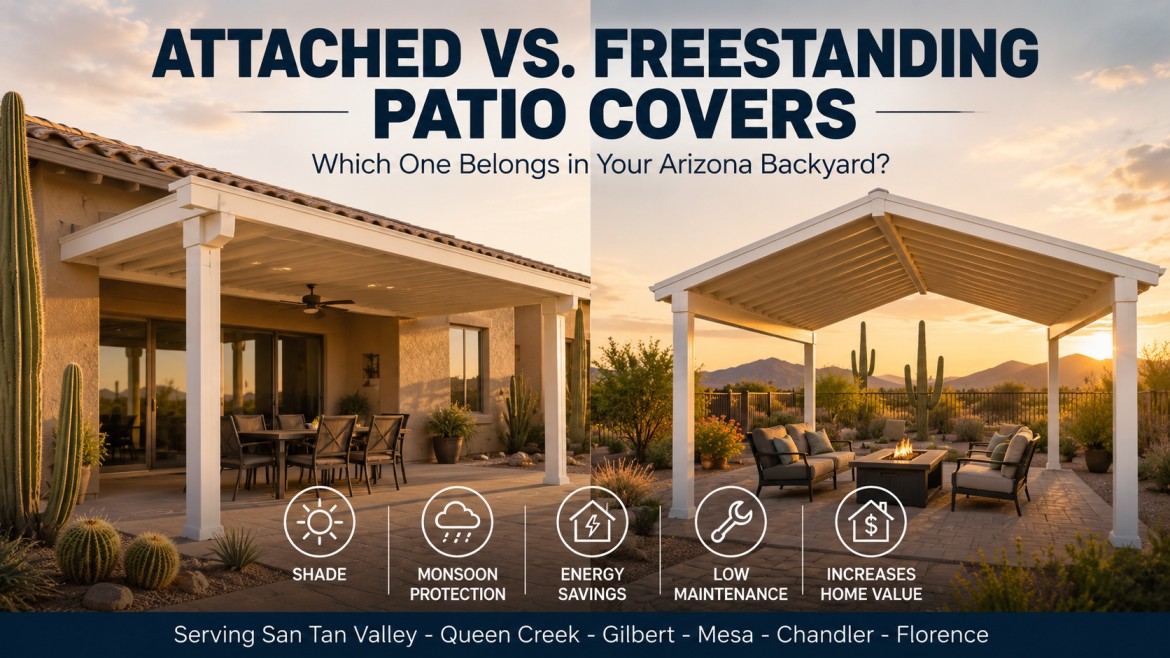
Quick Answer: An attached patio cover ties directly into your home's fascia or wall, extending the roofline for shade right off the back door. A freestanding patio cover stands on its own posts anywhere in the yard. Attached usually costs less and cools the house; freestanding gives you placement freedom and works when the roofline can't carry the load.
What's the Real Difference Between Attached and Freestanding Patio Covers?
The difference comes down to one question: what holds the roof up on the house side?
An attached patio cover borrows structural support from your home. We fasten a ledger or attachment beam into the fascia, wall, or roof structure, then carry the outer edge on posts. You get two or three posts instead of four to six, and the cover reads as part of the house.
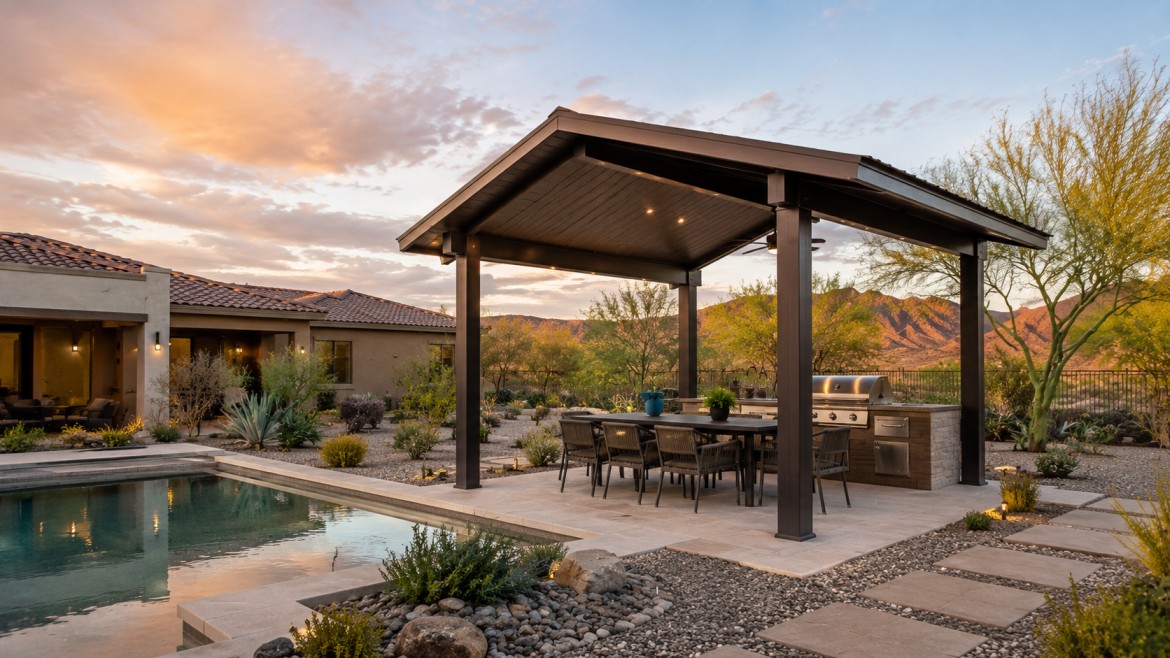
A freestanding patio cover carries its own weight on all four corners. Nothing touches the house. That independence is the whole point — float it over a pool deck in Gilbert, park it beside a putting green in Gold Canyon, or build a shaded outdoor kitchen twenty feet from the back wall.
Homeowners often assume attached is the default and freestanding is the upgrade. In practice, the roofline decides more often than the budget does. Tile roofs with low overhangs, second-story walls, and clipped-eave patios all push us toward a standalone build, as do HOA rules in some Queen Creek and Chandler communities.
Neither one is objectively better. They solve different problems, and the right call usually becomes obvious once someone stands in your yard at 3 p.m. in July.
Which Option Handles Arizona Sun and Monsoon Season Better?
This is where the East Valley stops being a generic market.
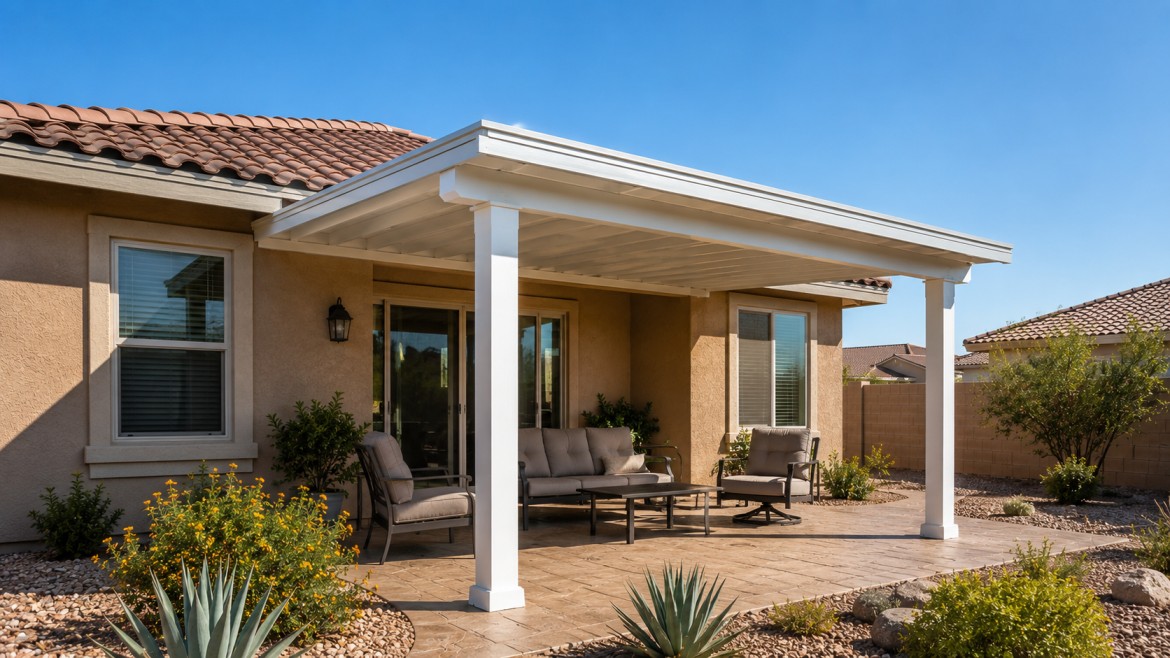
An attached patio cover does something a freestanding one can't: it shades your home's exterior wall and back windows. In San Tan Valley and Florence, where west-facing glass turns a living room into an oven by late afternoon, that means a cooler house and lower cooling bills all summer. Pair it with an insulated patio cover — a foam-core panel system rather than an open pan roof — and the difference underfoot is dramatic.
A freestanding patio cover wins on sun angle. Because it isn't locked to the back wall, we can rotate and position it to block the low western sun that slips under an attached cover every evening. For families in Apache Junction and Casa Grande who use the yard after work, that flexibility matters more than wall shading.
Monsoon season changes the math again. Attached covers must be flashed and sealed correctly where they meet the roof — done poorly, that seam leaks the first time a storm drives rain sideways. Freestanding structures skip that risk but need deeper footings and heavier posts to handle 60-plus mph gusts alone. Both are engineered and permitted here; neither should ever be built by feel.
Curious how other homeowners solved the same puzzle? Browse our project stories and homeowner guides for real backyard examples across the East Valley.
How Do Materials and Design Options Compare Between the Two?
Material choice is largely independent of the attachment method, which surprises people. Anything we build attached, we can build freestanding.
Aluminum patio covers dominate Arizona for good reason. They don't warp in 115-degree heat, termites ignore them, and the factory finish holds color far longer than painted wood. Within that family:
Solid patio covers give full shade and full rain protection — the workhorse option.
Insulated patio covers add a thermal core, cutting radiant heat and dampening the drum of monsoon rain.
Lattice patio covers filter light instead of blocking it, which suits gardens and pool decks where you still want brightness.
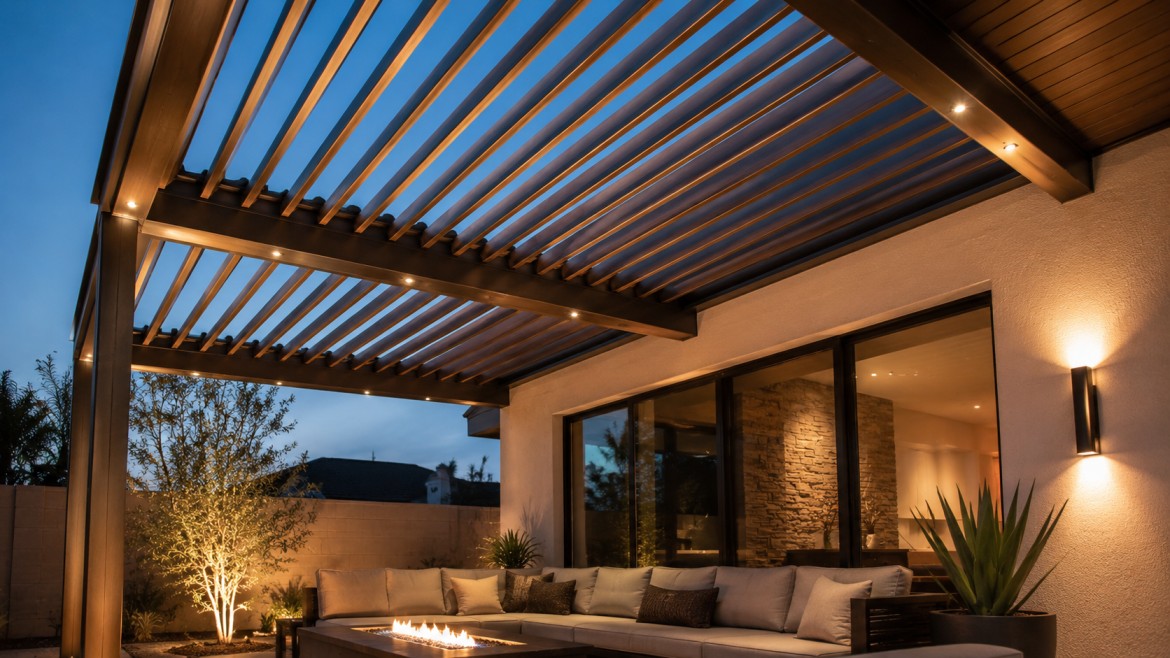
Louvered patio covers with remote-controlled blades let you open the roof on a mild March evening and close it when a storm rolls in.
Polycarbonate patio covers pass daylight through while cutting UV, ideal for shading a window you don't want to darken.
Freestanding builds do open up designs an attached structure can't reach — ramada-style columns, gabled roofs, wraparound beams, integrated lighting and ceiling fans. If you want an outdoor room rather than a shaded slab, freestanding gives the design more room to breathe.
Attached builds are easier to match to the house — same fascia line, same stucco tone, same roof pitch. Done right, a visitor can't tell where the home ends and the custom patio cover begins.
What Should You Expect for Permits, Cost, and Installation?
Cost follows the structure, not the style. A freestanding patio cover typically runs higher than a comparable attached one because it needs more posts, more footings, and more engineered beam, and the gap widens as the span grows. That said, if an attached build requires roof modification or fascia reinforcement, the two can land closer than expected.
Permits are non-negotiable in this valley. In Queen Creek, every structure attached to the home requires a building permit, and detached structures at or above 200 square feet require one as well. Setbacks, lot coverage limits, and height rules apply either way, and most master-planned communities layer HOA architectural approval on top. A legitimate patio cover contractor in Queen Creek handles the engineering stamp, the submittal, the inspections, and the HOA packet — not the homeowner.
Installation is faster than most people expect. After approvals, a typical build takes days on site: footings and post bases first, then beams, roof panels, trim, gutters, and any electrical. Most of the calendar time is permitting, not construction.
The honest cost conversation only happens with measurements in hand. Schedule a free consultation and estimate and we'll walk your yard, check the roofline, and price both options side by side.
Why Does the Right Choice Matter for Home Value and Long-Term Maintenance?
A patio cover is one of the few backyard upgrades that pays you back daily and again at closing. Buyers touring homes in Mesa, Chandler, and Sun Lakes in June aren't imagining bare concrete — they want usable outdoor square footage. It's part of why patio covers in Queen Creek and the surrounding communities have become expected rather than optional. Both structures deliver that.
Where they diverge is upkeep. An attached cover has one long seam against the house that deserves a look after a rough monsoon. A freestanding structure has no such seam but more posts sitting in irrigation spray, so drainage around the bases matters. With quality aluminum, maintenance for either is close to nothing — rinse the panels, clear the gutters, check the fasteners once a year.
Longevity is really a function of who built it. Undersized beams, shallow footings, and fasteners driven into stucco instead of structure are the failures we get called out to fix, usually after the first serious storm.
That's the part worth protecting. When you're weighing attached vs. freestanding patio covers, weigh the installer just as carefully — warranty coverage on both materials and labor is what turns a purchase into a twenty-year asset. Talk with our team about your backyard and see which structure fits your home, your lot, and how you actually live outdoors.
Frequently Asked Questions
Do I need a permit for a freestanding patio cover in Queen Creek or San Tan Valley?
Usually, yes. In Queen Creek, detached structures of 200 square feet or more require a building permit, and anything attached to the home requires one regardless of size. Setback, height, and lot coverage rules apply either way, and most HOAs require architectural approval first. A licensed patio cover contractor should handle all of it for you.
Which is cheaper, an attached or freestanding patio cover?
An attached patio cover is generally the more affordable option because it uses fewer posts and footings and borrows support from your home. A freestanding patio cover costs more for the same square footage. The gap narrows if your roofline needs reinforcement or modification, so compare real quotes rather than assuming.
Can a freestanding patio cover be added over an existing concrete slab?
Often, yes — but the slab has to be evaluated first. Post footings typically need to reach undisturbed soil below slab depth, so we core through and pour proper piers rather than bolting to thin concrete. Older or cracked slabs sometimes need patching. This is a standard part of Arizona patio cover installation and rarely a dealbreaker.
Will an attached patio cover damage my roof or cause leaks?
Not when it's installed correctly. The attachment must tie into actual structure, with proper flashing and sealing at the fascia or wall connection. Leaks come from shortcuts — fasteners in stucco, missing flashing, wrong pitch. Ask any patio cover contractor near me to explain exactly how they'll make and waterproof that connection.
How long does it take to install a patio cover in the East Valley?
Construction itself usually takes two to five days depending on size and options like electrical or louvered patio covers. The longer part is design, engineering, HOA approval, and municipal permitting, which can add several weeks. From first consultation to finished backyard, most projects in Gilbert, Mesa, and Florence wrap in a few weeks.
