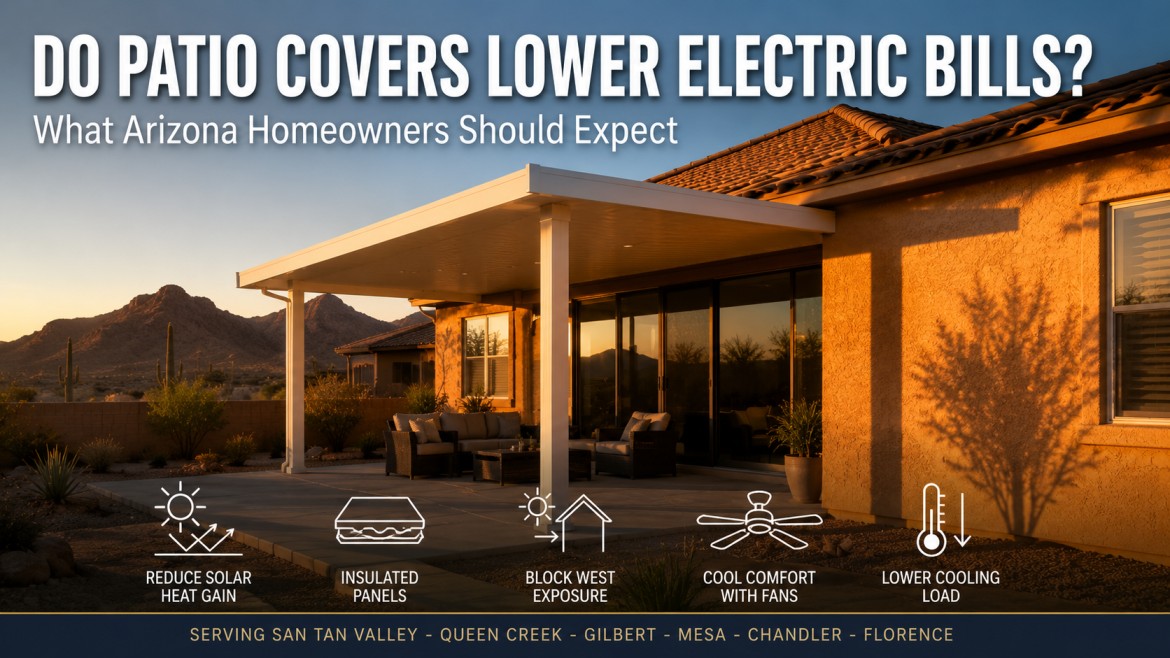
Do Patio Covers Lower Electric Bills? | Arizona Guide
Do Patio Covers Lower Electric Bills? What Arizona Homeowners Should Expect
Quick Answer: Yes, when the cover shades your home rather than just your patio. Air conditioning can account for 50% or more of an Arizona summer electric bill, and blocking sun before it reaches west-facing walls and glass reduces the heat your AC has to remove. Savings depend on orientation, glass area, and cover type.
How Does a Patio Cover Actually Reduce Cooling Costs?
By stopping heat before it becomes your air conditioner's problem.
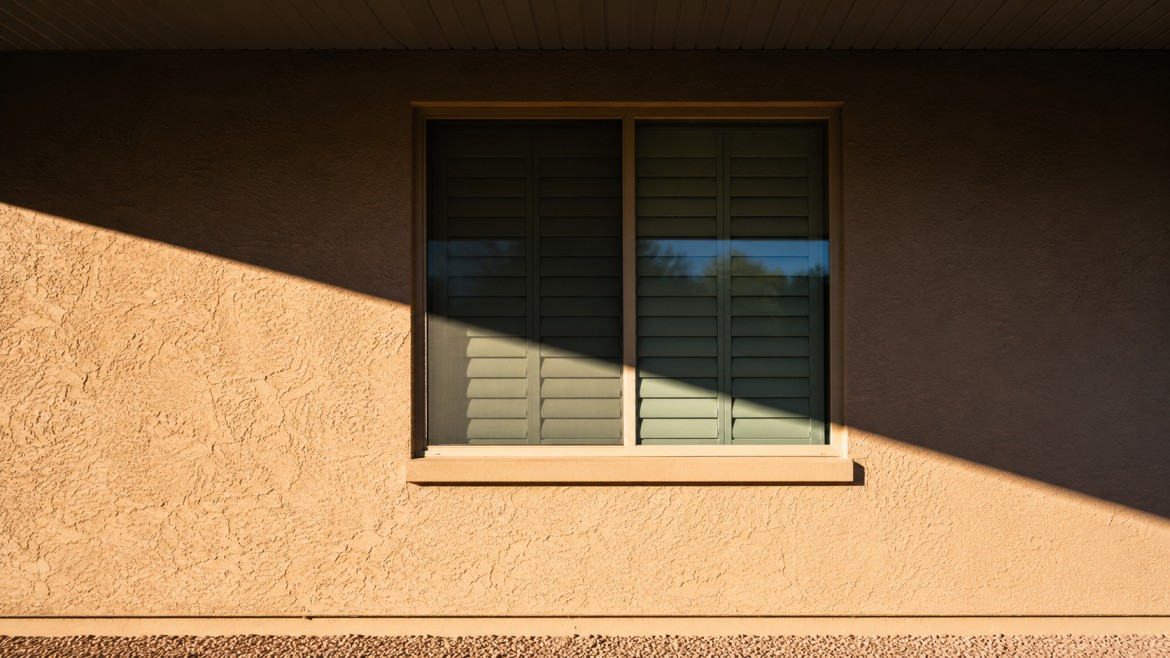
Heat enters an Arizona home in two ways that a patio cover can interrupt. The first is direct solar gain through glass. Sunlight passing through a window converts to heat inside the room, and your AC then has to remove it. The second is conducted heat through the wall itself: a stucco wall baking in direct sun all afternoon reaches a high surface temperature and pushes that heat inward for hours.
An attached patio cover shades both. The wall behind it never receives direct sun during the covered hours, and neither does the glass in that wall. You are intercepting the energy outdoors instead of paying to pump it back out.
That distinction matters. Interior blinds stop light after it has already entered the building and become heat; exterior shading stops it before it arrives. This is why a permanent structure outperforms curtains for the same window.
There is a secondary effect too. Shade lowers air temperature in the covered area by roughly 5 to 15 degrees, and shaded concrete can run 20 to 45 degrees cooler than concrete in full sun. A slab that never superheats is not radiating warmth back at the house through the evening.
How Much Can an Arizona Homeowner Realistically Save?
This is where honest answers matter more than confident ones.
Start with the size of the prize. According to SRP, air conditioning can account for 50% or more of your total electric bill during summer. Anything that reduces cooling load is working against the largest line item on the bill.
Related measures give a sense of scale. SRP notes that protective window screens can reduce cooling costs by up to 25%, and that landscaping shade can lower temperatures around a home by roughly 9 degrees. A patio cover works through the same mechanism — exterior shading of walls and glass — across a much larger surface.
What we will not do is quote you a percentage for a patio cover specifically. The honest answer is that it varies enormously with how much glass sits behind the cover, which direction that wall faces, how well the house is insulated, and how big the covered area is. A cover shading a wall of west-facing glass in Queen Creek does far more than the same structure on a shaded north wall.
The reliable framing is this: the mechanism is real and well understood, the effect is largest on west and south exposures with significant glazing, and the comfort gain is immediate and obvious regardless of what the bill does.
Which Patio Cover Types Deliver the Biggest Energy Savings?
The roof you choose changes the result substantially.
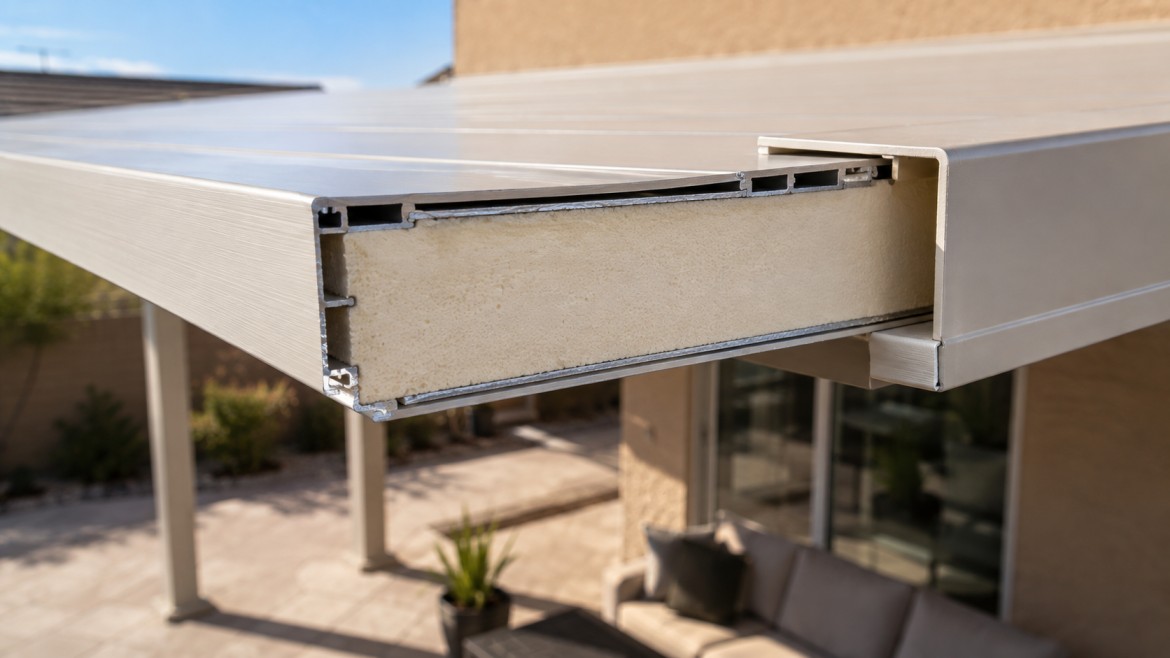
Insulated patio covers lead comfortably. A foam-core panel does two jobs: it blocks sun completely and it stops the panel itself from becoming a radiant heat source. An uninsulated pan roof baking in August is hot metal above your head — it shades you but it also re-radiates downward. Insulated panels break that second path.
Solid patio covers block all direct sun on the wall behind them and are a large step up from nothing. They remain the practical default for most patios.
Louvered patio covers are the interesting case. Closed blades shade the wall through summer afternoons; open blades let low winter sun reach the same wall to warm it in January. That seasonal reversibility is genuinely valuable in a climate with both cooling and heating months.
Lattice patio covers and polycarbonate patio covers deliver partial benefit. Lattice lets a share of sun through by design, and polycarbonate passes visible light while blocking UV. Choose these for daylight and aesthetics rather than for the utility bill.
Colour plays a smaller role than people expect on the energy side, though lighter finishes stay cooler to the touch and reflect more light onto the patio.
Not sure which system suits your home? Browse our homeowner guides and project stories for detailed comparisons across every style.
Where Should a Patio Cover Go to Cut the Most Heat Gain?
Orientation decides more than square footage does.
West-facing walls are the priority in this valley. Afternoon sun strikes them at a low angle during the hottest part of the day, exactly when your AC is already working hardest and utility rates are often at their peak. Shading west glass in Queen Creek, Apache Junction, or San Tan Valley is the single highest-value placement.
South-facing walls come next. They receive sun through more of the day but at a higher angle, which a standard roof overhang or attached cover intercepts effectively.
East-facing walls take morning sun. The heat arrives when the house is still cool from overnight, so the cooling impact is smaller — though the comfort benefit for morning coffee outside is real.
North-facing walls receive little direct sun in summer. A cover there is a comfort and rain decision, not an energy one.
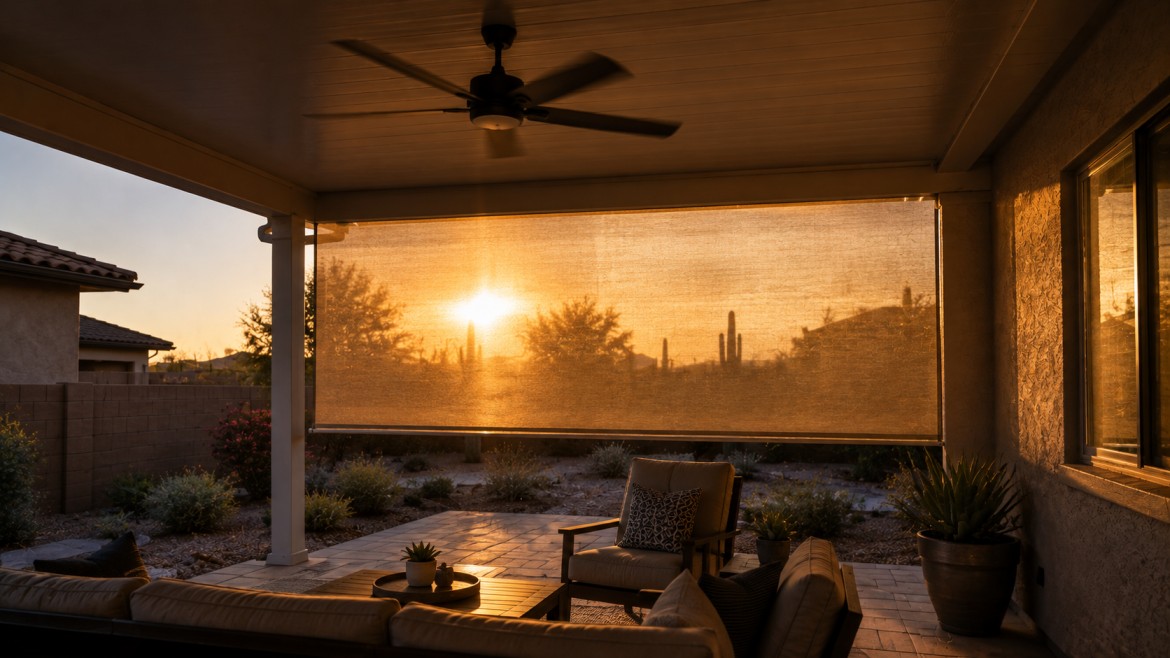
Depth matters as much as direction. A cover sized to the slab rather than to the sun will shade the wall at noon and let low afternoon sun slip underneath onto the glass by four o'clock. On west exposures, going deeper than the existing concrete suggests — or adding a drop screen on the open side — is what preserves the benefit when it counts.
What Else Can You Add to Increase the Savings?
A few additions compound the effect, and most are far cheaper installed during the original build.
Ceiling fans under the cover let you raise the thermostat indoors and still stay comfortable outside. SRP notes that for every degree you set the thermostat above 80, you can save roughly 2% to 3% on cooling costs — and a comfortable shaded patio is what makes the higher setting tolerable.
Drop screens or solar shades on the open west side block the low afternoon sun a roof cannot reach.
Insulated panels rather than standard pan roofing, if the budget allows the upgrade.
Landscaping against the shaded wall, which further moderates the surface temperature.
Worth knowing: cooling savings are only part of the return. A covered patio shifts household activity outdoors during evenings, which reduces indoor lighting and appliance use during peak hours. It is a modest effect, but it runs in the same direction.
And the non-financial return is the one homeowners actually talk about a year later — a backyard that is usable from May through September rather than one that gets abandoned.
Curious what a cover would do for your specific exposure? Schedule a free consultation and estimate and we'll assess which walls are costing you the most.
Frequently Asked Questions
How much can a patio cover lower my electric bill in Arizona?
It varies with orientation, glass area, and insulation, so no honest contractor will quote a fixed percentage. What is established is the scale of the opportunity: SRP notes air conditioning can be 50% or more of a summer bill, and exterior shading reduces the heat your AC must remove. West-facing walls with significant glass see the largest effect.
Do insulated patio covers save more energy than standard ones?
Generally yes. Insulated patio covers use a foam core that blocks sun and prevents the panel itself from radiating heat downward. A standard pan roof shades you but still becomes hot metal overhead in August. The insulated upgrade is the one our East Valley customers mention most after their first summer.
Which direction should a patio cover face for the most savings?
West is the priority in Arizona. Low afternoon sun strikes west walls during the hottest hours, when cooling demand and utility rates both peak. South is next. East delivers morning comfort but less cooling benefit, and north-facing walls receive little direct summer sun, making a cover there a comfort choice rather than an energy one.
Is a patio cover better than interior blinds for cutting heat?
For the same window, yes. Exterior shading stops sunlight before it enters the building; blinds and curtains block light after it has already passed through the glass and become heat inside the room. Interior coverings still help, but intercepting the energy outdoors is the more effective approach.
Will a patio cover help in winter too?
A solid cover blocks low winter sun that you may actually want on the wall in January. Louvered patio covers solve this — closed for summer shade, open to let winter sun through. If year-round performance matters to you, that adjustability is worth the premium over a fixed roof.
