How Much Shade Does a Patio Cover Provide? | Arizona
How Much Shade Does a Patio Cover Provide? A Straight Answer for Arizona Homeowners
Quick Answer: A solid patio cover blocks essentially all direct overhead sun, dropping surface temperatures 20 to 45 degrees and air temperatures 5 to 15 degrees beneath it. Lattice covers deliver roughly 30 to 60 percent shade depending on slat spacing, and adjustable louvered covers range from about 10 to 90 percent on demand.
How Much Shade Does a Patio Cover Actually Provide?
The honest answer: it depends on the roof you pick, and the range is wider than most homeowners expect.
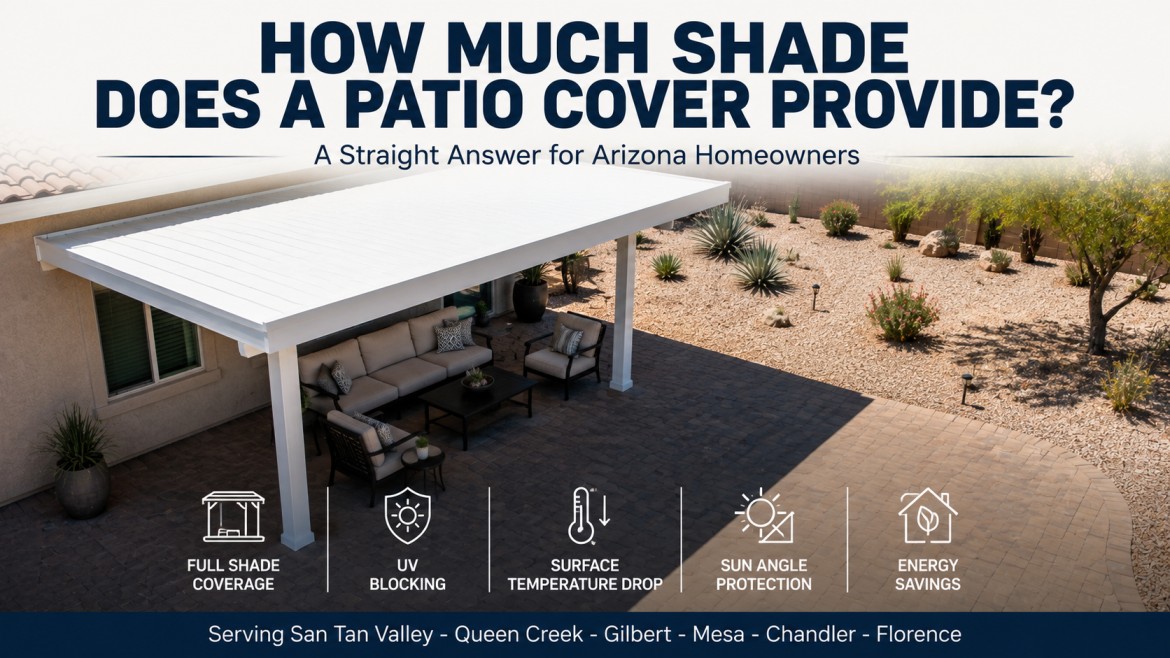
A solid patio cover — an interlocking aluminum pan roof — blocks essentially 100 percent of direct overhead sunlight. Stand under one at noon in July and there is no sun on you, period. That's the benchmark everything else gets measured against.
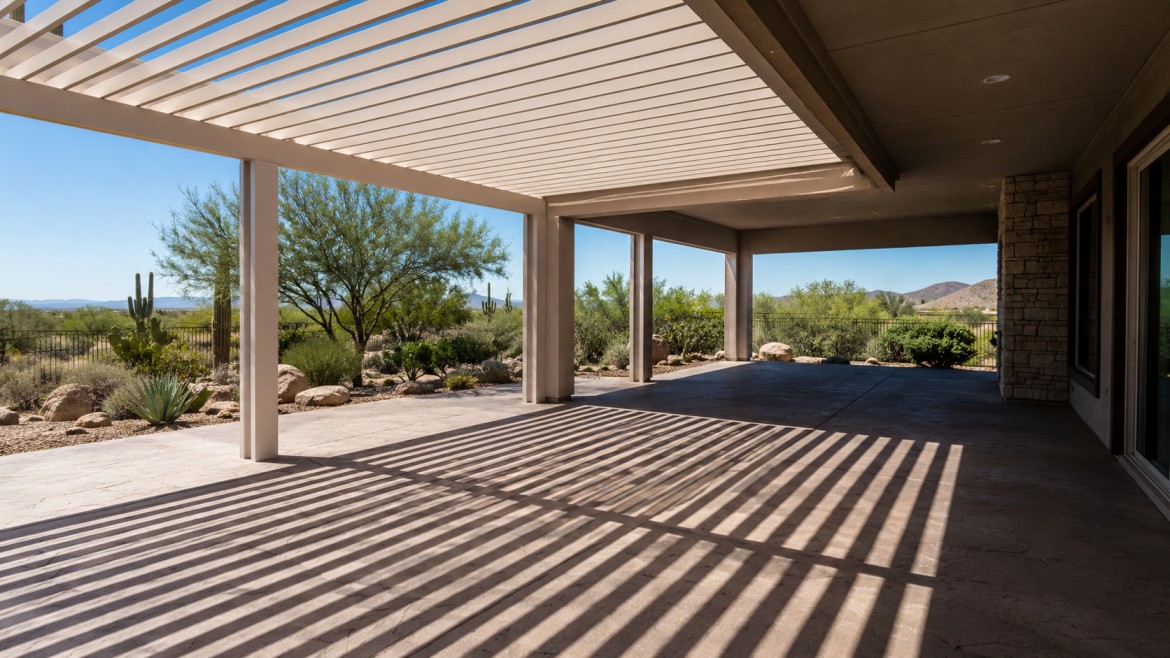
Lattice patio covers work differently. They're built from spaced slats, so shade depends entirely on how tight that spacing runs. Slats set roughly an inch apart deliver about 50 to 60 percent shade. Widen the gaps to two inches and you're closer to 30 to 40 percent — pleasant dappled light, not real relief from an Arizona afternoon.
Louvered patio covers are the flexible option. Because the blades rotate, you can dial coverage from roughly 10 percent to 90 percent with a remote, then close them completely when a monsoon cell rolls through.
Polycarbonate patio covers are the outlier. They transmit visible light while blocking the large majority of UV, so you get brightness without the burn — useful over a kitchen window you don't want to darken.
One factor people miss: no roof blocks reflected light. Sun bouncing off a pool, light pavers, or a white block wall still reaches you. Real patio cover shade is the roof and the surroundings working together.
Why Does Patio Cover Shade Change Throughout the Day?
Because the sun moves, and in Arizona it moves through a much wider arc than most of the country.
At solar noon in late June, the sun sits roughly 80 degrees above the horizon here — nearly straight overhead. Your cover throws its shadow almost directly down, so the shaded footprint matches the structure's footprint. That's best-case, and it lasts a couple of hours.
By four or five in the afternoon — exactly when families in Gilbert, Chandler, and San Tan Valley head outside — the sun has dropped west. The shadow stretches east, off the patio, and low sun slides underneath onto your seating. Homeowners tell us their cover "stops working" in the evening. It works fine. The geometry changed.
December flips it. At noon on the winter solstice the sun is only about 33 degrees up, so a cover that gave total shade in June now lets low winter sun reach under the roof and warm the slab. In an Arizona winter, that is exactly what you want.
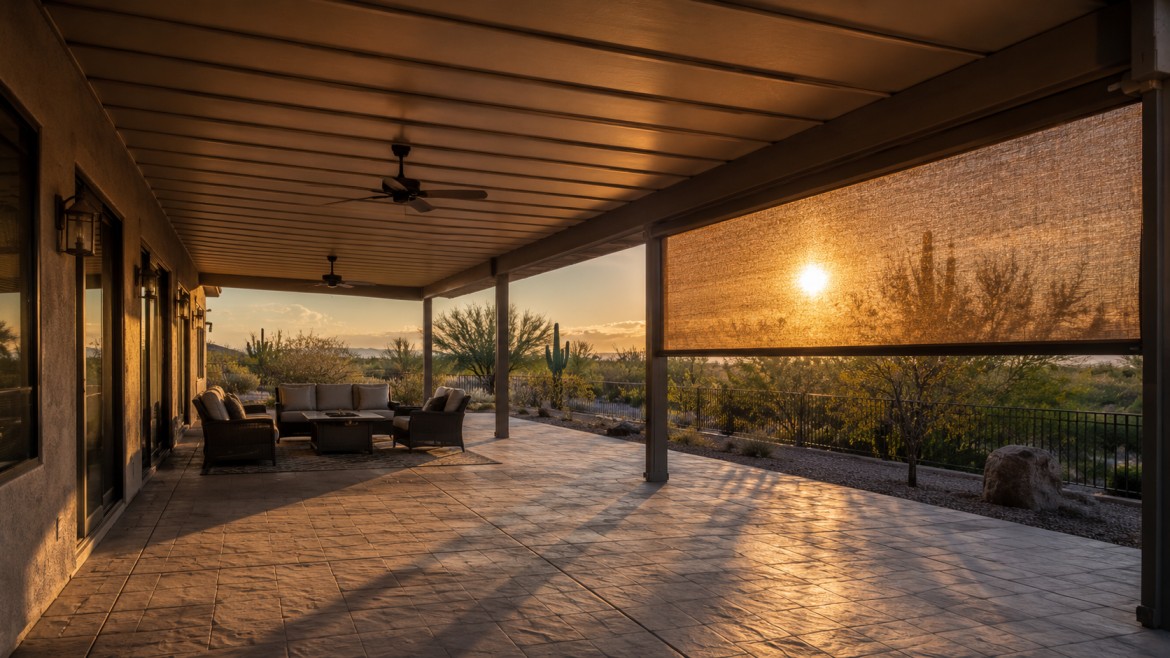
That seasonal swing is a feature, not a flaw, and it explains why orientation matters as much as size. A west-facing patio may need a deeper projection, a drop screen, or a freestanding patio cover rotated off the house.
Want to see how other East Valley yards were solved? Browse our homeowner guides and project stories for real examples.
Which Patio Cover Style Gives You the Most Shade?
If maximum coverage is the goal, the ranking is straightforward — though the most shade is not always the right target.
Solid patio covers — full shade, full rain protection. The default when you want the patio usable in July.
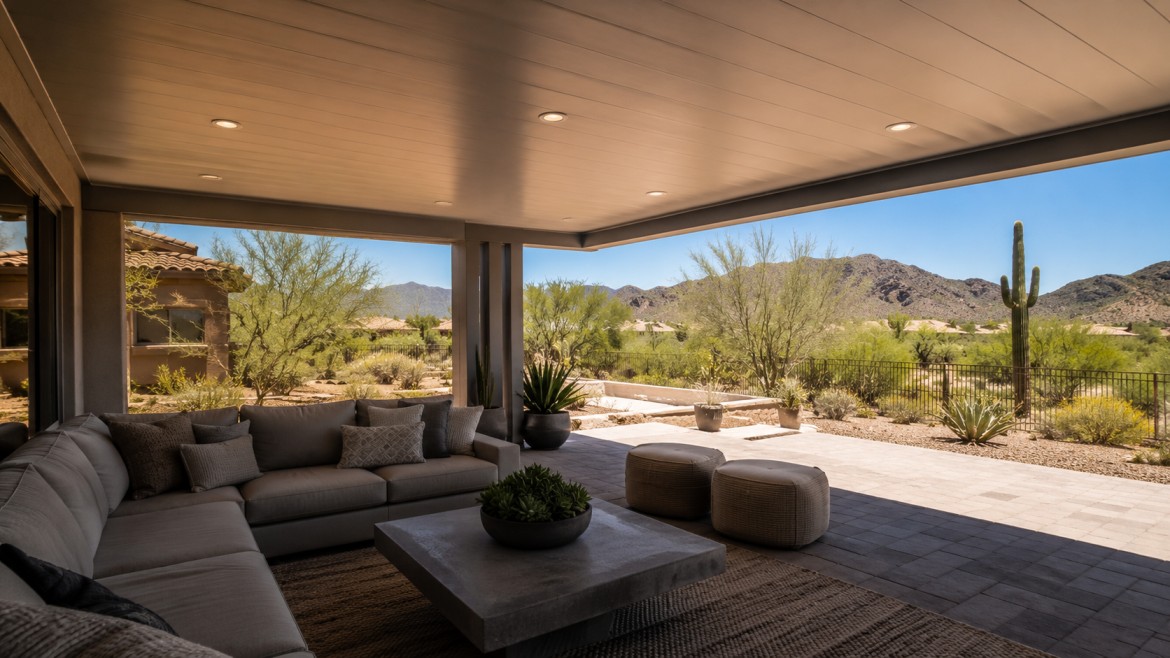
Insulated patio covers — the same full shade plus a foam core that stops radiant heat soaking through the panel, and it quiets monsoon rain overhead.
Lattice patio covers — partial shade with strong airflow and garden-friendly light. Best over pool decks and planting beds.
Louvered patio covers — shade on demand, the most versatile and the highest cost per square foot.
Polycarbonate patio covers — daylight through, UV blocked.
The comparison that surprises people most is solid versus insulated. On paper both read as 100 percent shade. Standing under them in August is a different experience: an uninsulated pan roof baking at 140 degrees on top is still a heat source above your head. Insulated panels cut that, and they are the upgrade our customers in Mesa, Florence, and Casa Grande mention most after their first summer.
Across every style, aluminum patio covers handle 115-degree heat without warping, cracking, or feeding termites — which is why wood has largely disappeared from new East Valley builds.
How Much Cooler Does a Patio Cover Make Your Backyard?
Cooler than people expect, in two separate ways.
Air temperature in a shaded area typically runs 5 to 15 degrees below the sun-exposed ground next to it. That is the figure most often quoted, and it undersells the experience.
The bigger effect is surfaces. Concrete, pavers, and metal furniture in direct Arizona sun can run 20 to 45 degrees hotter than the same materials in shade. Your slab is what radiates heat back at you all evening. Shade it during the day and the patio stops acting like a radiator after sunset, which is why a covered patio stays usable hours longer.
Then there is the house itself. An attached cover shades your back wall and windows through the hottest part of the day. West-facing glass in Queen Creek and Apache Junction is the largest single heat gain most homes have, and blocking that sun before it reaches the glass means the AC cycles less often.
UV is the third piece. Any solid roof stops direct UV completely, though scattered sky UV and light reflected off pool water and pale walls still reach you. Meaningful protection, not a sealed room.
Curious what those numbers look like on your specific patio? Schedule a free consultation and estimate and we'll walk the yard with you.
How Big Does a Patio Cover Need to Be for Usable Shade?
Sizing is where good projects separate from disappointing ones.
The mistake we see most is a cover sized to the slab instead of to the sun. A ten-foot projection sounds generous until 4 p.m. in June, when genuinely shaded seating has shrunk to four or five feet. On west and southwest exposures we usually recommend going deeper than the existing concrete suggests, or extending the slab to match.
Orientation matters just as much. South-facing patios get the most consistent all-day shade from a standard attached cover. East-facing patios are shaded in the afternoon and sunny in the morning, which suits evening entertaining. West-facing patios are the hard case, and often the best argument for a standalone structure or a drop screen.
What goes under the roof counts too. Ceiling fans move air and make shaded space feel several degrees cooler still, and recessed lighting extends usable hours past sunset. Both are far easier to wire during the build than after.
Getting this right takes someone standing in your yard with a tape measure and the sun angle in mind. Whether you are comparing patio covers in Queen Creek or searching for a patio cover contractor near me, ask them to map how shade actually falls across your patio before quoting a size. Talk with our team about your backyard and we will do exactly that.
Frequently Asked Questions
How much shade does a solid patio cover provide?
A solid patio cover blocks essentially all direct overhead sunlight — 100 percent shade beneath the roof itself. Low morning and late-afternoon sun still reaches under the open edges, and light reflected off pools and pale walls comes through. For maximum comfort, pair a solid roof with an insulated panel or a drop screen on the west side.
Do lattice patio covers provide enough shade for Arizona summers?
For most homeowners here, not on their own. Lattice patio covers deliver roughly 30 to 60 percent shade depending on slat spacing, which is comfortable in spring and fall but thin in July. Many East Valley families use lattice over pool decks and planters, and a solid or insulated cover over their main seating area.
How much cooler is it under a patio cover?
Air temperature under a cover typically runs 5 to 15 degrees below the open yard beside it. Surfaces make the bigger difference — concrete and furniture can be 20 to 45 degrees cooler in shade. That is why a covered patio stays comfortable well into the evening while an open slab keeps radiating stored heat.
Do patio covers block UV rays?
Yes, substantially. Solid, insulated, and polycarbonate patio covers block direct UV completely, and polycarbonate does it while still passing visible daylight. What no roof stops is scattered UV from open sky and light reflected off pool water, pavers, and white walls, so sunscreen is still worth it on long afternoons outside.
Will a patio cover lower my cooling bill?
It can, especially with an attached cover on a west or south wall. Shading exterior walls and windows before the sun reaches the glass reduces the heat your AC fights all afternoon. Insulated patio covers help most. Actual savings depend on your home’s orientation, window area, and existing insulation.
