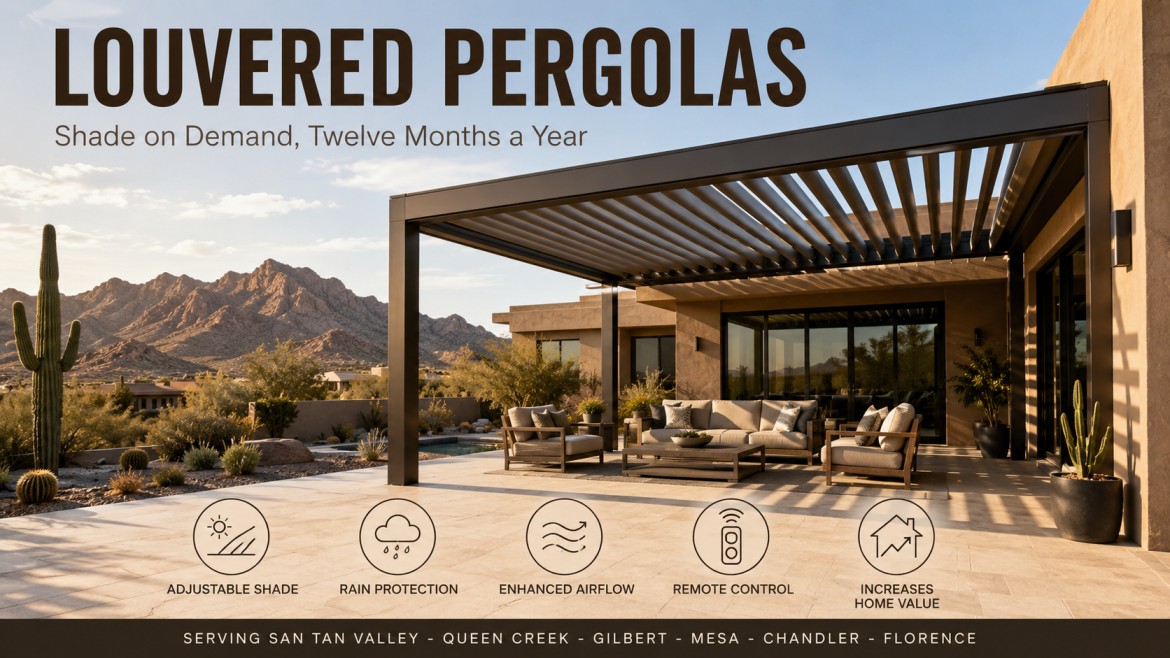
Louvered Pergolas in Arizona | Adjustable Shade Guide
Louvered Pergolas in Arizona: Shade on Demand, Twelve Months a Year
Quick Answer: A louvered pergola is an aluminum shade structure with rotating roof blades you control by remote. Open them for airflow and light, close them for near-total shade or to shed rain. In Arizona that adjustability turns one structure into a summer shade roof and a winter sun trap.
What Is a Louvered Pergola and How Does It Work?
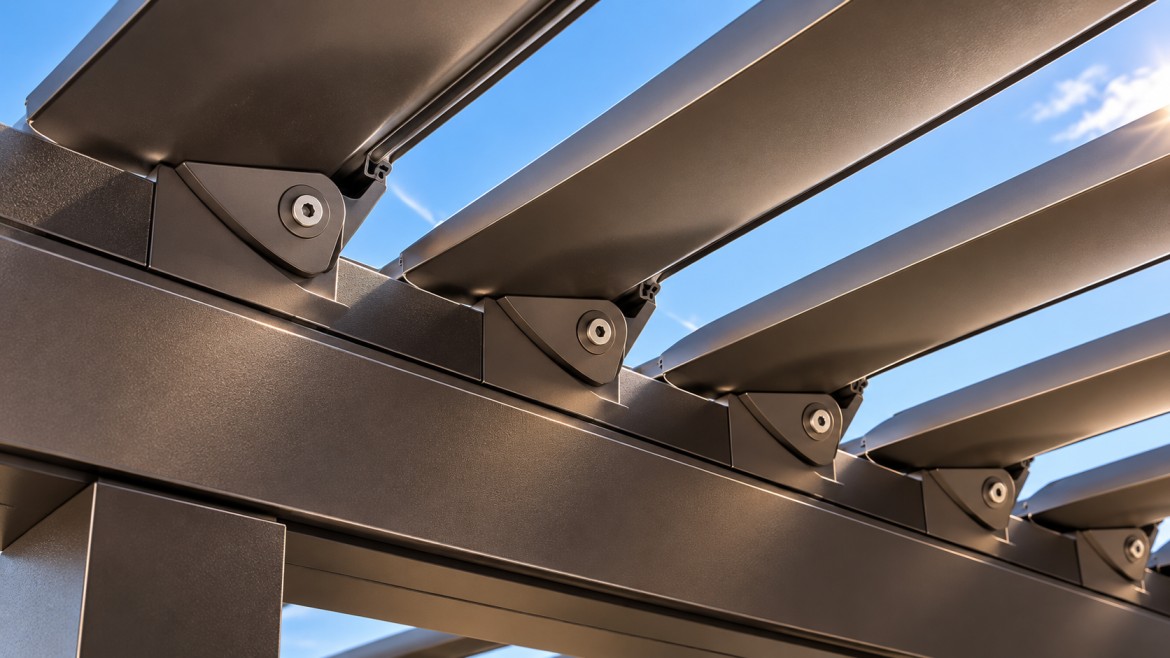
A louvered pergola looks like a conventional pergola until you touch the remote. Instead of fixed slats, the roof is built from aluminum blades mounted on a pivot, driven by a quiet motor housed inside the beam.
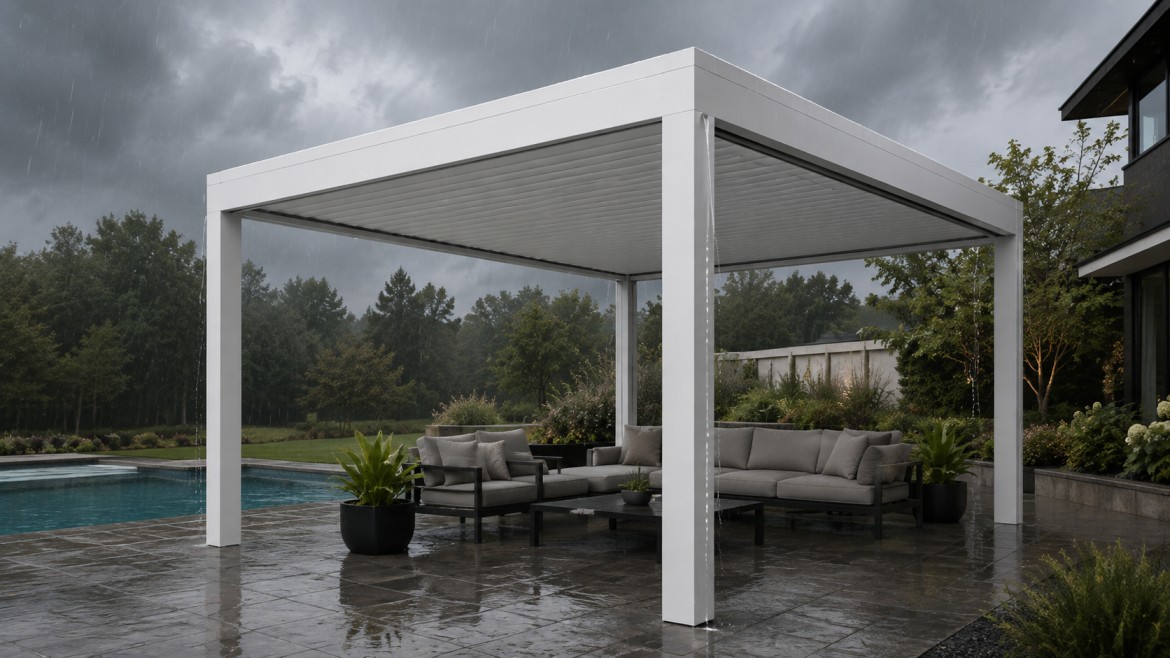
Rotate them open and you have an airy structure that filters light and lets heat escape upward. Rotate them closed and the blades seal against one another into a solid roof that sheds water toward integrated gutters in the frame, then down through the posts.
That single mechanism is why the category exists. A lattice patio cover gives you filtered light permanently. A solid cover gives you full shade permanently. A louvered roof gives you the entire range, and lets you change your mind at four in the afternoon when the sun drops into the west.
Most systems we install are motorised with a handheld or wall remote, and many offer app control. Rain and wind sensors are common options — the roof closes itself when the first drops land, which matters if a monsoon cell arrives while you are at work.
Structurally it is still a pergola: posts, beams, engineered connections. The blades add moving parts, which is why hardware quality deserves more scrutiny here than on any other structure we build.
Why Do Louvered Pergolas Suit the Arizona Climate So Well?
Because our climate asks for opposite things at opposite times of year, and a fixed roof can only answer one of them.
In July, the sun sits roughly 80 degrees above the horizon at midday here. Closed blades give you near-complete shade exactly when you need it, and the covered slab stops absorbing heat it would otherwise radiate back at you all evening.
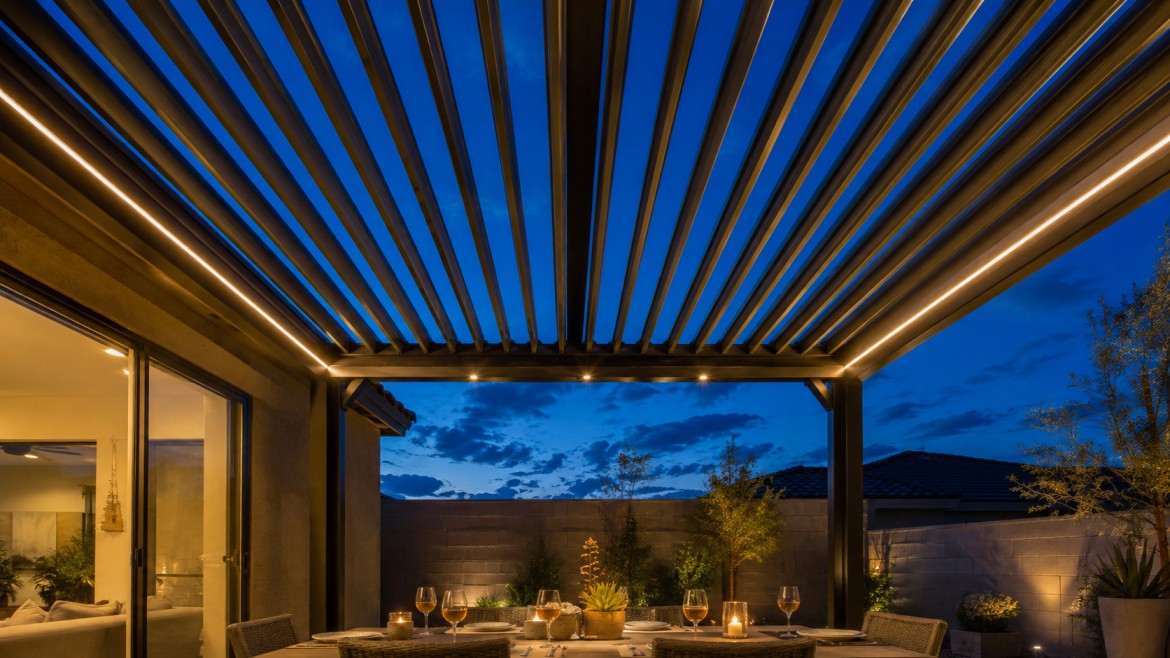
In December, the noon sun is only about 33 degrees up. Open the blades and that low winter sun reaches straight through to warm the patio — the same patio you were desperate to shade five months earlier. A permanent solid roof blocks it and leaves you sitting in the cold.
Monsoon season adds a third case. Blades close against driving rain, and integrated gutters carry water away rather than letting it sheet off the edge onto your furniture. Some manufacturers instead recommend opening blades in high wind so air passes through rather than pushing against a sealed surface — guidance varies by system, so ask which applies to yours.
Airflow is the underrated benefit. Partially open blades let hot air rise and escape instead of pooling under a solid roof. On a still evening in Queen Creek or Gilbert that alone makes a patio feel cooler than the temperature suggests.
Which Features Matter Most When Choosing a Louvered Pergola?
The frame is the easy part. These are the details that separate systems:
Motor and blade hardware. This is the component that has to work ten thousand times. Ask what drives the blades, what the duty rating is, and whether the motor is serviceable without dismantling the roof.
Blade seal quality. A roof that claims to be waterproof when closed is only as good as the seal between blades. Ask to see one closed under a hose before you sign.
Integrated drainage. Good systems run water through the beams and down inside the posts. Cheaper ones let it run off the edge, which puts water exactly where you did not want it.
Sensors. Rain and wind sensors close the roof automatically. Worth having if the patio is ever unattended, which is most of the time.
Warranty split. Ask separately about the structure, the finish, and the motor. These are frequently covered for different terms, and the motor is the one most likely to need attention.
Attached or freestanding matters too. An attached version borrows the wall and needs only outer posts, which suits shallow patios. A freestanding aluminum pergola with louvers can sit anywhere — over a pool deck in Gold Canyon, beside an outdoor kitchen in Chandler.
Weighing this against a fixed-slat structure or a solid roof? Browse our homeowner guides and project stories for side-by-side comparisons.
What Does Installation and Permitting Involve?
More engineering than a fixed pergola, and the same permitting path.
Most Arizona jurisdictions require a building permit for any structure attached to the home regardless of size, and for freestanding structures at or above 200 square feet. Municipalities across Maricopa County generally require these structures to be engineered for a 115 mph ultimate design wind speed under ASCE 7-16 and the 2021 building code.
Louvered systems carry additional weight in the roof and concentrate load differently, so footings and post sizing are not interchangeable with a lightweight lattice structure. Chandler, as one example, specifies a minimum footing of 18 inches square and 12 inches deep below grade. Post bases must reach undisturbed soil, which on an existing slab means coring through and pouring proper piers.
Electrical is the other difference. Motorised blades need power, and so do the lighting and fans most homeowners add at the same time. Running that during the build is straightforward; retrofitting it afterward means opening up finished beams.
Expect a few days on site once approvals land. As with every permanent structure here, the calendar is dominated by permitting and HOA architectural review rather than construction. A licensed pergola contractor in Queen Creek should handle the engineering stamp, submittal, inspections, and the HOA packet.
Are Louvered Pergolas Worth the Investment?
They are the most expensive structure in the category, and for the right yard they are also the most used.
The honest framing is usage. A fixed-slat pergola is comfortable perhaps eight months of the year in this climate. A solid cover is comfortable in summer and cold in winter. A louvered roof is comfortable in all of them, which means the patio stops being seasonal. If your household actually lives outdoors — meals, work, guests — that difference compounds every week.
If the patio is used occasionally, the maths is different and a well-built solid or lattice structure delivers most of the value for less.
On resale, permanent engineered structures behave differently from furnishings. A permitted custom pergola appears in listing photos and stays with the house, and a motorised roof is the kind of feature buyers remember from a walkthrough. Buyers touring homes in Mesa, Florence, and Casa Grande in June are running one calculation — can I use this yard — and an adjustable roof answers it emphatically.
Maintenance stays low. Rinse the blades, keep the drainage channels clear, and check fasteners annually. The motor is the only component with a service life worth planning for, which is why the warranty question above matters.
Want to see one open and close before deciding? Schedule a free consultation and estimate and we'll walk your yard and show you the systems we install.
Frequently Asked Questions
Are louvered pergolas waterproof when closed?
Good systems are, and the seal between blades is what determines it. Quality louvered pergolas channel water through integrated gutters in the beams and down inside the posts rather than letting it sheet off the edge. Ask any installer to demonstrate a closed roof under a hose before you commit — the difference between systems is visible immediately.
How much do louvered pergolas cost compared to a regular pergola?
Meaningfully more, because you are buying a motorised mechanism rather than fixed slats. The premium buys year-round usability instead of seasonal shade. If your patio gets used most weeks of the year the cost spreads sensibly; if it gets used occasionally, a fixed-slat or solid structure delivers most of the benefit for less.
Do louvered pergolas work during Arizona monsoons?
Yes, when properly engineered. Arizona jurisdictions generally require a 115 mph ultimate design wind speed, well above typical monsoon gusts. Some systems close against driving rain while others recommend opening blades so wind passes through. Follow your manufacturer guidance, and consider wind and rain sensors that respond automatically when nobody is home.
Do you need a permit for a louvered pergola in Arizona?
In most cases yes. Structures attached to the home generally require a permit at any size, and freestanding pergolas typically require one at 200 square feet or larger. Louvered systems also need electrical permitting for the motor. HOA architectural approval is separate and usually required as well.
How long does a louvered pergola motor last?
The frame and finish will outlast the motor, which is the one component worth planning around. Ask specifically about the motor warranty term, whether it differs from the structural warranty, and whether the unit can be serviced or replaced without dismantling the roof. Reputable installers answer all three without hesitation.
