Patio Cover Maintenance Checklist for Arizona Homes
Patio Cover Maintenance Checklist for Arizona Homeowners
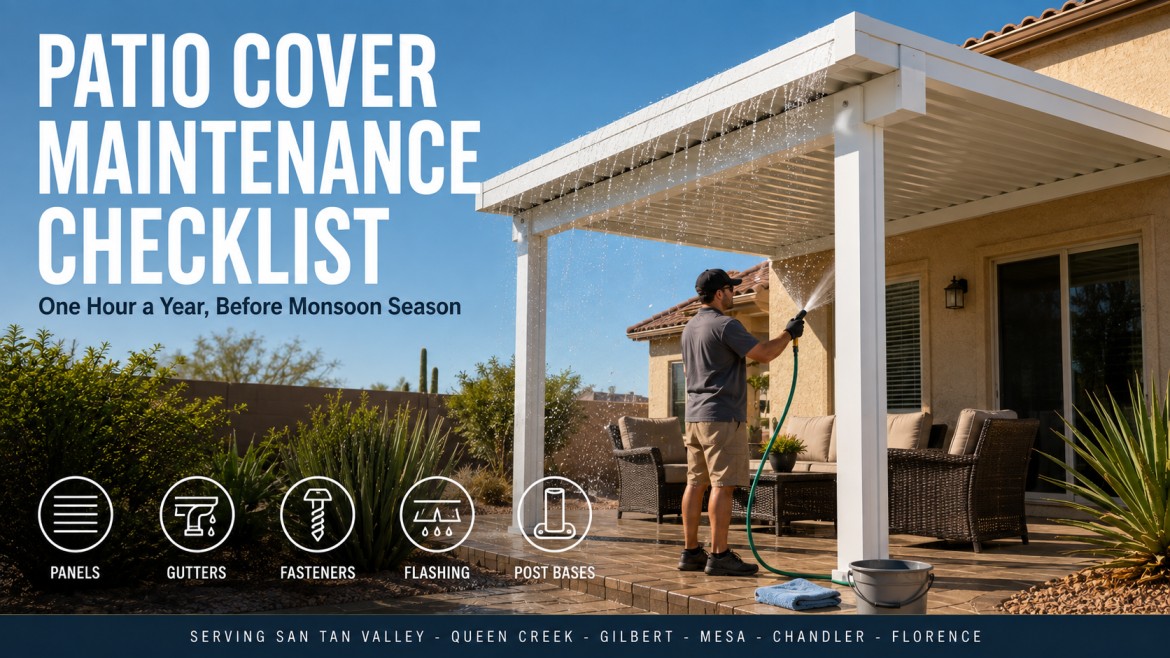
Quick Answer: A quality aluminum patio cover needs about an hour of attention a year. Rinse the panels, clear the gutters, check fasteners at the ledger and posts, inspect flashing where the cover meets the house, and look for standing irrigation water at the post bases. Do it in spring, before monsoon season.
How Much Maintenance Does an Aluminum Patio Cover Really Need?
Far less than most homeowners expect, which is precisely why it gets skipped entirely.
Aluminum patio covers do not rot, warp at 115 degrees, feed termites, or need refinishing on a schedule. The powder-coated finish is baked on rather than brushed, so it does not peel the way painted timber does. Compared with a wood structure that needs sanding and restaining every two to three years in this climate, the difference is measured in weekends.
What aluminum does need is inspection. Nothing about the material fails quietly, but the connections and the drainage can — and Arizona is unusually good at finding weak points. Monsoon winds test every fastener. Blowing dust packs grit into gutters and seams. Ultraviolet exposure degrades sealant long before it touches the metal.
So the honest framing is not "low maintenance means no maintenance." It is that one careful hour a year protects a structure built to last decades. Skipping it does not cause sudden failure; it lets small, cheap problems become large, expensive ones over about five years.
If your cover was professionally installed and permitted, most years the inspection finds nothing. That is the expected outcome, not a wasted afternoon.
What Should Be on Your Annual Patio Cover Checklist?
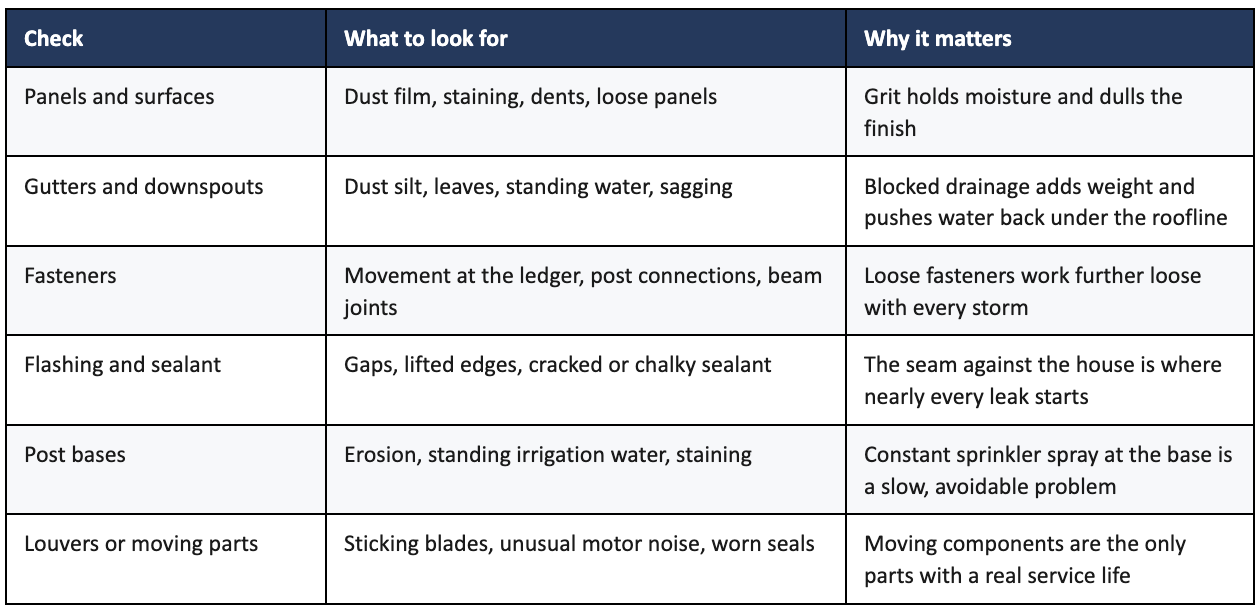
Six items, in the order that makes sense to do them.
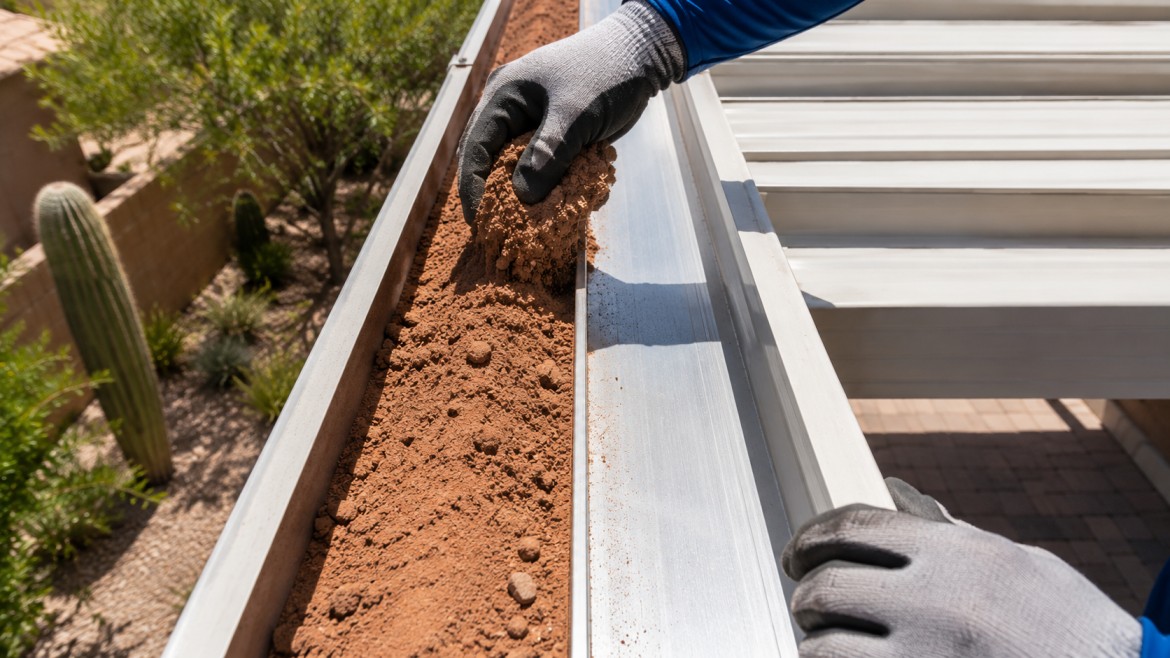
The cleaning itself is genuinely simple. Rinse the panels with a hose, wipe the posts and fascia with mild soap and water, and flush the gutters through. Skip pressure washers — high pressure can drive water past flashing and under panel seams, creating exactly the problem you were trying to prevent.
Avoid abrasive pads and solvent-based cleaners on powder coating. Mild detergent and a soft cloth handle everything an Arizona patio throws at a finish.
When Should You Inspect, and What Does the Arizona Calendar Look Like?
Timing matters more here than in most climates, because our year has two events worth planning around.
Spring — the main inspection. Late February through April is the window. Weather is comfortable enough to spend an hour outside, and you are ahead of monsoon season, which the National Weather Service defines as June 15 through September 30. Anything you find has time to be repaired before the first storm tests it.
Before a forecast storm — the two-minute version. Secure what is under the cover rather than inspecting the cover itself. Umbrellas, lightweight furniture, and shade sails become projectiles in a 60 mph gust and do more damage to a structure than the wind does. Retract awnings and close louvers per manufacturer guidance.
After a significant storm — the walk-around. Look for new gaps at the roofline, water staining on the underside of panels, debris in the gutters, and any post that no longer reads as plumb.
Autumn — the quick pass. Clear whatever the monsoon deposited in the gutters. Fifteen minutes.
Homeowners across Queen Creek, San Tan Valley, and Gilbert who keep to this rhythm rarely call us for anything urgent. The calls we do get almost always follow a first storm after several years of nobody looking.
Want more homeowner guidance like this? Browse our project stories and homeowner guides for seasonal advice across every structure we build.
Which Problems Should You Never Ignore?
Most findings are cosmetic. These five are not.
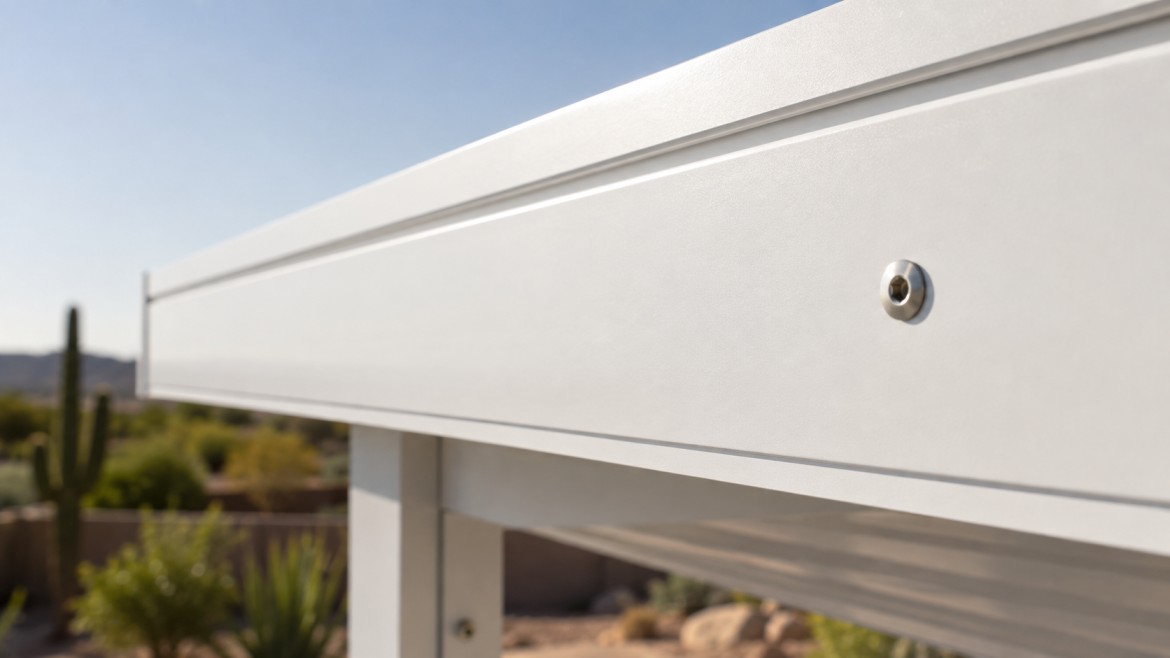
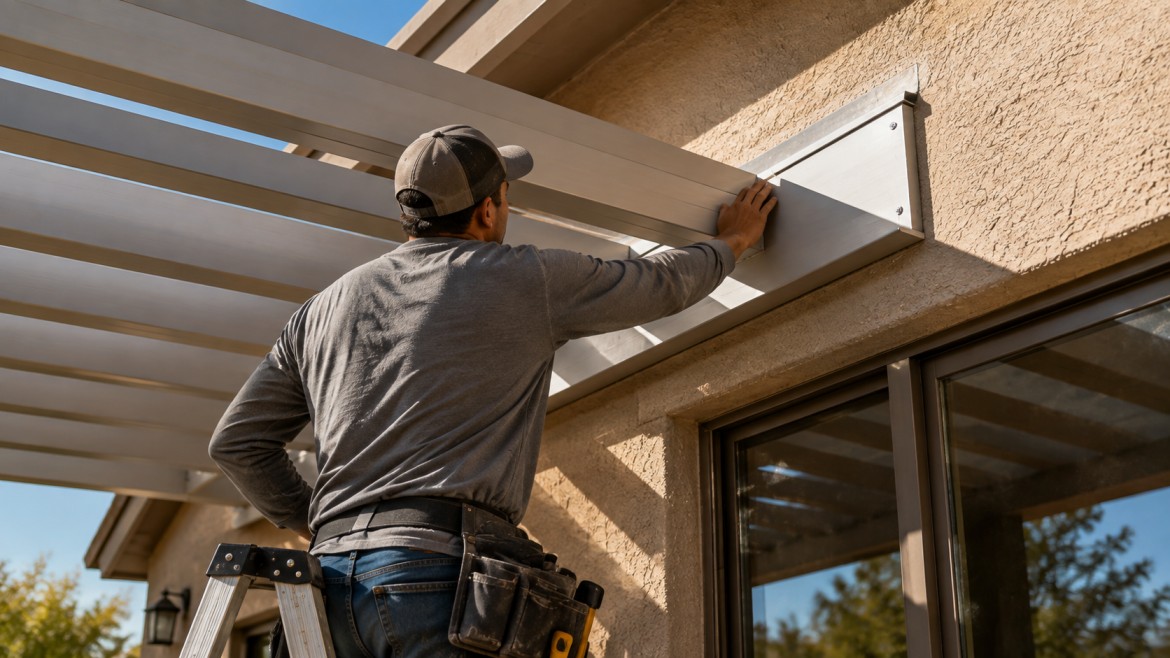
Movement at the ledger. If the connection where an attached patio cover meets the house shows any play, stop and call someone. This is the joint that carries the structure, and it is the failure we are called out to fix most often — usually because fasteners went into stucco rather than framing.
Water staining on the underside of panels. Means water is getting in somewhere upstream. It will not resolve itself and the source is rarely where the stain appears.
A post that is out of plumb. Suggests footing movement or erosion at the base. Structural, not cosmetic.
Standing water anywhere on the roof. Indicates a drainage failure or a sagging panel, and standing water adds load the structure was not designed to carry continuously.
Sprinkler spray hitting post bases daily. Cheap to fix by adjusting a head, expensive to ignore for a decade.
Worth saying plainly: none of these mean your cover is failing. They mean something needs attention now rather than after the next monsoon. Caught early, most are minor repairs.
When Should You Call a Professional Instead of Doing It Yourself?
Rinsing, wiping, and clearing gutters are homeowner jobs. Draw the line at four things.
Anything requiring a ladder above single-storey height, anything involving the ledger connection or flashing, any structural question about posts or footings, and any motor or louver mechanism issue. Flashing in particular looks simple and is not — sealant applied over a failed detail hides the problem rather than fixing it, and the leak returns worse.
This is also where warranty terms earn their keep. Coverage on both materials and labour turns a defect into a phone call rather than a negotiation. Before doing any repair yourself, check whether the work would affect that coverage — some warranties are specific about who may service the structure.
If you have inherited a cover with a house and have no idea whether it was permitted or professionally built, an inspection is worth more than a cleaning. A licensed patio cover contractor in Queen Creek can tell you in twenty minutes whether the ledger is fastened into structure, whether the footings look right, and whether the drainage was ever detailed properly.
Not sure what you are looking at? Schedule a free consultation and estimate and we'll assess your existing cover before the next storm does it for you.
Frequently Asked Questions
How much maintenance does an aluminum patio cover require?
About an hour a year. Rinse the panels, clear gutters, check fasteners and flashing, and look at the post bases. Aluminum patio covers need no refinishing, unlike wood structures that require sanding and restaining every two to three years in Arizona. Most annual inspections on a well-built cover find nothing at all.
Can I pressure wash my patio cover?
Better not to. High pressure can drive water past flashing and under panel seams, creating leaks where none existed. A garden hose, mild detergent, and a soft cloth clean an Arizona patio cover perfectly well. Avoid abrasive pads and solvent-based cleaners, which damage the powder-coated finish.
When is the best time to inspect a patio cover in Arizona?
Late February through April. The weather is comfortable and you are ahead of monsoon season, which runs June 15 through September 30. That timing means anything you find can be repaired before the first storm tests it. Add a quick gutter clear in autumn once the monsoon has passed.
What are the signs my patio cover needs professional repair?
Movement at the ledger where it meets the house, water staining on the underside of panels, a post out of plumb, or standing water on the roof. Any of these is structural rather than cosmetic. Sprinkler spray hitting post bases daily is also worth fixing — cheap now, expensive after a decade.
Does maintenance affect my patio cover warranty?
It can. Some warranties specify who may service the structure or require reasonable upkeep to remain valid. Check your terms before doing repairs yourself, particularly on flashing, ledger connections, or louver motors. Coverage on both materials and labour is worth confirming when you buy, not when you need it.
