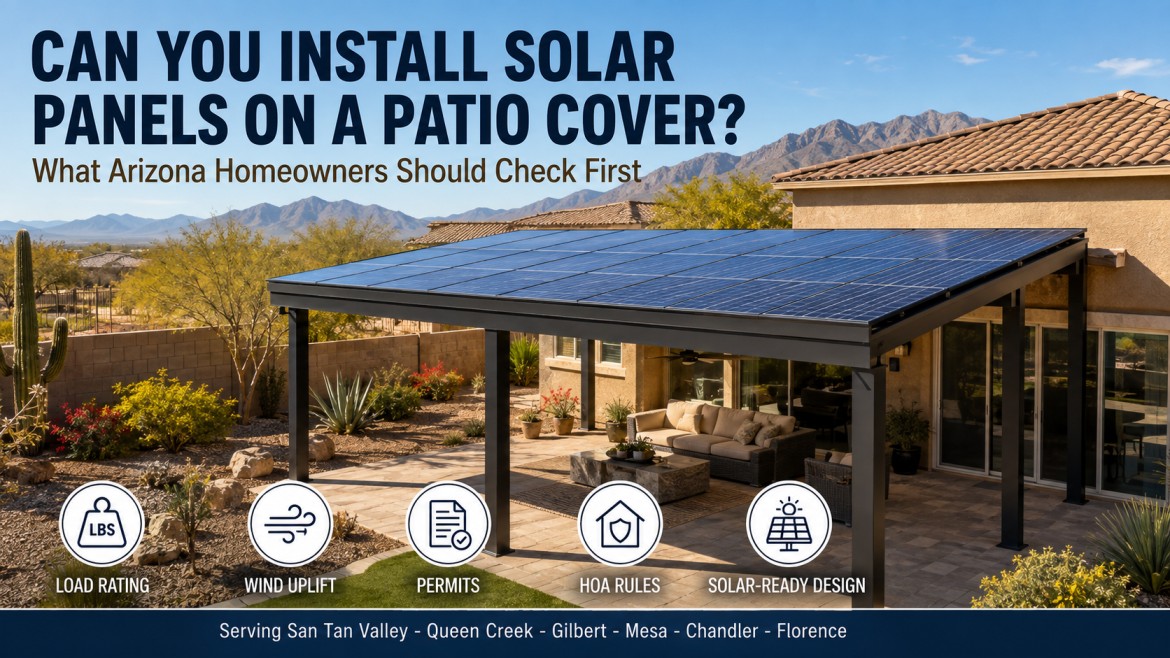
Can You Install Solar Panels on a Patio Cover? | AZ
Can You Install Solar Panels on a Patio Cover?
Quick Answer: Often yes, but not on just any cover. Solar panels weigh only about 2 to 4 pounds per square foot, well within a typical aluminum patio cover's load rating. The real questions are wind uplift, attachment points, and whether the structure was engineered for panels in the first place.
Can a Patio Cover Actually Support Solar Panels?
On paper the weight is a non-issue. Quality aluminum patio cover systems are commonly rated around 25 pounds per square foot of live load, and solar panels come in at roughly 2 to 4 pounds per square foot. The panels are not going to crush anything.
Weight is also not the question that matters. Three others do.
Wind uplift. This is the big one in Arizona. A panel array turns an open-framed roof into a large continuous surface, and wind moving across it generates lift. Municipalities across Maricopa County generally require these structures to be engineered for a 115 mph ultimate design wind speed, and adding panels changes the load case the original engineer signed off on.
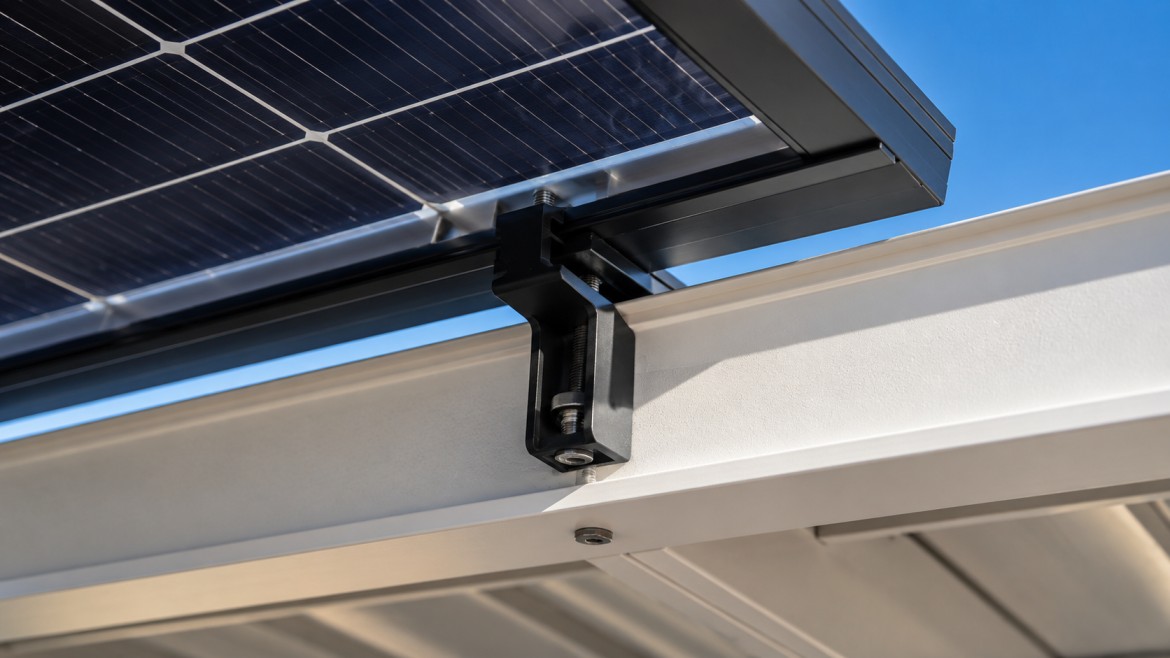
Point loads at the attachment. Panels do not spread their weight evenly. Rail-based mounting systems exist precisely to distribute load across multiple attachment points rather than concentrating it on a few rafters.
What the original permit covered. A cover permitted and inspected as a shade structure was not reviewed for a solar array. That is not a technicality — it is the difference between an engineered assembly and an assumption.
So the honest answer to "can my patio cover hold panels" is that a structural assessment answers it, not a weight chart. Some covers are ready. Some need reinforcement. Some should not carry panels at all.
What's the Difference Between a Solar-Ready Cover and a Retrofit?
Quite a lot, and it is worth understanding before you build anything.
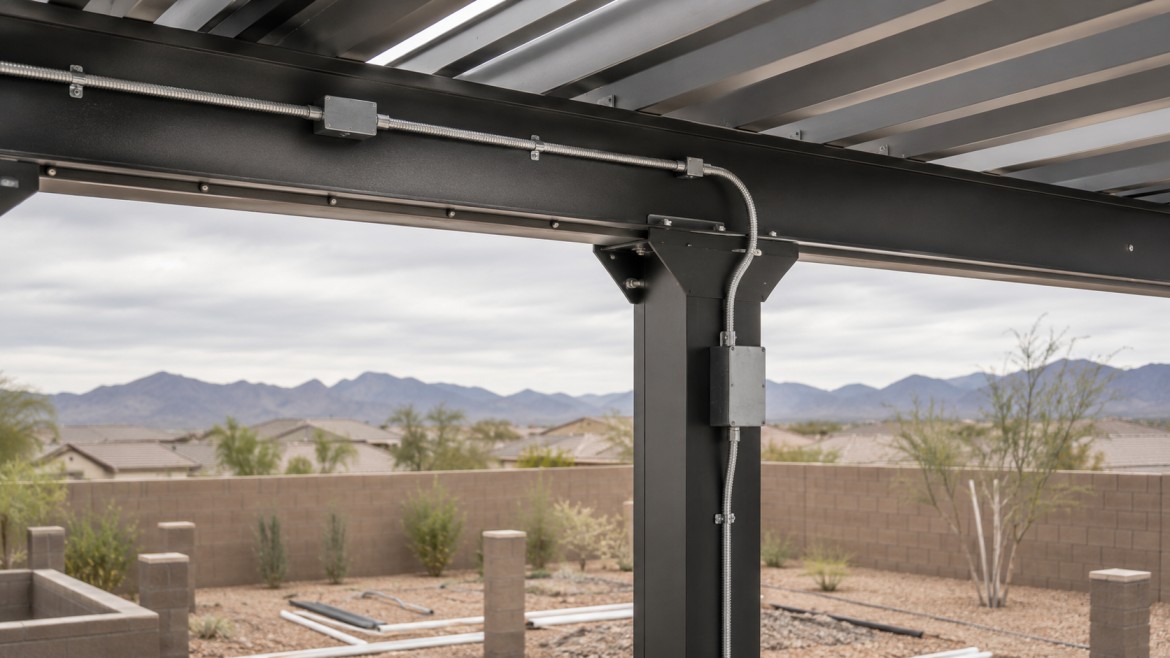
A solar-ready custom patio cover is engineered from the outset to carry an array. That means heavier beams or tighter post spacing where the loads demand it, pre-planned mounting points, a roof pitch chosen for solar exposure rather than only for drainage, and conduit pathways run inside the structure so no wiring is surface-mounted later.
A retrofit adds panels to a structure built for shade. Sometimes that works fine after an engineer reviews it. Sometimes it requires reinforcement — additional posts, upgraded fasteners, a strengthened ledger connection. And sometimes the honest recommendation is to put the panels on the house roof instead.
The cost difference is real but smaller than people assume. Building solar-ready costs modestly more than a standard cover. Retrofitting an existing structure that needs reinforcement can cost considerably more than the difference would have been.
This is the single most useful thing to know if you are planning both projects: if solar is anywhere in your five-year plan, say so when you are designing the aluminum patio cover. Engineering for it upfront is cheap. Discovering later that it was not is not.
What Permits and Codes Apply to Solar on a Patio Cover?
More than for the cover alone, because you are now dealing with two systems.
The structure follows the usual path. Any cover attached to the home requires a building permit regardless of size, and freestanding structures generally require one at 200 square feet or larger. Adding an array typically means a revised structural review, and some building departments require a stamped engineering report specific to the panel loading.
The electrical side brings its own requirements. Solar installations must comply with National Electrical Code Article 690, and current code requires rapid shutdown capability so firefighters can de-energise the array. That is a separate electrical permit and a separate inspection from the structural work.
Coordination is where projects go wrong. Your patio cover contractor and your solar installer need to be talking to each other before either one starts, because the mounting method, the conduit path, and the structural review all sit at the seam between the two trades. When nobody owns that seam, the homeowner ends up mediating between two companies who each assumed the other had it covered.
Planning a cover and thinking about solar later? Browse our homeowner guides and project stories to see how we approach structures built for what comes next.
Does Your HOA Have a Say in Arizona?
Less than they might tell you, and this is worth knowing before you accept a refusal.
Arizona has solar access provisions that limit how far a homeowners association can go in restricting solar devices on a property. Associations generally retain the ability to impose reasonable aesthetic conditions — placement, screening of conduit, colour of visible hardware — but blanket prohibitions on solar do not hold up the way they might for a paint colour.
That said, the patio cover itself is a different matter entirely. The structure is a permanent architectural addition and remains fully subject to your community's architectural review: colour, roofline, height, visibility from the street. Approval of the solar array does not carry the structure with it.
The practical approach across Queen Creek, San Tan Valley, and Gilbert communities is to submit both together with drawings showing the finished appearance. Committees respond better to a complete picture than to a structure application followed by a surprise array three months later.
If your association is pushing back on the solar element specifically, it is worth reading the statute rather than taking the committee's summary of it. Legal questions about your particular situation belong with an attorney, not a contractor — but you should at least know the protection exists.
Is a Patio Cover the Right Place for Your Solar Panels?
Sometimes it is the best option available, and sometimes the house roof is simply better.
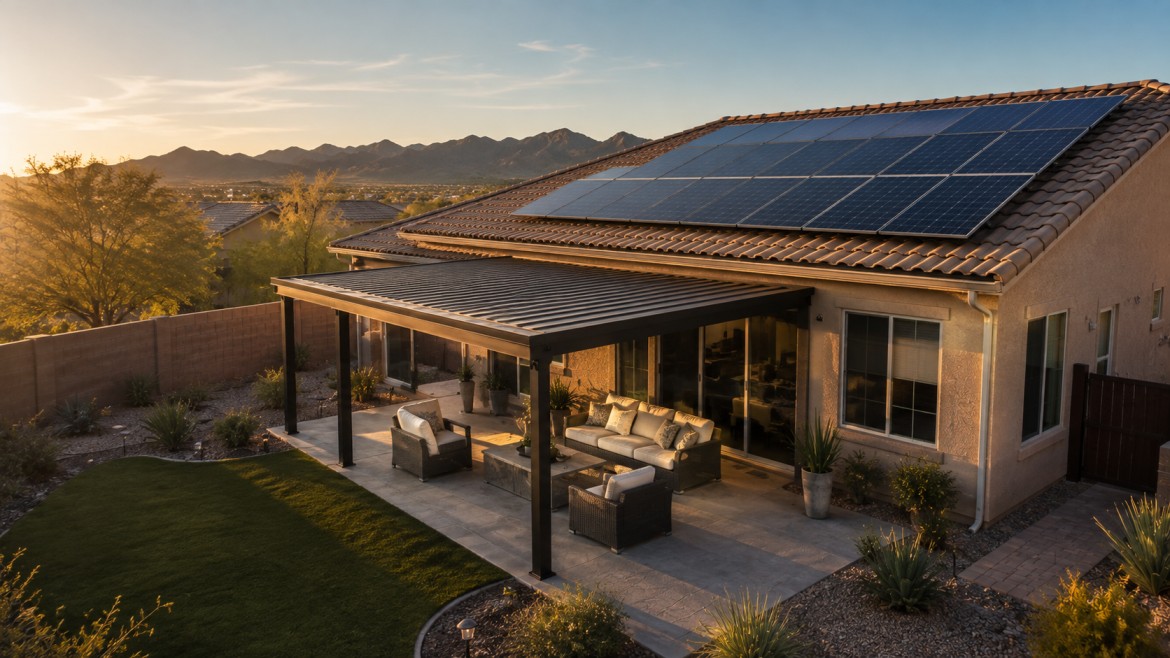
A patio cover wins when your main roof is unsuitable — heavily shaded, poorly oriented, aging, or already crowded. It also wins when you want the array visible and deliberate rather than hidden, or when a freestanding structure lets you point panels at a better angle than any roof plane offers. Arizona installation costs have run below the national average, which helps the arithmetic either way.
The house roof usually wins when it has good south or west exposure and plenty of unshaded area. It is already engineered to carry loads, the mounting methods are thoroughly standardised, and installers work on roofs every day.
There is one trade-off specific to covers that nobody mentions upfront: a solid panel array over your patio is a permanent full-shade roof. That is often welcome in an Arizona summer, but it removes the option of winter sun reaching the patio. If year-round flexibility matters, a louvered patio cover and a roof-mounted array may serve you better than combining the two.
Thinking about a structure now with solar later? Schedule a free consultation and estimate and we'll design it to carry what you plan to add.
Frequently Asked Questions
How much weight can a patio cover hold for solar panels?
Quality aluminum systems are commonly rated around 25 pounds per square foot of live load, and solar panels weigh roughly 2 to 4 pounds per square foot. Weight is rarely the limiting factor. Wind uplift on the array and the concentration of load at attachment points are the real engineering questions, and both need professional assessment.
Do I need a new permit to add solar panels to an existing patio cover?
Usually yes, and often two. Adding an array typically triggers a revised structural review, and some building departments require a stamped engineering report for the panel loading. The electrical work needs its own permit under National Electrical Code Article 690, including rapid shutdown capability, with a separate inspection.
Can my HOA stop me from putting solar on a patio cover in Arizona?
Arizona solar access provisions limit how far an association can restrict solar devices, though reasonable aesthetic conditions are generally still allowed. The patio cover itself remains fully subject to architectural review as a permanent structure. Submit both together with drawings, and consult an attorney for questions about your specific situation.
Is it cheaper to build a solar-ready patio cover or retrofit later?
Building solar-ready costs modestly more than a standard cover. Retrofitting a structure that turns out to need reinforcement — extra posts, upgraded fasteners, a strengthened ledger — often costs considerably more than that original difference. If solar is in your plans at all, mention it during design.
Will solar panels on my patio cover block all the sunlight?
Yes. A panel array creates a permanent solid roof over that area, which is welcome in July and less so in January when low winter sun would otherwise warm the patio. If year-round flexibility matters to you, consider a louvered patio cover with the array mounted on the house roof instead.
