
HOA Patio Cover Approval in Arizona: What to Know
How to Get HOA Approval for a Patio Cover in Arizona
Quick Answer: Getting HOA approval for a patio cover usually means submitting plans that show the structure’s location, dimensions, height, materials, colors, and appearance. Arizona homeowners may also need a separate city or county building permit. HOA approval and government permitting are different processes, so it is best to address both before construction begins.
What Does an HOA Look for When Approving a Patio Cover?
If you live in a planned community in Queen Creek, San Tan Valley, Gilbert, Chandler, or another East Valley neighborhood, your HOA may have a say in what you build in the backyard. A patio cover can be perfectly legal under local building codes and still be rejected by an architectural review committee if the design does not meet the community's rules.
That distinction catches homeowners off guard. A city or county reviewer is primarily concerned with safety, structural requirements, setbacks, and code compliance. An HOA is generally concerned with appearance and consistency within the neighborhood.
The committee may review the proposed patio cover for its height, roof style, color, materials, placement, visibility, and relationship to the existing home. Some communities have very specific architectural standards, while others give the committee more discretion.
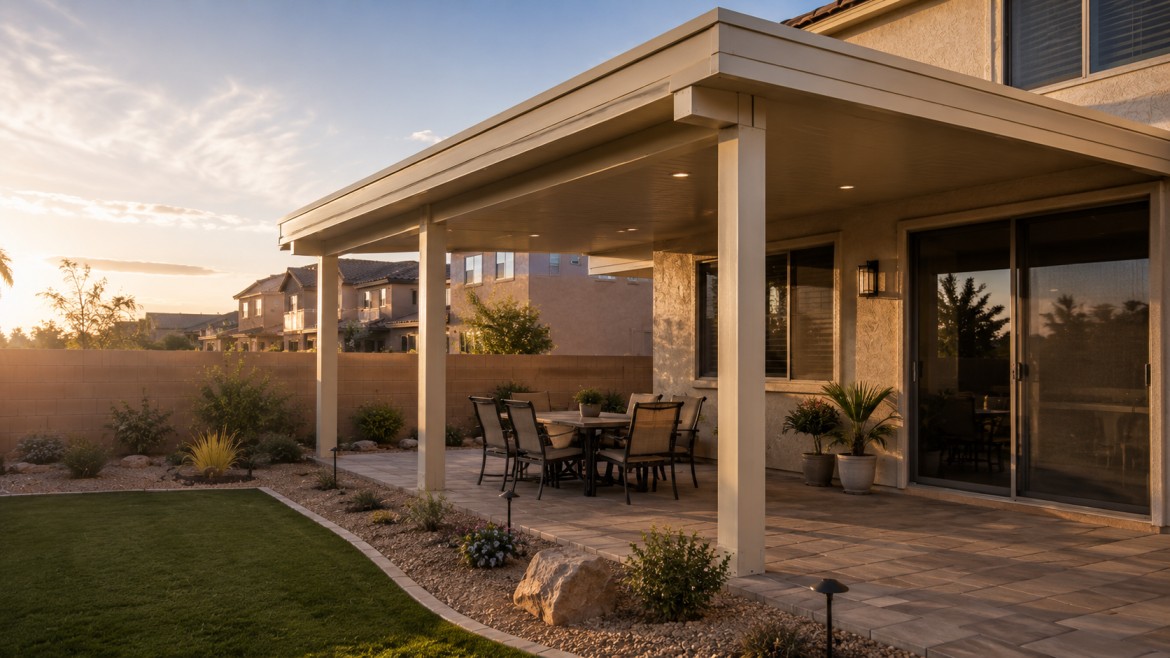
For example, an aluminum patio cover that matches the home's existing trim and roofline may be easier to approve than a structure that looks completely different from the house. A freestanding structure may also receive more scrutiny if it can be seen above a block wall or from a neighboring property.
The key is to find your community's architectural guidelines before choosing the design. Do not assume that because another homeowner has a particular patio cover, yours will automatically qualify.
This is especially important in newer master-planned communities where exterior modifications are often reviewed for consistency.
If you're still deciding which style fits your home, our guide to [the best patio cover designs for Arizona backyards] can help you compare the major options before preparing an HOA submission.
What Documents Do You Need for HOA Patio Cover Approval?
The exact requirements vary by community, but most HOA architectural applications need enough information for the reviewer to understand exactly what you plan to build.
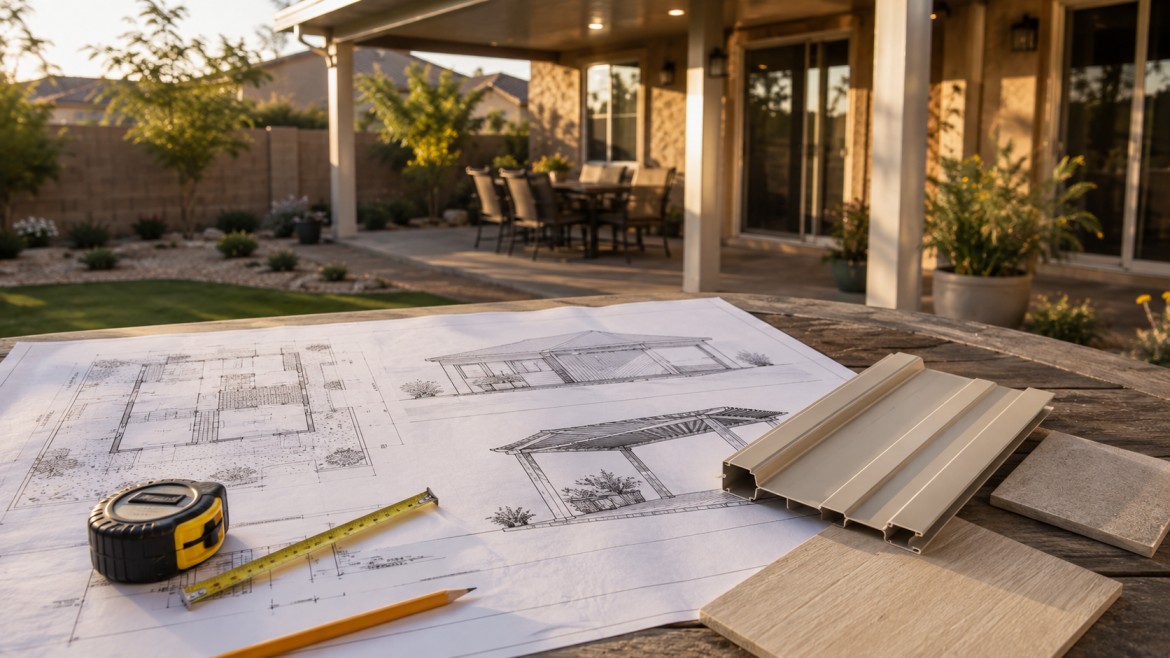
A typical HOA patio cover approval package may include a site plan showing where the structure will sit in relation to the house and property lines. You may also need dimensions, elevations, construction drawings, material information, colors, and photographs or renderings showing the proposed appearance.
The more complete the submission, the fewer questions the committee has to send back.
For a homeowner, that matters because HOA review can become frustrating when an application is missing basic information. A committee may request clarification about the height, distance from the property line, roof pitch, attachment method, or exterior finish before it can approve the project.
Color is another common consideration. An HOA may specify approved exterior colors or require the patio cover to coordinate with the home's existing stucco, fascia, trim, or roofing.
Material can matter as well. Aluminum patio covers are popular in Arizona because they provide shade and weather protection without the rot, insects, and repeated refinishing associated with many wood structures. But the fact that aluminum is practical does not automatically mean every color or profile is acceptable to your HOA.
A professional installer can help prepare the information needed for architectural review instead of leaving you to interpret technical drawings on your own.
It is also worth checking whether the HOA requires neighboring-property notification, owner signatures, photographs, a fee, or additional documentation. Requirements can change from one community to another.
Before submitting anything, compare the proposed design against the community's current guidelines rather than relying on an older approval or a neighbor's project.
For the separate government permitting side, see our detailed guide on [whether you need a permit for a patio cover in Arizona]. HOA approval does not replace a building permit when one is required.
How Long Does HOA Approval Take for a Patio Cover?
The timeline depends heavily on the community and its review schedule.
Some HOAs process architectural applications relatively quickly. Others have scheduled committee meetings, which can add significant time if your submission misses the next review date. A small correction can create another delay if the application has to return to the committee.
That is why homeowners should start the HOA process before ordering materials or scheduling installation.
A practical approach is to work backward from the date you would like construction completed. Allow time to finalize the design, prepare the HOA package, receive architectural approval, obtain any required city or county permit, order materials, and schedule installation.
Do not treat HOA approval and permitting as the same step.
In many East Valley communities, you may need both. The local jurisdiction determines whether the proposed structure meets building and zoning requirements, while the HOA determines whether the modification complies with the community's governing documents and architectural standards.
Running the processes in parallel can sometimes reduce the overall wait.
It also helps to submit a complete application the first time. A drawing that clearly shows dimensions, roof height, location, colors, and materials gives the reviewer considerably more information than a basic sketch.
For homeowners in San Tan Valley, there is another consideration: the exact government jurisdiction can depend on the property's location. Some areas fall under Pinal County rather than a municipality, so the permitting authority should be confirmed before assuming the rules for a nearby city apply.
If your project is being planned around Arizona's summer weather, remember that permitting and HOA approval are only part of the planning process. Our guide on [how patio covers handle Arizona monsoon conditions] explains why engineering, footings, connections, and drainage deserve attention before construction.
Can an HOA Deny a Patio Cover in Arizona?
An HOA can reject or request changes to a proposed patio cover when the application does not comply with the community's governing documents or architectural standards. That does not necessarily mean the project cannot be built.
Often, the issue is something specific that can be corrected.
The requested change might involve the color, roof style, height, placement, visibility, materials, or relationship to an existing structure. A homeowner may be able to revise the design and resubmit it.
This is one reason it is risky to purchase materials before receiving approval. You do not want to discover after the fact that the patio cover you ordered has a roof profile or finish the community does not permit.
Setbacks can also become confusing because there are potentially two different sets of requirements.
The city or county may have zoning setbacks governing how close the structure can be to property lines. Your HOA may impose additional restrictions or architectural requirements. Meeting one does not automatically mean you meet the other.
The same applies to height. A structure can comply with the local building code but still create an HOA issue if it is considered too visually prominent within the neighborhood.
If an application is denied, read the reason carefully before assuming the entire project is off the table. A specific design adjustment may resolve the objection.
And if you believe the decision conflicts with the community's governing documents, review the association's appeal or reconsideration procedure. Keep the discussion focused on the written rules, the submitted plans, and the reason for the decision.
This is also where experienced local installation matters. A contractor familiar with East Valley communities can help identify potential approval problems before the application is submitted.
For another practical homeowner consideration, see our guide to [patio cover costs in Queen Creek]. The design choices that affect HOA approval can also affect the project's overall price, particularly when you move from a basic aluminum structure to insulated or louvered systems.

How Can You Make a Patio Cover HOA Approval Easier?
The easiest HOA application is usually the one that gives the reviewer very little to question.
Start with the community's current architectural guidelines. Confirm the acceptable colors, materials, height limitations, placement requirements, and application process before choosing a final design.
Then make sure the proposed patio cover fits the house.
In Arizona neighborhoods, a structure that looks like it was designed as part of the original home generally has an easier visual argument than one that appears added as an afterthought. Matching the existing trim, coordinating the roofline, and keeping the structure proportional to the backyard can make a significant difference.
Think about visibility, too. A patio cover that is barely visible behind a block wall may be treated differently from a tall structure that is prominent from neighboring yards or the street.
Next, prepare a complete application.
Include accurate measurements, the proposed location, materials, colors, elevations, and any drawings the HOA requests. If the community requires photographs or product information, include them rather than waiting for the committee to ask.
Finally, do not start construction until the necessary approvals are in place.
A permitted project can still create an HOA dispute, and an HOA-approved project can still require a government permit. The safest path is to satisfy both requirements before work begins.
That is particularly important for permanent structures such as patio covers, pergolas, and other backyard improvements. Good planning at the beginning is much less expensive than redesigning or modifying a structure after installation.
If you're considering a project in Queen Creek, San Tan Valley, Gilbert, Mesa, Chandler, Florence, or the surrounding East Valley, Best Choice Exteriors can help you evaluate the design, permitting considerations, and installation requirements before construction begins.
And because Arizona's climate creates its own construction considerations, homeowners planning larger exterior improvements can also review our [Arizona fire-hardening guide] before finalizing their outdoor project.
A patio cover should make your backyard easier to use, not create another problem to manage. Starting with the HOA requirements gives you a much better chance of getting the design you want without unnecessary delays.
Frequently Asked Questions
How do I get HOA approval for a patio cover in Arizona?
Start by obtaining your community's current architectural guidelines and application requirements. Prepare a site plan, dimensions, elevations, materials, colors, and any required photographs or drawings. Submit the complete package before purchasing materials or beginning construction. Remember that HOA approval is separate from any city or county building permit your patio cover may require.
What does an HOA look for in a patio cover?
Most HOA reviews focus on appearance and compatibility with the neighborhood. Common considerations include height, location, roof style, color, materials, visibility, and how the structure relates to the existing home. Requirements vary by community, so homeowners should review their association's current architectural standards rather than relying on what a neighbor previously built.
Can an HOA deny a patio cover in Arizona?
An HOA may reject a proposed modification when it does not comply with the association's governing documents or architectural standards. A denial does not always mean the project is impossible. In many cases, homeowners can modify the color, height, placement, materials, or design and resubmit the application. Follow the community's written appeal or reconsideration process if necessary.
Do I need both HOA approval and a building permit for a patio cover?
Often, yes. They serve different purposes. The city or county evaluates building and zoning requirements, while the HOA reviews compliance with community rules. A patio cover can receive a building permit and still require HOA approval. Conversely, HOA approval does not eliminate a government permit requirement when local regulations require one.
How long does HOA approval take for a patio cover?
There is no universal timeline because every association operates differently. Some review applications quickly, while others rely on scheduled architectural committee meetings. Missing a meeting or submitting incomplete information can add weeks. Starting early and submitting complete plans can reduce unnecessary delays, especially when HOA approval must be coordinated with the local building permit process.
