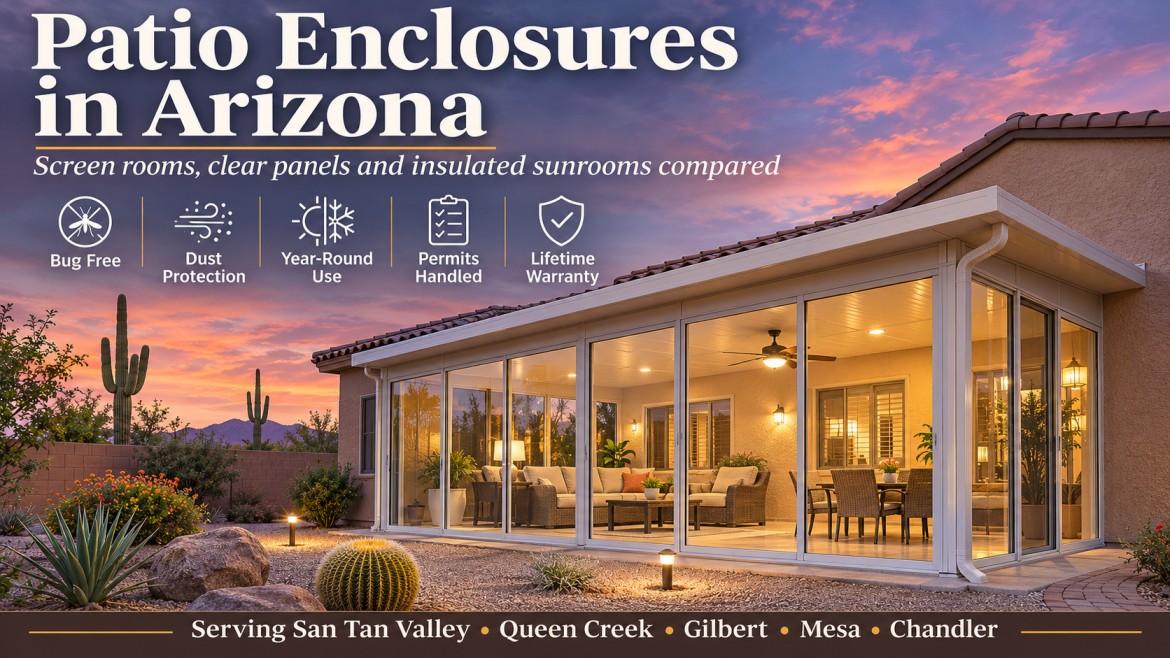
Patio Enclosures in Arizona: Screen Rooms, Clear Panels and Insulated Sunrooms Compared
Quick Answer: Patio enclosures in Arizona range from screen rooms that keep out bugs, to clear-panel enclosures that block wind and dust, to fully insulated sunrooms you can use most of the year. Screens cost the least but don't stop heat or dust. Insulated sunrooms cost the most but handle desert summers best. Choose by how you'll use it.
Many East Valley homeowners reach a point where a covered patio isn't quite enough. The shade is great, but dust storms coat the furniture, bugs come out at dusk, and wind makes winter evenings chilly. Enclosing the patio solves some or all of that, depending on the type you choose. The trouble is that "patio enclosure" can mean very different things. Here's how the main options compare for homeowners in San Tan Valley, Queen Creek, Gilbert, Mesa, and Chandler.
What Are the Main Types of Patio Enclosures?
Most enclosures fall into three groups, from simplest to most complete:
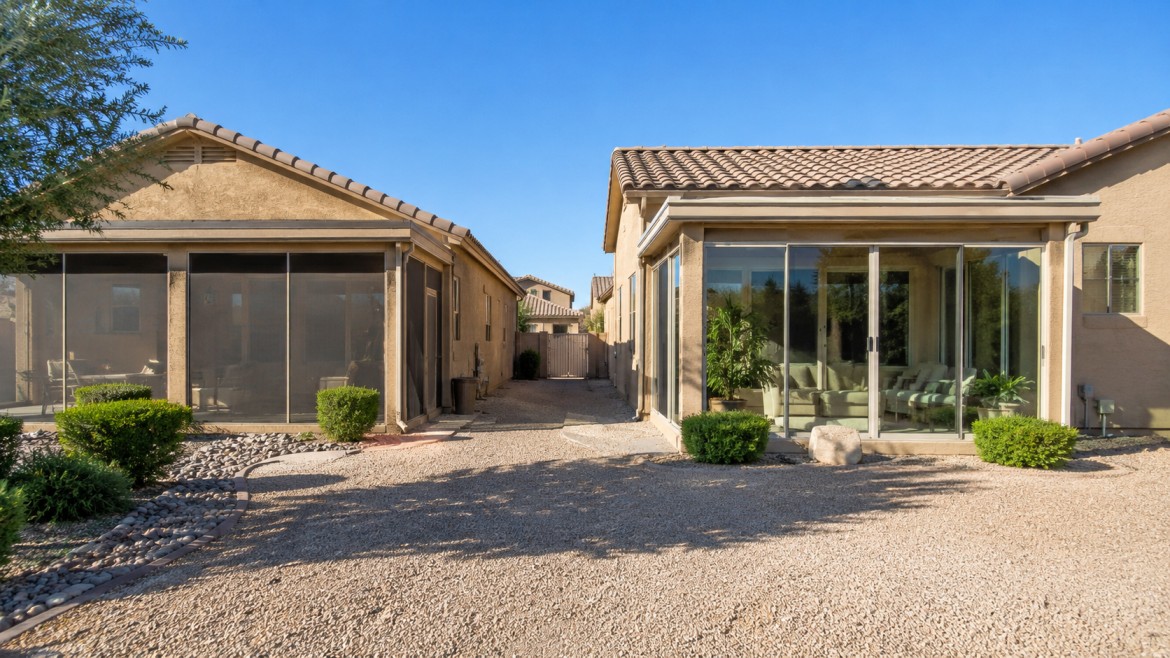
Screen rooms: mesh panels added to the sides of a covered patio. They keep out insects and let air flow, but don't block wind, dust, or heat.
Clear-panel enclosures: vinyl or acrylic window panels, sometimes removable or slide-open, that block wind, dust, and light rain while keeping the view.
Insulated sunrooms: a true room with an insulated roof, energy-efficient glass, and a door. In Arizona these are often called Arizona rooms.
There are also hybrid setups. Some homeowners add clear panels on the windy west side and screens on the rest, or install drop-down shades that roll up in spring and close during dust season. Hybrids can be a smart middle ground, but they work best when planned as one design rather than added piece by piece over the years.
Each step up adds protection and comfort, along with cost and permit requirements. A screen room feels like a patio with walls, while an insulated sunroom feels like part of the house. Our Arizona room guide explains how the local term fits in.
How Do Patio Enclosures Handle Arizona Heat, Dust and Bugs?
Desert conditions test each type differently:
Concern | Screen room | Clear-panel enclosure | Insulated sunroom |
|---|---|---|---|
Bugs | Blocks them | Blocks them | Blocks them |
Dust and wind | Little protection | Good protection | Full protection |
Summer heat | Relies on roof shade and airflow | Can trap heat without ventilation | Best, with insulated roof and efficient glass |
Winter comfort | Limited | Good on sunny days | Best, especially with a heater |
Monsoon rain | Lets blown rain in | Blocks most rain | Fully sealed |
Heat is the big one in Arizona. A clear enclosure on a west-facing patio can get uncomfortably warm in the afternoon unless it has vents, openable panels, or exterior shading. An insulated roof matters most of all, because the sun beating down on the roof is the biggest source of heat. Our guide to insulated vs. standard roof panels explains why, and our article on energy-efficient awnings covers shading the glass.
Which Patio Enclosure Fits the Way You Use Your Space?
The best option depends on what you want the space to do:
Evening relaxing without bugs: a screen room is often enough, especially with a ceiling fan.
Keeping furniture clean after dust storms: a clear-panel enclosure or sunroom.
Using the space in winter: clear panels or a sunroom, with a heater for cool nights.
A room you use most of the year: an insulated sunroom, with cooling for summer.
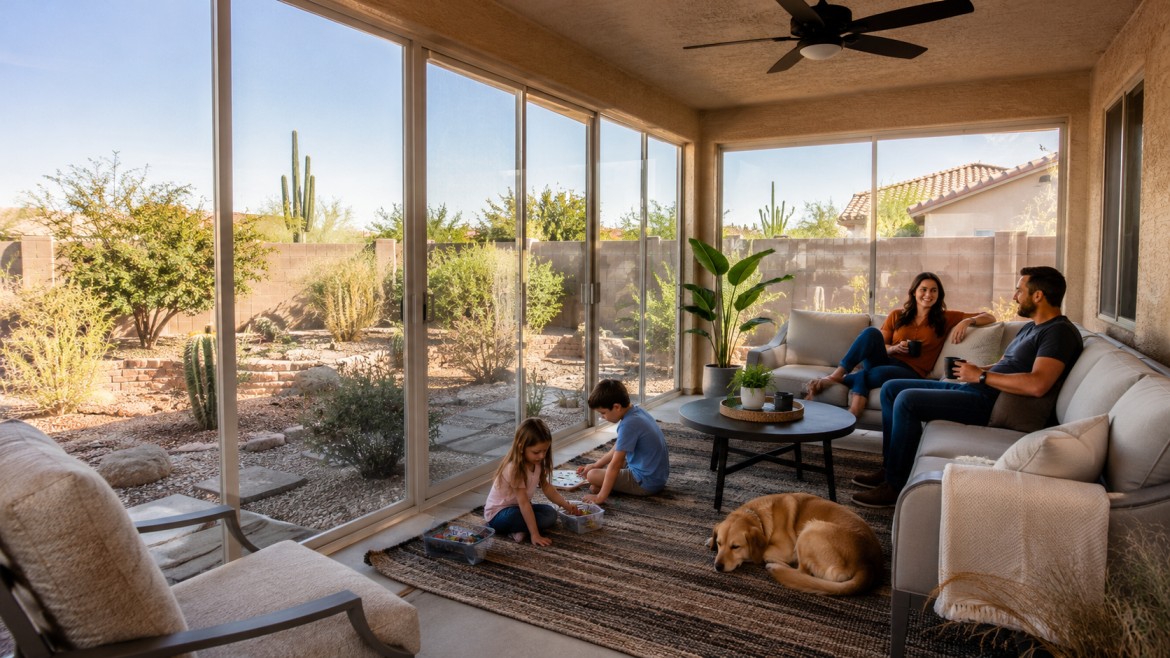
Pets and young kids: any enclosed option creates a safe, contained space; a sunroom keeps it comfortable longest.
A home office, hobby room, or plant room: an insulated sunroom.
Think about the next five years, not just next summer. A family with young kids may want a contained play space now and a home office later. A retired couple may want a winter room first and a cooled summer room down the road. Choosing an enclosure that can grow with those plans saves money on a second project.
Some homeowners start with an open patio cover and enclose it later. If that's your plan, mention it during design so the roof and posts can support walls in the future. Our comparison of sunrooms vs. patio covers can help you decide where to start.
What Should You Check Before Enclosing an Existing Patio?
Not every patio cover is ready to be enclosed. Before adding walls, a contractor should check:
The roof: whether it can carry the added load and should be upgraded to an insulated roof.
The posts and footings: whether they can support wall framing and resist wind.
The slab: whether it's level, sound, and sloped so water drains away from the house.
The house connection: whether the attachment is sound and properly sealed.
Existing permits: whether the original cover was permitted.
Permit rules usually get stricter as an enclosure becomes more like a room. A screen room may be reviewed differently from an insulated sunroom, which is typically treated like a home addition. In HOA communities, any enclosure usually needs architectural approval. Learn more in our guides to permits in Arizona and HOA approval.
How Do Patio Enclosure Costs Compare?
Costs rise with protection and comfort. Screen rooms are generally the most affordable, clear-panel enclosures sit in the middle, and insulated sunrooms are the largest investment because they add an insulated roof, glass, doors, and often electrical work and cooling.
Other factors that affect price include size, whether the existing roof and slab can be reused, door and window choices, electrical work, permits, and HOA requirements. Comparing options side by side in one estimate makes the trade-offs clear. For a closer look at the top tier, read our sunroom cost guide, and see financing options if you'd like to spread out the cost.
Best Choice Exteriors is a veteran-owned company licensed under ROC#347963, building sunrooms, patio covers, pergolas, and awnings for homeowners within about 30 miles of San Tan Valley, including Queen Creek, Gilbert, Mesa, and Chandler. If you're comparing patio enclosure options near me, explore our work on the Best Choice Exteriors homepage or schedule a free consultation and estimate.
Frequently Asked Questions
What is the cheapest way to enclose a patio in Arizona?
A screen room is usually the most affordable way to enclose a covered patio. It keeps out bugs and keeps airflow, but it won't block dust, wind, or heat. If you need protection from dust storms or want to use the space in winter, a clear-panel enclosure or insulated sunroom is the better long-term value.
Can you use an enclosed patio in an Arizona summer?
It depends on the type. Screen rooms rely on shade and airflow, so fans help a lot. Clear-panel enclosures can trap heat without vents. An insulated sunroom with efficient glass, exterior shading, and cooling is the most comfortable option for patio enclosures in Arizona during summer.
Do I need a permit to enclose my patio?
In most cases, yes, and the rules usually get stricter as the enclosure becomes more like a room. Insulated sunrooms are typically treated like additions, with plans and inspections. HOA approval is often required too. Your contractor should confirm the rules for your city before work begins.
Is a screen room or a sunroom better for dust storms?
A sunroom is far better. Screens let fine dust pass through during monsoon dust storms, while a sunroom's glass walls and sealed door keep it out. A clear-panel enclosure falls in between. If dust is your main concern, choose an option with solid, sealed panels.
Who builds patio enclosures and sunrooms near me?
Best Choice Exteriors designs and builds insulated sunrooms and patio covers for homeowners in San Tan Valley, Queen Creek, Gilbert, Mesa, Chandler, and nearby communities. We're veteran-owned, licensed under ROC#347963, and offer lifetime material and labor warranties. See our guide to sunroom additions in Mesa.
