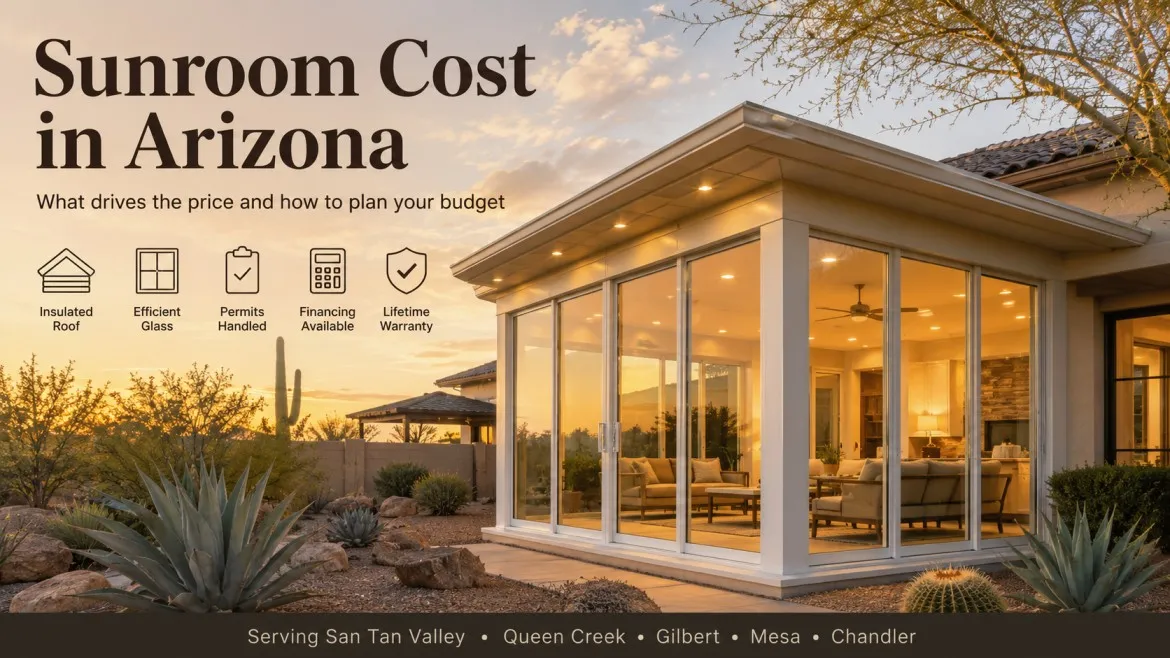
Sunroom Cost in Arizona: What Drives the Price and How to Plan Your Budget
Quick Answer: Sunroom cost in Arizona depends mainly on size, roof type, glass, and whether you build new or enclose an existing patio. Insulated roofs and energy-efficient windows cost more but keep the room usable in desert heat. Electrical work, cooling, permits, and HOA requirements also affect the total. A free in-home estimate gives the most accurate price.
A sunroom is one of the biggest outdoor-living upgrades an Arizona homeowner can make. It adds a bright, protected room for reading, entertaining, hobbies, or watching the grandkids play in the yard, without the dust, bugs, and wind. It's also a bigger investment than a patio cover or awning, so most homeowners start by asking what drives the price. This guide breaks down the main sunroom cost factors for homes in San Tan Valley, Queen Creek, Gilbert, Mesa, and Chandler, so you can plan a budget with confidence.
What Determines the Cost of a Sunroom in Arizona?
Every sunroom is custom to the home, so there's no single price tag. Instead, a handful of decisions shape the total:
Size: larger rooms need more roofing, glass, framing, and labor.
Roof type: insulated roof panels cost more than basic covers but make a huge difference in comfort.
Windows and doors: energy-efficient glass, sliding doors, and operable windows add cost and comfort.
Starting point: a new build from the slab up is priced differently from enclosing an existing covered patio.
Electrical and cooling: outlets, lights, ceiling fans, and any dedicated cooling add to the project.
Site conditions: roof tie-ins, two-story homes, and slab repairs can change the scope.
Permits and HOA: fees, drawings, and review requirements vary by city and community.
Here's a common example. Two neighbors in Gilbert both want a 12-by-16 room off the back of the house. One already has a solid, permitted patio cover in good shape, and the other has an old lattice cover that needs to come down. Even though the rooms end up the same size, their quotes will look different because the starting points are different. That's why comparing your quote to a neighbor's rarely tells the full story.
Understanding these factors helps you compare quotes fairly and decide where to spend and where to save. If you're still deciding between enclosing a space or keeping it open, read our comparison of sunrooms vs. patio covers in Arizona.
How Do the Roof and Glass Affect Sunroom Price and Comfort?
In Arizona, the roof and glass matter more than almost anything else. They decide whether your sunroom is comfortable in June or only in January.
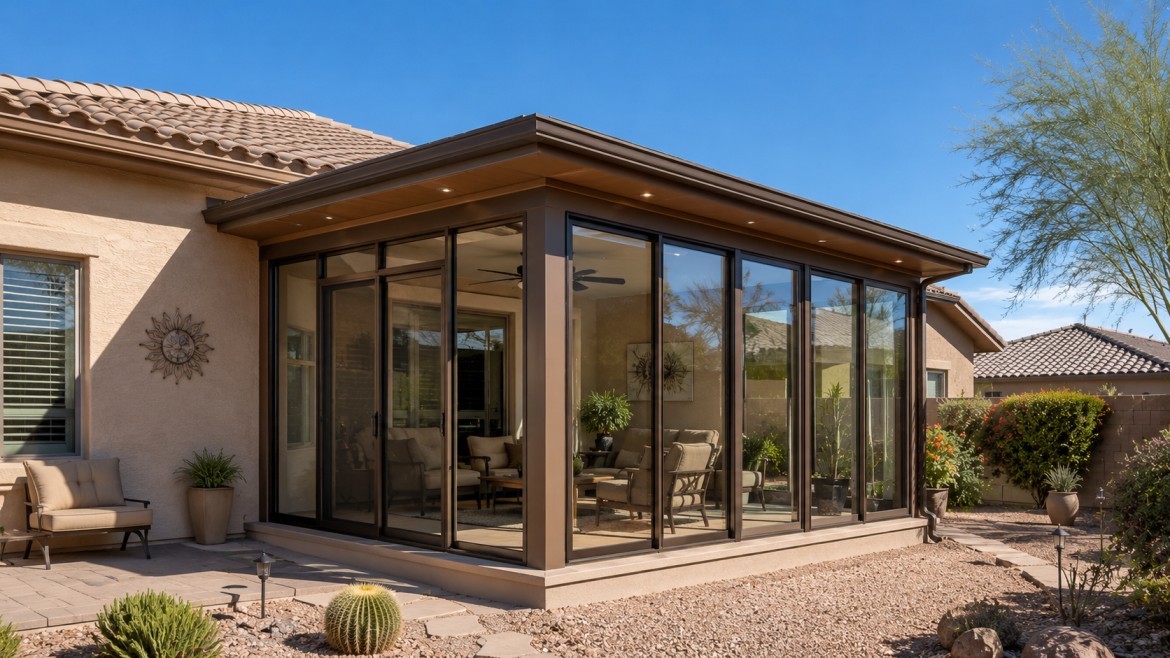
An insulated sunroom roof uses foam-core panels that block radiant heat from above, which is the biggest source of heat gain. It costs more than a thin, uninsulated roof, but it also allows recessed lighting and keeps the room quieter during monsoon rain. Our guide to insulated vs. standard roof panels explains the difference.
Glass choices work the same way. Low-E or tinted, energy-efficient windows reduce solar heat while keeping your view, but they cost more than basic glass. West-facing walls may also benefit from exterior shading, like an awning, to keep afternoon sun off the glass. Our article on window awnings vs. solar screens covers those options.
Spending more on the roof and glass usually pays off. A cheaper room that overheats every summer often goes unused for months, which defeats the purpose of building it.
Is It Cheaper to Enclose an Existing Patio Cover?
Sometimes, but not always. Enclosing an existing covered patio can reuse the slab and, in some cases, part of the structure. That can reduce material and labor compared to building from scratch.
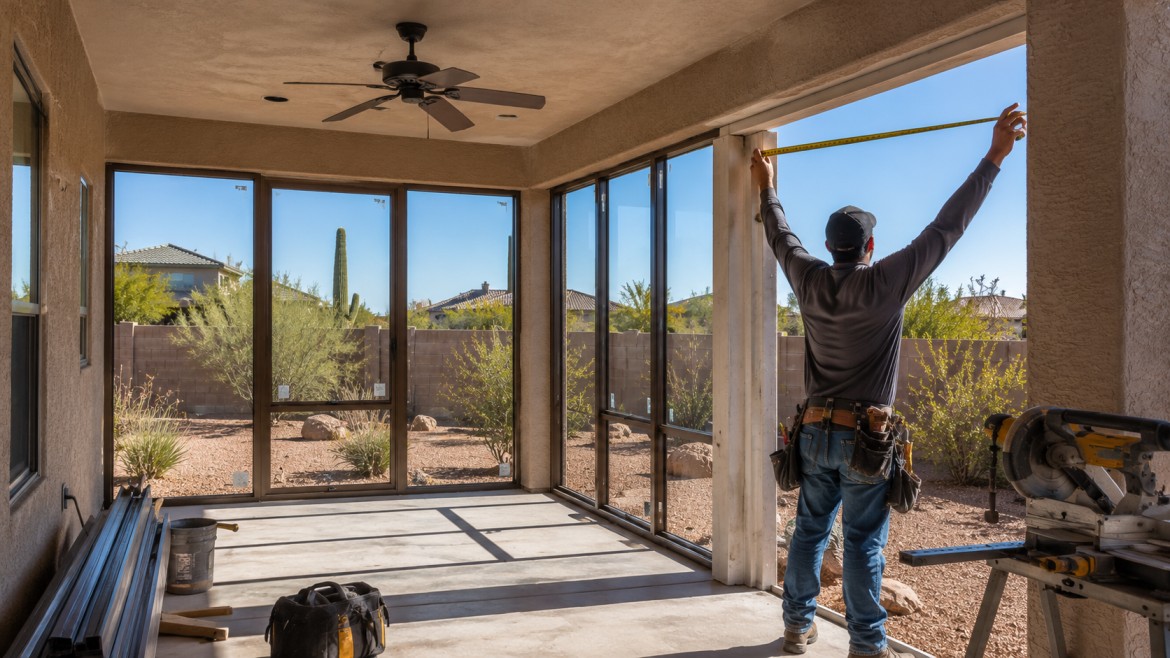
The catch is that many patio covers weren't designed to support walls, windows, and insulation. Before converting, a contractor should check:
Whether the existing roof can carry the added load or should be replaced with an insulated roof.
The condition, level, and slope of the concrete slab.
How the cover attaches to the house and whether that connection is sound and sealed.
Whether the original cover was permitted.
If the existing structure needs major upgrades, building new can end up costing about the same while giving you a stronger, more comfortable room. Our Arizona room guide explains how patio conversions work, and our guide to attached vs. freestanding covers covers how structures connect to the home.
What Other Costs Should You Plan For?
Beyond the structure itself, a few line items are easy to overlook when budgeting a sunroom addition:
Permits and plans: enclosed rooms almost always need a building permit, drawings, and inspections.
HOA review: many communities require approval of design, materials, and colors.
Electrical: outlets, lighting, and fans usually need their own permit and wiring work.
Cooling: a ceiling fan may be enough in spring and fall, while summer use often calls for dedicated cooling.
Flooring and finishes: tile, flooring, blinds, and furniture add to the final picture.
For more on how ceiling fans help any covered or enclosed space, see our guide to ceiling fans for covered patios.
Ask for an itemized quote so you can see exactly what's included. That makes it easier to compare companies and avoid surprises. Learn more in our guides to permits in Arizona and HOA approval.
How Can You Get the Most Value From a Sunroom Investment?
A sunroom delivers the most value when it's built for how you'll actually use it. A few tips help:
Prioritize comfort features: insulated roofing and efficient glass make the room usable more of the year.
Size it right: plan around the furniture and activities you want, not just the patio footprint.
Permit it properly: a permitted room avoids problems at resale and gives buyers confidence.
Choose durable materials: aluminum framing and quality panels hold up to Arizona sun with little upkeep.
Ask about financing: spreading the cost can let you choose the features you really want.
Before you hire, compare licenses, insurance, warranties, and local experience. Our guide on how to vet a licensed contractor covers what to check.
Best Choice Exteriors is a veteran-owned company licensed under ROC#347963, building sunrooms, patio covers, pergolas, and awnings for homeowners within about 30 miles of San Tan Valley. We offer free estimates, lifetime material and labor warranties, and financing options. If you're searching for a sunroom contractor near me, explore our work on the Best Choice Exteriors homepage or schedule a free consultation and estimate.

Frequently Asked Questions
How much does a sunroom cost in Arizona?
There's no one-size price, because every sunroom is built for the home. Size, roof type, glass, electrical work, cooling, and permits all affect the total, and enclosing an existing patio is priced differently from a new build. The best way to understand sunroom cost in Arizona for your home is a free, itemized in-home estimate.
Is an insulated sunroom roof worth the extra cost?
In Arizona, usually yes. An insulated sunroom roof blocks radiant heat from above, keeps the room cooler, reduces rain noise, and allows recessed lighting. Without it, a sunroom can overheat in summer and go unused for months. Insulation is often the single upgrade that makes the room worth having.
Does a sunroom add value to a home?
A permitted, well-built sunroom adds usable space that many buyers appreciate, especially in Arizona, where protected outdoor-style living is popular. How much it adds depends on build quality, design, and your local market. Unpermitted or poorly built rooms can do the opposite, so permitting and quality matter.
Can I finance a sunroom?
Many contractors offer financing, and Best Choice Exteriors has 0% interest financing options for qualified homeowners. Financing can let you choose comfort features like insulated roofing and efficient glass instead of cutting corners. Ask about terms during your consultation so you can plan your sunroom addition budget.
How long does it take to build a sunroom?
Timelines depend on size, design, permits, and HOA review. Design and approvals often take several weeks, and construction follows once permits are issued. Enclosing an existing patio may move faster than a new build. Your sunroom contractor should give you a realistic schedule before you sign.
