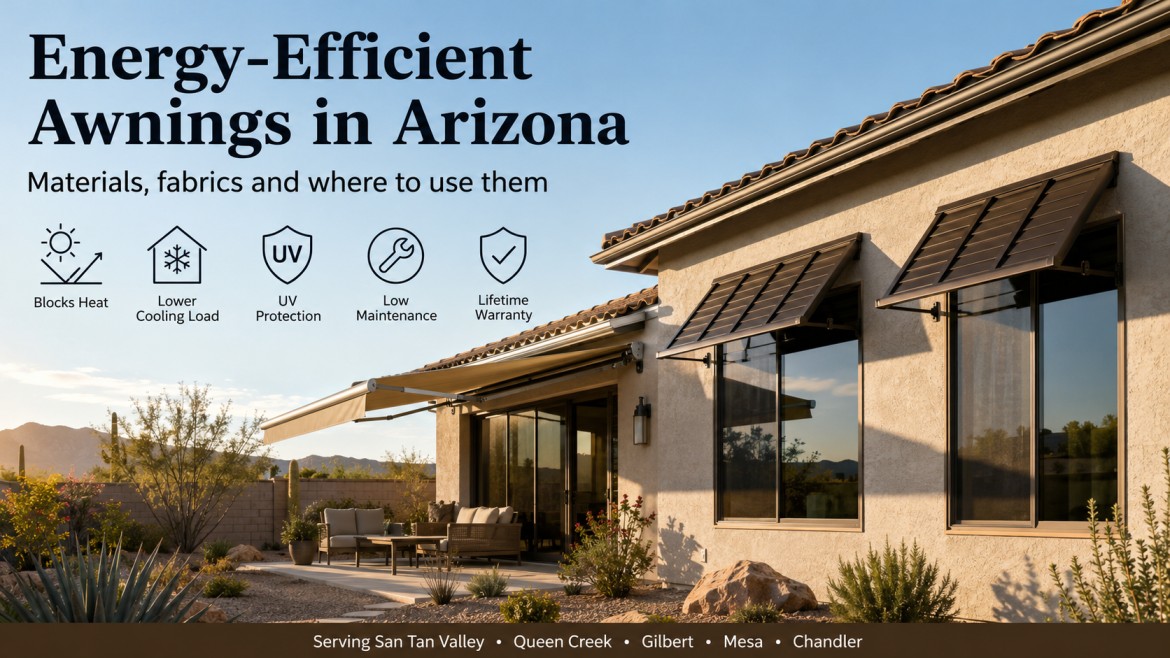
Energy-Efficient Awnings in Arizona: Materials, Fabrics and Where to Use Them
Quick Answer: The most energy-efficient awnings in Arizona block sun before it reaches the glass, especially on west- and south-facing windows. Aluminum awnings last longest with almost no upkeep, while solution-dyed acrylic fabric offers more color choices and breathes to release heat. For screens, a lower openness factor blocks more heat. Placement and size matter as much as material.
When summer cooling bills climb, many East Valley homeowners look for ways to keep heat out of the house without giving up light and views. Exterior shading is one of the most effective answers, because it stops sunlight before it ever turns into heat inside. But not all awnings and shades perform the same. Material, color, fabric type, and placement all change how much heat you block. Here's how to choose energy-efficient awnings and shade fabrics for homes in San Tan Valley, Queen Creek, Gilbert, Mesa, and Chandler.
How Do Awnings Make an Arizona Home More Energy Efficient?
Sunlight passing through a window turns into heat once it hits floors, furniture, and walls inside. Blinds and curtains help a little, but by then the heat is already in the room. An awning works outside the glass, so most of that energy never gets in.
That makes awnings especially useful on the sides of the house that take the most sun. In the East Valley, west-facing windows and sliding doors take the harshest late-afternoon heat, and south-facing windows get strong midday sun. Shading those openings can noticeably reduce how hard your air conditioner works on summer afternoons.
Awnings also protect what's inside. Less direct sun means less fading on floors, rugs, and furniture. If you're comparing awnings to other exterior options, our guide to window awnings vs. solar screens explains when each works best, and our article on whether shade structures lower electric bills covers the bigger picture.
Which Awning Materials Are Most Energy Efficient?
Every material blocks direct sun, but they differ in how they handle heat, how long they last, and how much care they need:
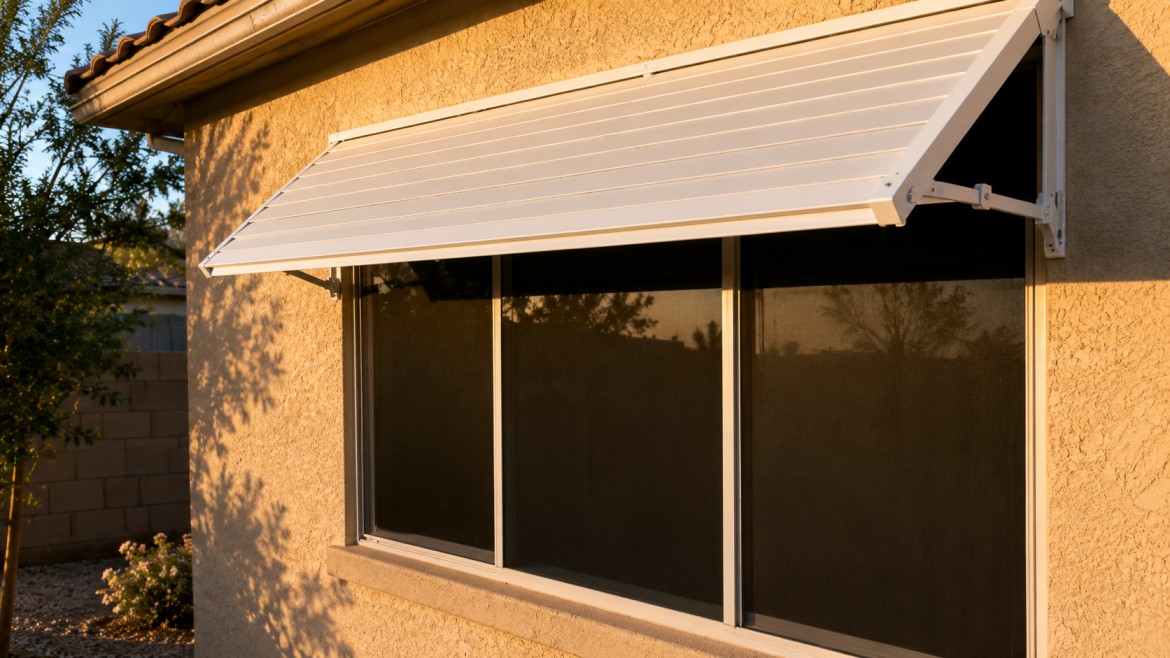
Aluminum awnings: solid metal blocks direct sun completely and reflects heat, especially in lighter colors. They don't fade, rot, or need new covers, which makes them the lowest-maintenance choice in Arizona.
Insulated aluminum awnings: a foam core reduces the heat that radiates down from the awning itself, which helps over doors and patios where people stand underneath.
Solution-dyed acrylic fabric: the color goes all the way through the fiber, so it resists fading better than printed fabrics. It breathes, letting trapped heat escape instead of building up underneath.
Vinyl-coated polyester: water-resistant and durable, but it doesn't breathe, so heat can collect under the fabric.
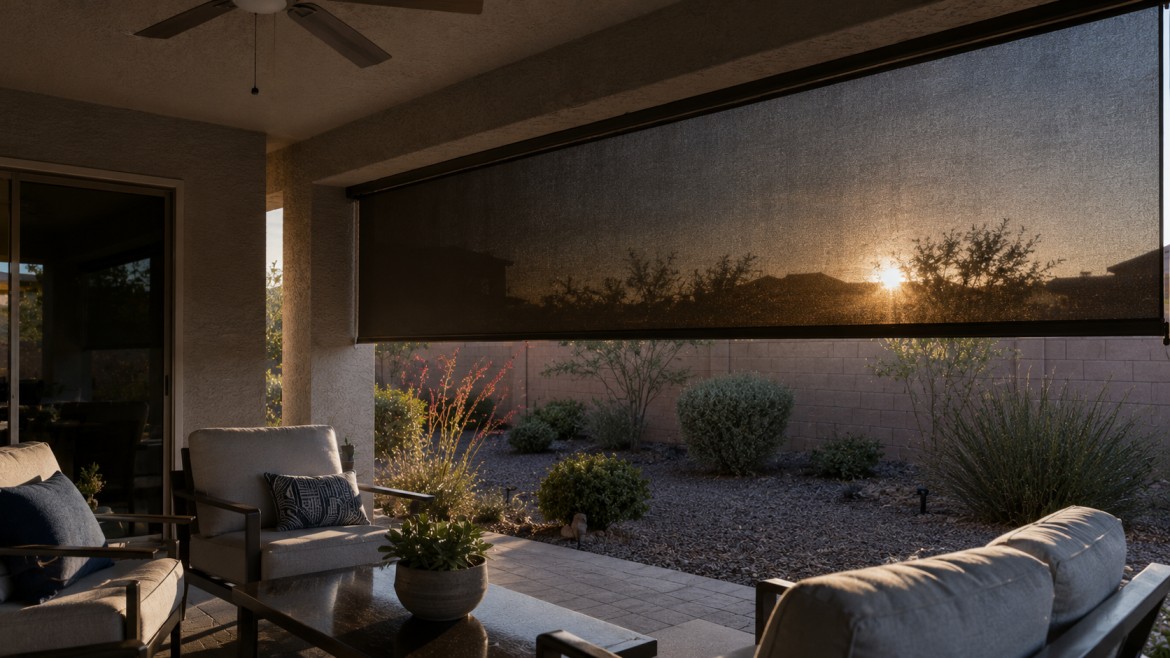
Shade mesh fabric: an open weave that blocks much of the sun while letting air move through, common on retractable and patio shades.
For most Arizona homes, aluminum is the long-term value pick, while acrylic fabric suits homeowners who want more color and a softer look. Our guide to the best awnings for Arizona compares fixed, retractable, and aluminum styles in more detail.
How Do You Choose Solar Screen and Shade Fabric in Arizona?
Solar screens and drop shades use a specially woven fabric over windows or patio openings. Two choices make the biggest difference in how well they work:
Openness factor: this is the percentage of the weave that's open. A lower openness, such as 3 to 5 percent, blocks more heat and glare. A higher openness, such as 10 percent, keeps more of the view and light but blocks less heat.
Color: darker fabrics usually give a clearer view out and cut glare better. Lighter fabrics reflect more heat but can look brighter and slightly hazier from inside.
West-facing windows usually benefit from a lower openness, while east windows can use a lighter weave since morning sun is cooler. Many homeowners pick one fabric for the hottest walls and a lighter one elsewhere.
Drop shades on the open sides of a covered patio work the same way, blocking low afternoon sun that slips under the roof. Our article on how much shade a patio cover provides explains why side shading matters so much in the late afternoon.
Where Should Awnings Go for the Biggest Energy Savings?
Placement can matter as much as material. Focus on the openings that let in the most heat:
West-facing windows and sliders: the top priority. Use deeper awnings or add side panels or screens to stop low afternoon sun.
South-facing windows: a properly sized fixed awning shades the glass well because the summer sun is high.
Back doors and patios: an awning or patio cover shades the glass and creates a cooler spot outside.
Front entries: shading the front door protects the finish and keeps the entry cooler.
Sunrooms and Arizona rooms: exterior shading on glass walls helps keep these rooms usable in summer.
Size matters too. An awning that's too shallow lets sun reach the glass for much of the afternoon. A good installer sizes each awning to the window and the direction it faces. See our guides to front entry awnings and the Arizona room guide for more on shading doors and sunrooms.
How Do You Keep Energy-Efficient Awnings Working Year After Year?
An awning only saves energy if it stays in good shape. A little upkeep keeps it working:
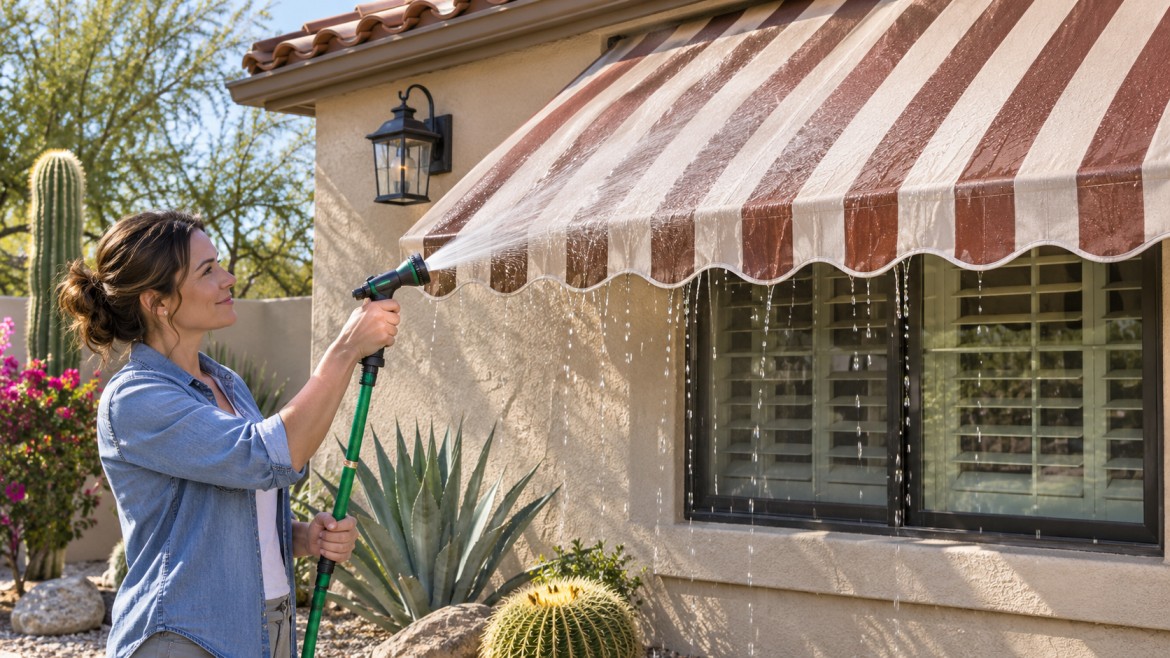
Rinse aluminum awnings and fabric a few times a year to clear dust and pollen.
Clean fabric with mild soap and a soft brush, never harsh chemicals or pressure washers.
Retract fabric awnings before monsoon storms and high winds.
Check fasteners and seals once a year, especially after monsoon season.
Replace worn or faded fabric before it tears.
Aluminum needs the least attention, which is one reason so many Arizona homeowners choose it. Our maintenance checklist covers a full yearly routine, and our guide to monsoon-ready shade structures explains why secure installation matters. If you live in an HOA community, check color and style rules first using our guide to HOA rules in Arizona.
Best Choice Exteriors is a veteran-owned company licensed under ROC#347963, installing awnings, patio covers, sunrooms, and pergolas for homeowners within about 30 miles of San Tan Valley. If you're looking for energy-efficient awnings near me, explore our work on the Best Choice Exteriors homepage or schedule a free consultation and estimate.
Frequently Asked Questions
What is the most energy-efficient awning for Arizona?
For most homes, an aluminum awning on west- and south-facing windows is the most energy-efficient long-term choice. It blocks direct sun completely, reflects heat, and needs almost no upkeep. Insulated aluminum is even better over doors and patios. Solution-dyed acrylic fabric is a good option if you want more colors and a softer look.
Are fabric or aluminum awnings better for cooling?
Both block direct sun. Aluminum lasts longer and doesn't fade, which keeps it performing for years. Breathable acrylic fabric lets trapped heat escape and offers more colors, but Arizona UV fades it over time. Vinyl-coated fabric is durable but traps more heat. For long-term energy-efficient awnings, aluminum usually wins.
What openness factor is best for solar screens in Arizona?
Lower openness, around 3 to 5 percent, blocks more heat and glare and suits west-facing windows. A 10 percent openness keeps more of the view and light but blocks less heat, which can work on east or north windows. Darker fabric colors usually give the clearest view out.
Do awnings really lower cooling costs?
They can. Awnings stop sunlight before it reaches the glass, which reduces heat gain inside, especially on west- and south-facing windows. That means your air conditioner doesn't work as hard on summer afternoons. Actual savings depend on window size, orientation, and how well each awning is sized.
Who installs energy-efficient awnings near me?
Best Choice Exteriors installs energy-efficient awnings in Arizona for homeowners in San Tan Valley, Queen Creek, Gilbert, Mesa, Chandler, and nearby communities. We're veteran-owned, licensed under ROC#347963, and offer lifetime material and labor warranties. Also see our comparison of awnings vs. patio covers.
