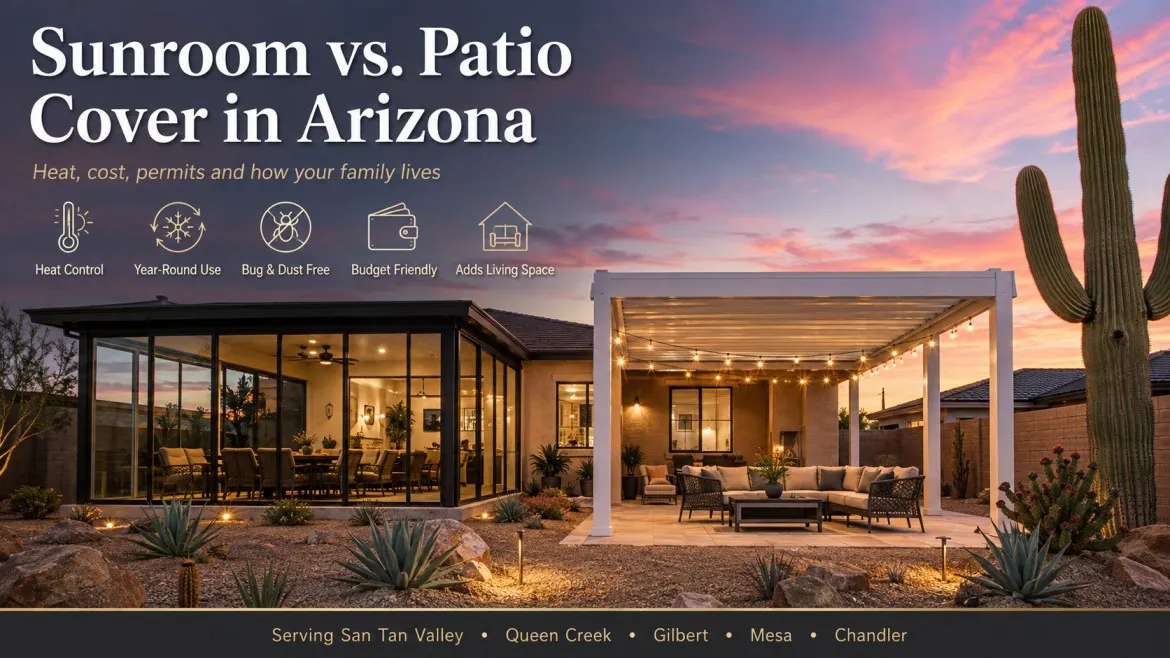
Sunroom vs. Patio Cover in Arizona: Which Is Right?
Sunroom vs. Patio Cover in Arizona: Which Is Right for Your Home?
Quick Answer: Choose a patio cover if you want affordable shade and an open-air space for entertaining. Choose a sunroom in Arizona if you want an enclosed room protected from dust, bugs, and monsoon rain that you can use more months of the year. Sunrooms cost more and involve more permitting, but they add true indoor-outdoor living space.
Homeowners in San Tan Valley and Queen Creek often start with the same question: should we just shade the patio, or close it in and gain a whole new room? Both are popular upgrades across the East Valley, and both can completely change how you use your backyard. The right answer depends on your budget, your family, and how you picture the space on a 110-degree afternoon versus a cool January evening. This guide on sunroom vs patio cover choices breaks down the differences so you can decide with confidence.
What Is the Difference Between a Sunroom and a Patio Cover?
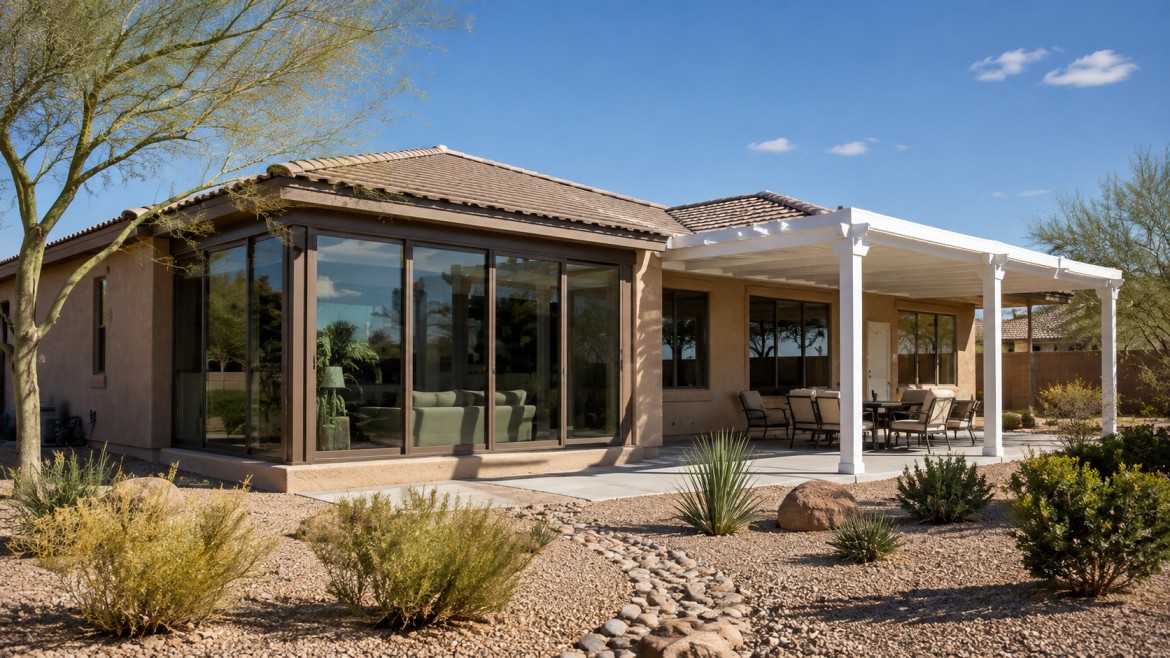
A patio cover is a roof over your outdoor space. It's supported by posts, and the sides stay open. Aluminum patio covers are the most common choice in Arizona, with solid, lattice, insulated, and louvered roof styles depending on how much sun you want to block.
A sunroom takes that idea further. It has a roof, walls, windows, and a door, turning part of your patio into an enclosed room attached to your home. You still get natural light and backyard views, but you're protected from wind, dust, insects, and rain.
Think of it this way: a patio cover makes your outdoor space more comfortable, while a sunroom creates a new space that feels partly indoors. Both can be attached to the house, though patio covers can also stand on their own in the yard. If you're still deciding on placement, our guide to attached vs. freestanding patio covers explains the tradeoffs.
How Do Sunrooms and Patio Covers Handle Arizona Heat?
Arizona sun changes the conversation. In many parts of the country, sunrooms are built to capture warmth. Here, the goal is usually the opposite: keep heat out while letting light in.
A patio cover handles heat by blocking direct sun. A solid or insulated patio cover can make a shaded patio feel much cooler than the uncovered concrete around it, especially when you add a ceiling fan. It also shades nearby windows and doors, which can take some load off your air conditioning. Our article on whether patio covers lower electric bills explains how that works.
A sunroom needs more planning to stay comfortable in summer. Roof insulation, glass type, window placement, and airflow all matter. Without the right design, an enclosed room facing west can trap heat by late afternoon. With the right design, a sunroom becomes a comfortable spot for most of the year, especially from October through May, when Arizona weather is at its best.
So the question isn't which option is cooler. It's whether you want an open-air shaded space or a sheltered room built to manage the heat.
Which Option Fits the Way Your Family Uses the Space?
Start with how you actually spend time outside. Here's how the two options usually line up:
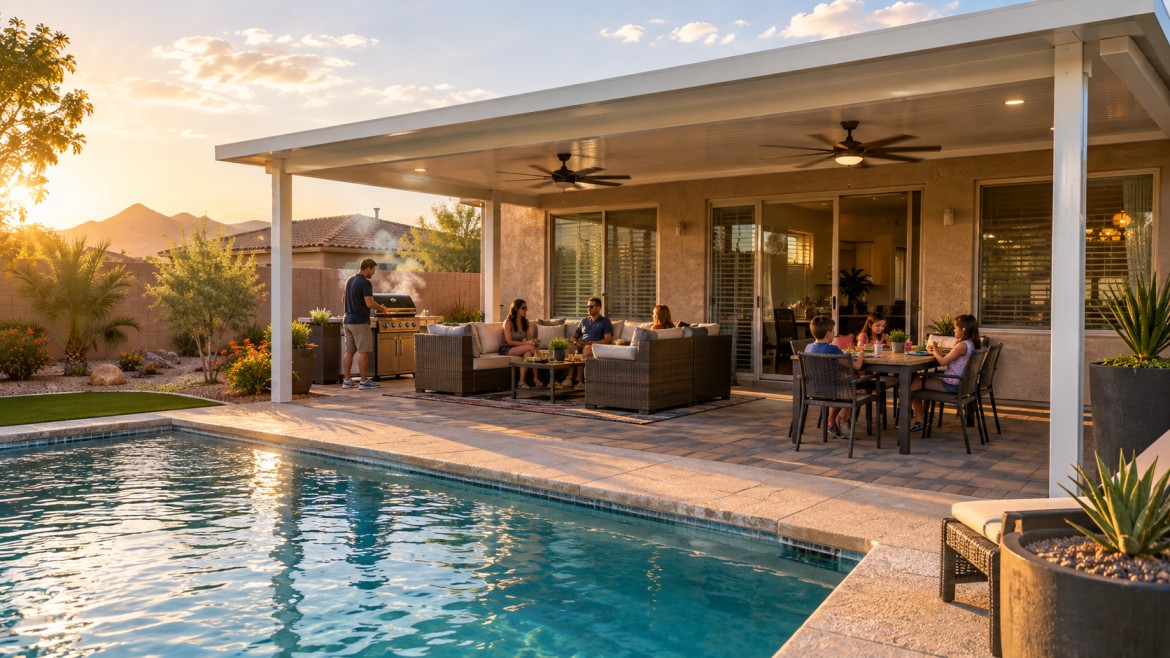
Frequent entertaining: a patio cover keeps the space open for grilling, big gatherings, and easy flow to the pool or yard.
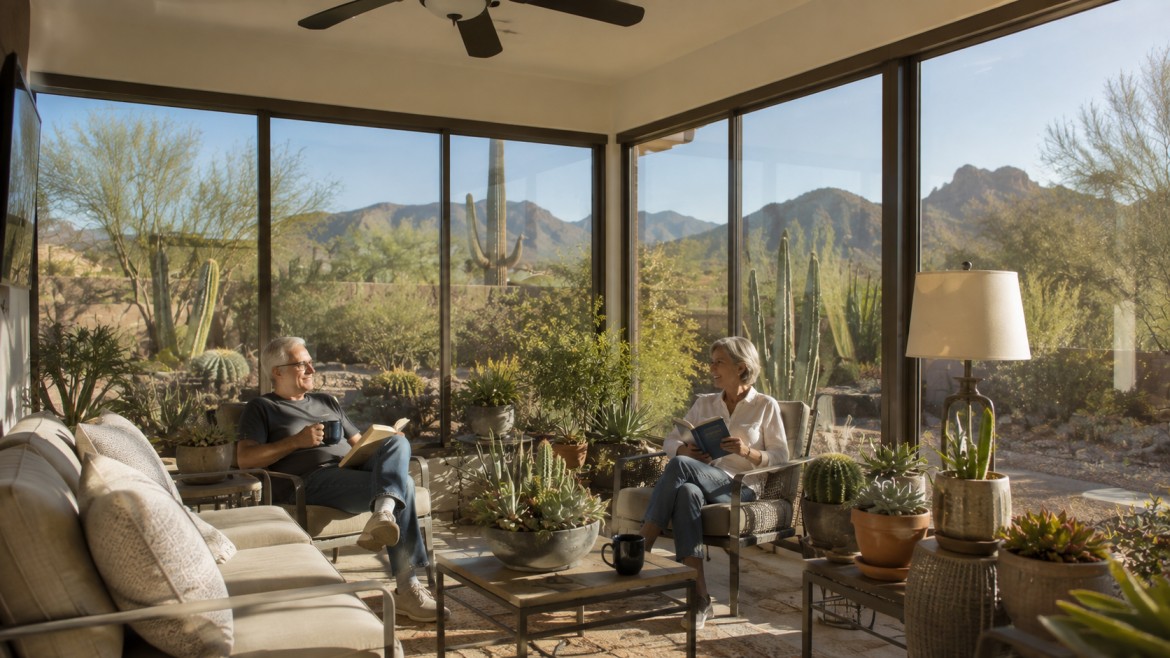
Morning coffee and quiet reading: a sunroom offers a calm, bug-free spot with a view.
Retirees who want year-round comfort: a sunroom gives a protected room for hobbies, plants, or visiting with family.
Families with young kids or pets: a sunroom creates a contained play area, while a patio cover keeps kids in the shade outdoors.
Dusty or windy lots: a sunroom keeps monsoon dust and debris out of your furniture.
Budget-first upgrades: a patio cover delivers the most shade for the money.
Many homeowners find their answer in this list. If you mostly want shade for outdoor living, a patio cover is hard to beat. If you want another room without a full home addition, a sunroom makes sense. For more ideas on laying out the space, see our guide to outdoor living spaces in Arizona.
How Do Cost, Permits, and HOA Rules Compare?
A sunroom is the bigger investment. It includes walls, windows, doors, and often electrical work, so it costs more than a patio cover of the same footprint. A patio cover is usually faster to design, approve, and build.
Permits apply to both. Attached patio covers in most Arizona cities need a permit, and enclosed rooms go through a more detailed review because they're closer to a home addition. Your HOA will also want to see plans, materials, and colors that match your home. A good sunroom contractor handles the drawings, permit, and HOA submittal for you.
Before you compare quotes, it helps to understand the rules in your area. Read our guides to patio cover permits in Arizona and HOA patio cover rules in Arizona.
When Does It Make Sense to Start With a Patio Cover?
If you're torn, a patio cover is often the smart first step. It gives you shade right away, costs less, and lets you see how your family uses the space before committing to an enclosure. If you think you'll want a sunroom later, mention it during design. Some layouts can be planned with a future enclosure in mind, which may save time and money down the road.
On the other hand, if you already know you want a protected room, going straight to sunroom installation avoids doing the work twice. That's often the case for homeowners who want a space for plants, pets, a home office, or winter gatherings without dealing with dust and bugs. Not sure a cover alone will be worth it? Our article on whether patio covers are worth it can help you decide.
Best Choice Exteriors is a veteran-owned company licensed under ROC#347963, building patio covers, sunrooms, pergolas, and awnings for homeowners within about 30 miles of San Tan Valley, including Queen Creek, Gilbert, Mesa, Chandler, and Florence. Explore our work on the Best Choice Exteriors homepage, or schedule a free consultation and estimate to compare both options for your home.
Frequently Asked Questions
Can a sunroom be used year-round in Arizona?
It can, with the right design. Insulated roof panels, energy-efficient glass, shading on west-facing walls, and good airflow all help a sunroom in Arizona stay comfortable. Most homeowners use their sunroom the most from fall through spring. Adding a ceiling fan or tying into cooling can extend comfortable use into the warmer months.
Does a sunroom add more home value than a patio cover?
A sunroom usually costs more and can add more usable space, which buyers often appreciate. A patio cover offers strong value for a lower investment, especially in Arizona, where shaded outdoor space is in high demand. The better return depends on your neighborhood, budget, and how well the project matches your home's design.
Do I need a permit for a sunroom in Arizona?
Yes, in most cases. Because a sunroom is an enclosed structure attached to your home, cities typically require plans, a building permit, and inspections, plus an electrical permit if you're adding outlets, lights, or fans. HOA approval is usually needed too. Your sunroom contractor should prepare and submit this paperwork for you.
Which is better for pets and kids, a sunroom or a patio cover?
A sunroom is better if you want a contained, bug-free space where pets and kids can play safely out of the dust and heat. A patio cover is better if you want them outside in the shade with easy access to the yard or pool. Some families choose a covered patio now and enclose part of it later.
Where can I get a sunroom or patio cover estimate near me?
Homeowners in San Tan Valley, Queen Creek, Gilbert, Mesa, Chandler, and nearby communities can request a free in-home consultation from Best Choice Exteriors. We'll measure your space, talk through how you want to use it, and price both a patio cover and a sunroom installation so you can compare them side by side.
