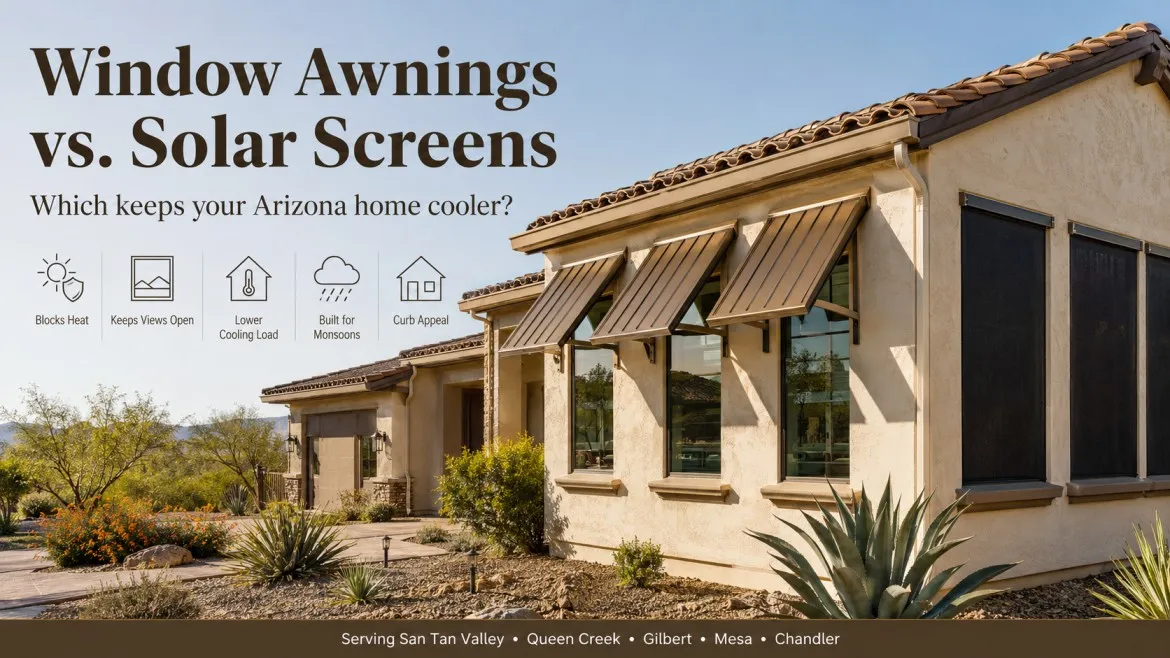
Window Awnings vs. Solar Screens in Arizona: Which Keeps Your Home Cooler?
Quick Answer: Both window awnings and solar screens cut heat by stopping sun before it reaches the glass. Awnings work best on south-facing windows and doors, keep your view open, and add curb appeal. Solar screens handle low east and west sun better but darken rooms. In Arizona, many homes get the best results by combining the two.
Walk through almost any East Valley neighborhood in July and you'll see homeowners fighting the same battle: windows that turn rooms into ovens by late afternoon. Blinds and curtains help a little, but by the time sunlight hits the glass, most of the heat is already inside. That's why exterior shading matters so much here. The two most common options are window awnings in Arizona and solar screens. Here's how they compare for homeowners in San Tan Valley, Queen Creek, Gilbert, Mesa, and Chandler.
How Do Window Awnings and Solar Screens Block Arizona Heat?
Both options work on the same principle: stop the sun outside the window. Once sunlight passes through glass, it turns into heat that your air conditioner has to remove. Shading the outside of the window is far more effective than anything you hang inside.
The difference is how they do it:
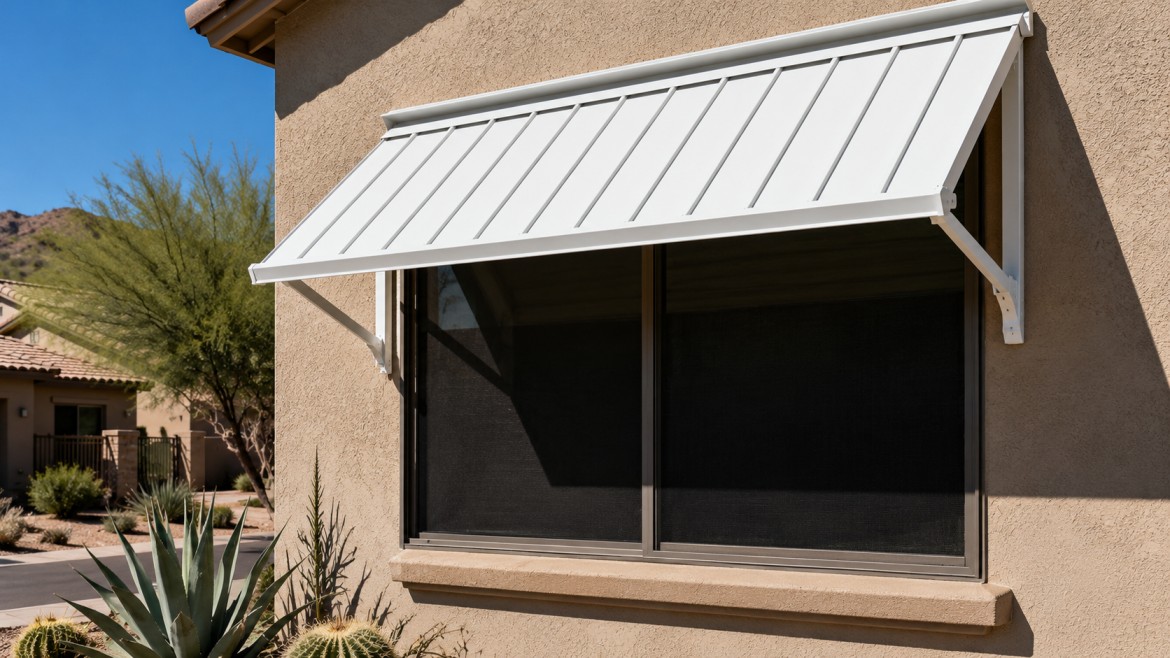
Window awnings project out from the wall above the window, casting a shadow over the glass. They block direct sun while leaving the window itself clear.
Solar screens are tightly woven mesh panels mounted over the window. They absorb and block a large share of the sun's heat while letting some light and a filtered view through.
Awnings shade a window from above, so they're strongest when the sun is high. Screens cover the whole window, so they work at any sun angle. That one difference explains most of the pros and cons below. For a deeper look at awning styles and materials, see our guide to the best awnings for Arizona.
Which Works Better on West-, South-, and East-Facing Windows?
Window direction is the single biggest factor when choosing between awnings vs. solar screens:
South-facing windows: the summer sun is high in the sky, so a properly sized awning shades the glass almost completely while keeping the view open. Awnings are usually the better choice here.
West-facing windows: the late-afternoon sun comes in low and hot, sliding under most awnings. Solar screens, or a deeper awning with side panels, handle this best.
East-facing windows: morning sun is also low, so screens work well. Because mornings are cooler, some homeowners skip shading here or use lighter screens.
North-facing windows: they get little direct sun and rarely need either.
Sliding doors and French doors are another story. An awning or patio cover over a back door shades the glass and creates a small outdoor spot at the same time, which a screen can't do. Our article on how much shade a cover provides explains how sun angle affects coverage.
How Do Awnings and Screens Compare for Views, Light, and Curb Appeal?
Heat isn't the only thing that matters. How the room feels and how the house looks count too.
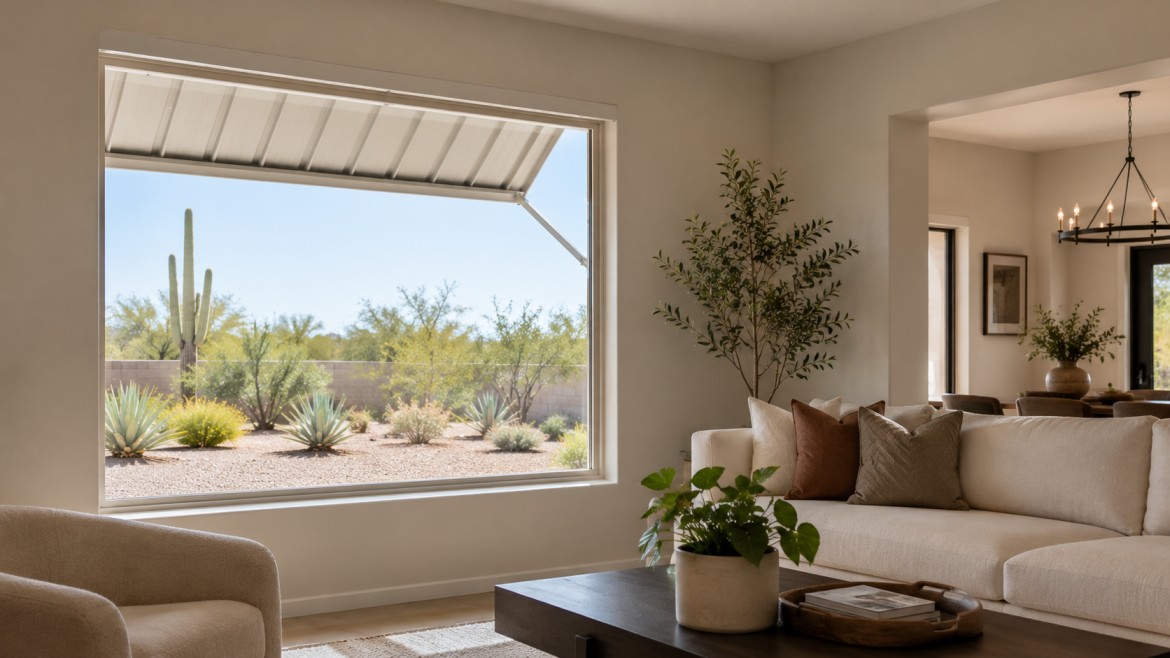
Views: awnings leave the glass clear, so your view stays the same. Solar screens soften the view, a bit like looking through sunglasses.
Natural light: awnings keep rooms bright with indirect light. Screens noticeably darken rooms, which some homeowners like in summer and dislike in winter.
Privacy: screens make it harder to see in during the day. At night, with lights on inside, that effect reverses.
Curb appeal: well-designed awnings add depth and character to a home's exterior. Screens are more of a functional upgrade and can make windows look darker from the street.
Outdoor use: awnings over doors and patios create shaded space you can use. Screens only cover the window.
If you're also planning bigger outdoor shade, our guide to pergola ideas for Arizona backyards shows how shade structures can work alongside window shading.
Which Lasts Longer in Arizona Sun and Monsoons?
Durability depends heavily on materials. Aluminum window awnings are the longest-lasting option in Arizona. They don't fade like fabric, won't rot, and hold up well to monsoon rain and wind when installed with secure fasteners into the home's framing.
Fabric awnings offer more color choices, but Arizona UV fades and weakens fabric over time, so expect to replace the covers eventually. Retractable fabric awnings should be pulled in during storms.
Solar screens are fairly durable, but the mesh can fade, sag, or tear over the years, especially on west-facing windows that take the most sun. Frames can also bend during high winds or when windows are opened often.
For any exterior shading, a quick check after monsoon season helps catch loose fasteners or damage early. Our maintenance checklist covers what to look for, and our guide on monsoon-ready shade structures explains why installation quality matters.
When Should You Combine Awnings, Screens, and Patio Covers?
You don't have to pick just one. Many East Valley homes get the best results by matching each window to the right solution:
Awnings on south-facing windows and over doors.
Solar screens or deep awnings on west-facing windows.
A patio cover or pergola over the back patio and sliding doors.
Together, these cut heat gain across the whole house, which can ease the load on your air conditioner. Our article on whether shade structures lower electric bills explains how exterior shade affects cooling. And if you're thinking about an enclosed space, our Arizona room guide covers how shading keeps sunrooms comfortable.
Many HOAs have rules on awning colors, styles, and placement, so check your guidelines before you buy. Our guide to HOA rules in Arizona explains what committees usually review.
Best Choice Exteriors is a veteran-owned company licensed under ROC#347963, installing awnings, patio covers, pergolas, and sunrooms for homeowners within about 30 miles of San Tan Valley, including Queen Creek, Gilbert, Mesa, and Chandler. If you're searching for an awning installer near me, explore our work on the Best Choice Exteriors homepage or schedule a free consultation and estimate.

Frequently Asked Questions
Do window awnings really lower cooling bills in Arizona?
They can. Window awnings block direct sun before it reaches the glass, which reduces heat gain inside the home, especially on south-facing windows. Less heat coming in means your air conditioner doesn't have to work as hard. Results vary by window size, direction, and how well the awning is sized for your home.
Do solar screens make a room dark?
Yes, to some degree. Solar screens filter sunlight, so rooms look dimmer than with clear glass. Lighter-density screens let in more light but block less heat. Many homeowners use screens only on west-facing windows and choose awnings elsewhere to keep main living areas bright.
Do I need HOA approval for window awnings?
In most HOA communities, yes. Awnings change the exterior look of your home, so committees often review color, material, size, and placement. Some HOAs also have rules for solar screen colors. Get approval before installation to avoid having to remove or replace window awnings later.
How long do aluminum awnings last in Arizona?
A quality aluminum window awning can last for many years in Arizona because aluminum won't rot, warp, or fade like fabric. Secure installation into the home's framing helps it handle monsoon wind. Occasional rinsing and a yearly check of fasteners keep it in good shape. Learn more in our guide to how long aluminum structures last.
Who installs window awnings near me in the East Valley?
Best Choice Exteriors installs window awnings in Arizona for homeowners in San Tan Valley, Queen Creek, Gilbert, Mesa, Chandler, and nearby communities. We're veteran-owned, licensed under ROC#347963, and offer lifetime material and labor warranties. Before you hire anyone, see how to vet a licensed contractor.
