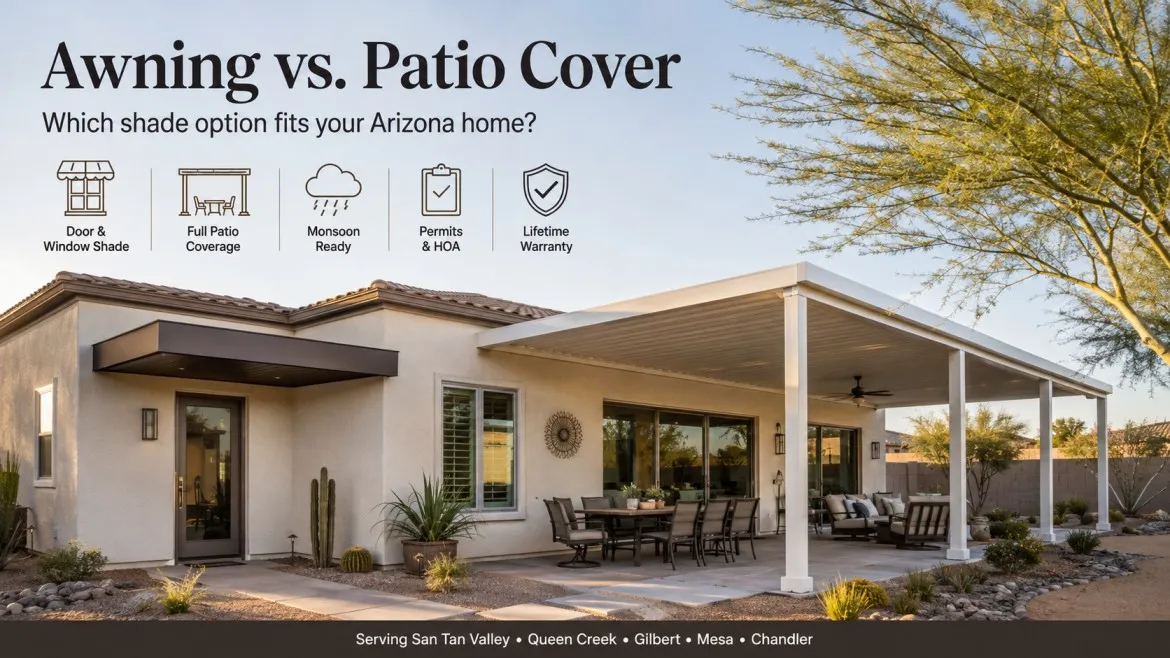
Awning vs. Patio Cover in Arizona: Which Shade Option Fits Your Home?
Quick Answer: An awning is a wall-mounted shade that covers a door, window, or small patio, usually without posts. A patio cover is a larger roof supported by posts that shades a full outdoor living area. In Arizona, awnings are a lower-cost fix for small spaces, while patio covers give more shade and better monsoon protection.
When the back of the house turns into a heat trap every summer, most homeowners start with the same question: do we need a full patio cover, or will an awning do the job? Both block the sun, both can add value, and both look great when they're designed well. But they're built for different jobs. Choosing the wrong one can leave you with too little shade or more structure than you need. Here's how to compare an awning vs. patio cover for homes in San Tan Valley, Queen Creek, Gilbert, Mesa, and Chandler.
What Is the Difference Between an Awning and a Patio Cover?
The biggest difference is how each one is supported.
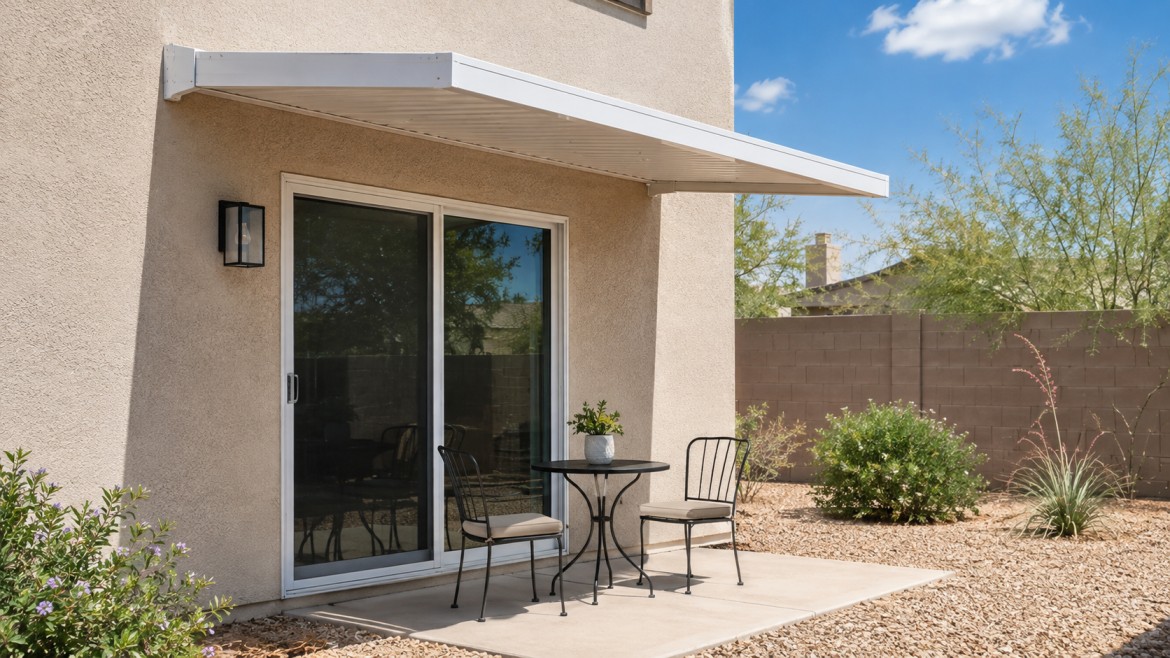
Awnings attach directly to the wall of your home and project outward. Most have no posts, which keeps the space underneath open. They come in fixed aluminum, fabric, and retractable styles.
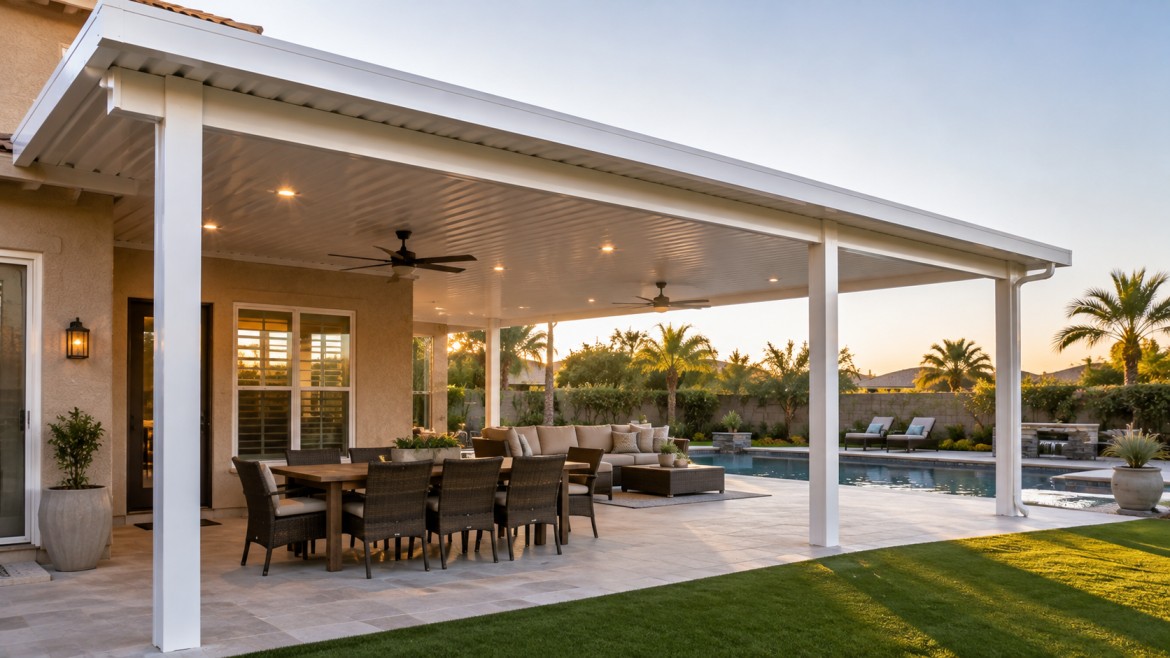
Patio covers attach to the house or stand on their own, with posts holding up the outer edge. That support lets them cover much larger areas and carry features like fans, lights, and heaters.
Because awnings rely on the wall alone, they're best for shorter projections, such as over a door, a window, or a small landing. Patio covers can stretch across the full width of a home and extend well into the yard. Think of an awning as a shade accent and a patio cover as an outdoor room.
For a closer look at awning styles and materials, see our guide to the best awnings for Arizona. If you're weighing open-roof options too, read our comparison of pergolas vs. patio covers.
Which Gives More Shade and Weather Protection in Arizona?
For a full outdoor living area, a patio cover wins. It can extend farther from the house and cover more width, so you get a larger shaded space that stays usable through the afternoon. Solid and insulated roofs also block heat and rain more completely.
Awnings shade a smaller footprint. That's perfect for keeping sun off a sliding door, a kitchen window, or a small bistro table, but less effective for a dining set, lounge area, and grill all at once. Low afternoon sun on west-facing walls can also slip under a short awning.
Monsoon season is the other big factor. A well-built aluminum awning handles rain and wind when it's properly anchored. Retractable fabric awnings, however, should be pulled in before storms. Patio covers are engineered with footings and framing for local wind loads, so they stay in place year-round. Our guide on whether patio covers survive Arizona monsoons explains what makes the difference.
If you're mainly shading windows, our article on window awnings vs. solar screens covers that comparison in detail.
How Do Cost, Permits, and Installation Compare?
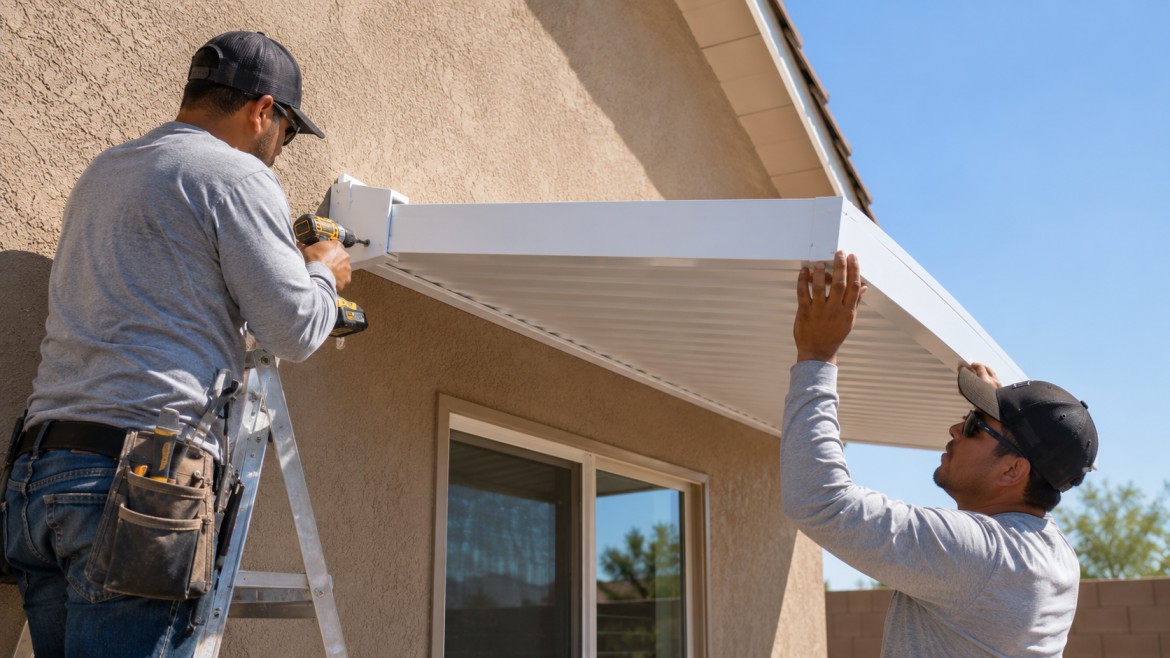
Awnings usually cost less because they're smaller and use less material. Installation is often quicker too, since there are no footings to dig. That makes awnings a smart choice when you want to solve a specific hot spot without a larger project.
Maintenance is part of the cost picture too. Aluminum awnings need little more than an occasional rinse, while fabric awnings fade in Arizona sun and need new covers every so often. Retractable models have motors or arms that may need service over time. Aluminum patio covers are similarly low-maintenance, which is one reason they hold their value so well.
Patio covers are a bigger investment, but they deliver much more usable space. Pricing depends on size, roof style, and add-ons like fans and lighting. Our patio cover cost guide explains the main factors.
Permit rules differ as well. Attached patio covers almost always need a city permit and inspections. Some awnings may too, depending on size, attachment, and your city's rules, so it's worth checking before you buy. In HOA communities, both usually need architectural approval for color, size, and placement. Learn more in our guides to permits in Arizona and HOA rules.
Which Option Fits Small Patios, Doors, and Side Yards?
Awnings shine in tight spaces. They're a great fit for:
Back doors and sliders that get direct afternoon sun.
Front entries where you want shade and curb appeal without posts.
Side yards where posts would block a walkway or gate.
Small landings or balconies with room for just a chair or two.
Townhomes and narrow lots where setbacks limit how far a structure can extend.
A patio cover makes more sense when you want room for a dining table, outdoor sofa, grill, or play area. For more ways to work with limited space, see our small backyard makeover ideas, and our guide to attached vs. freestanding covers if posts near the house are a concern.
When Should You Choose a Patio Cover Instead of an Awning?
A patio cover is usually the better choice if you:
Want shade for a full outdoor living area, not just a door or window.
Plan to add ceiling fans, lights, or heaters.
Want year-round protection without retracting anything before storms.
Entertain often and need room for guests.
Want an upgrade that adds usable living space and long-term value.
Many homes use both: a patio cover over the main patio and awnings on sunny windows or a side door. That combination shades the whole house efficiently. If you're planning for cooler months too, our winter outdoor living guide shows how to make your patio comfortable year-round.
Best Choice Exteriors is a veteran-owned company licensed under ROC#347963, installing awnings, patio covers, pergolas, and sunrooms for homeowners within about 30 miles of San Tan Valley, including Queen Creek, Gilbert, Mesa, and Chandler. If you're searching for an awning and patio cover installer near me, explore our work on the Best Choice Exteriors homepage or schedule a free consultation and estimate.
Frequently Asked Questions
Is an awning cheaper than a patio cover?
Usually, yes. Awnings are smaller, use less material, and don't need footings, so they typically cost less to buy and install. A patio cover costs more but shades a much larger area and can carry fans, lights, and heaters. The right choice depends on how much space you want to shade and how you plan to use it.
Do awnings need a permit in Arizona?
Sometimes. Requirements depend on the awning's size, how it attaches to your home, and your city's rules. Attached patio covers almost always need a permit, while smaller awnings may not. HOA approval is often required either way. A professional installer should confirm the rules before your awning goes up.
Can an awning handle Arizona monsoon winds?
A properly anchored aluminum awning holds up well to monsoon rain and wind. Retractable fabric awnings should be closed before storms, since strong gusts can damage the fabric and arms. For full-time protection over a large patio, an engineered patio cover is the more storm-ready option.
How far can an awning extend from the house?
Most residential awnings project a shorter distance than patio covers because they're supported only by the wall. That makes them ideal for doors, windows, and small landings. If you need shade that reaches farther into the yard, a patio cover with posts is usually the better choice. Your installer can recommend the right size for your space.
Who installs awnings and patio covers near me?
Best Choice Exteriors installs awnings and patio covers for homeowners in San Tan Valley, Queen Creek, Gilbert, Mesa, Chandler, and nearby communities. We're veteran-owned, licensed under ROC#347963, and offer lifetime material and labor warranties. Before you hire anyone, read how to vet a licensed contractor.
