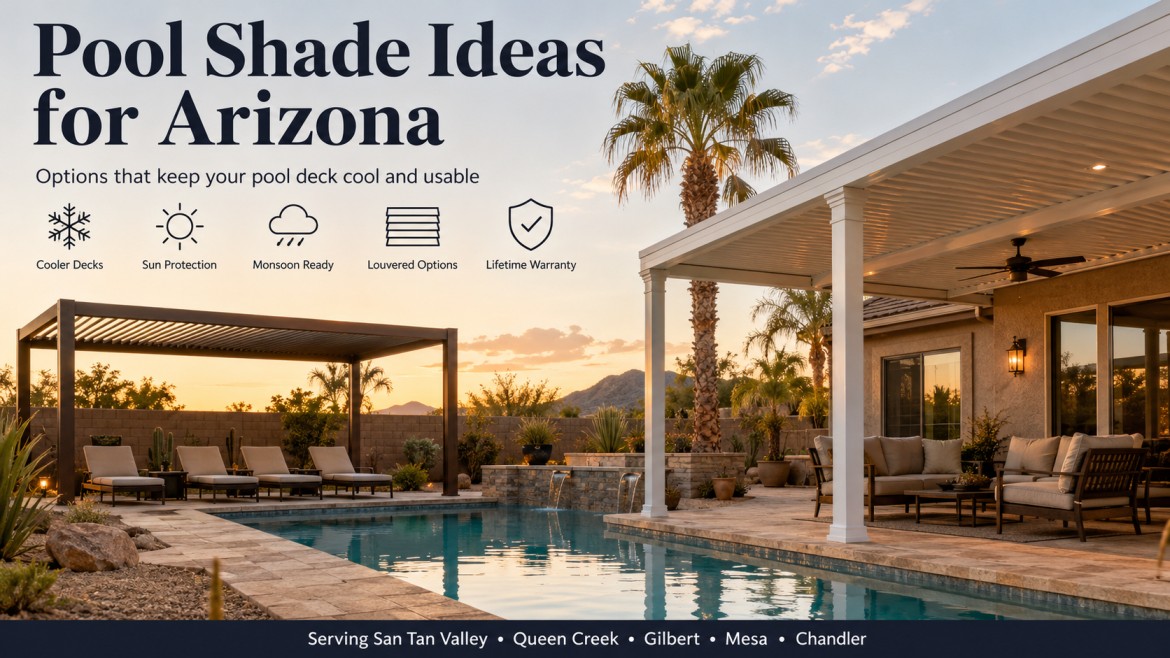
Pool Shade Ideas for Arizona Backyards: Options That Actually Work
Quick Answer: The best pool shade ideas in Arizona include aluminum patio covers over the deck, freestanding pergolas or louvered roofs beside the pool, shade sails, and large umbrellas. Permanent aluminum structures last longest and handle monsoon wind best. Most homeowners shade the lounge and seating areas rather than the water, so the pool still warms in the sun.
An Arizona pool is the center of summer life, but without shade it can be hard to enjoy. Pool decks get hot enough to burn bare feet, lounge chairs sit empty until sunset, and parents end up watching the kids from inside the house. The right shade changes that. Here are practical pool shade options for homeowners in San Tan Valley, Queen Creek, Gilbert, Mesa, and Chandler, plus how to choose the one that fits your yard.
Why Does Pool Shade Matter So Much in Arizona?
Summer sun in the East Valley is intense from late morning until close to sunset. Around a pool, that heat is amplified. Concrete and pavers soak up sunlight, water reflects glare, and there's often nowhere to escape it without going inside.
Good pool shade solves several problems at once:
Cooler decks: shaded pavers and concrete are far more comfortable to walk and sit on.
Sun protection: family and guests can stay out longer with less direct UV exposure.
A place to watch the kids: parents can supervise from a comfortable shaded spot.
Longer-lasting furniture: cushions and loungers fade and wear out faster in full sun.
More usable hours: the pool area becomes a place to spend the afternoon, not just the evening.
For an overview of shade options across the whole yard, see our guide to backyard shade solutions.
Which Pool Shade Options Work Best in Arizona?
Each option has strengths and trade-offs. Here's how the most common choices compare:
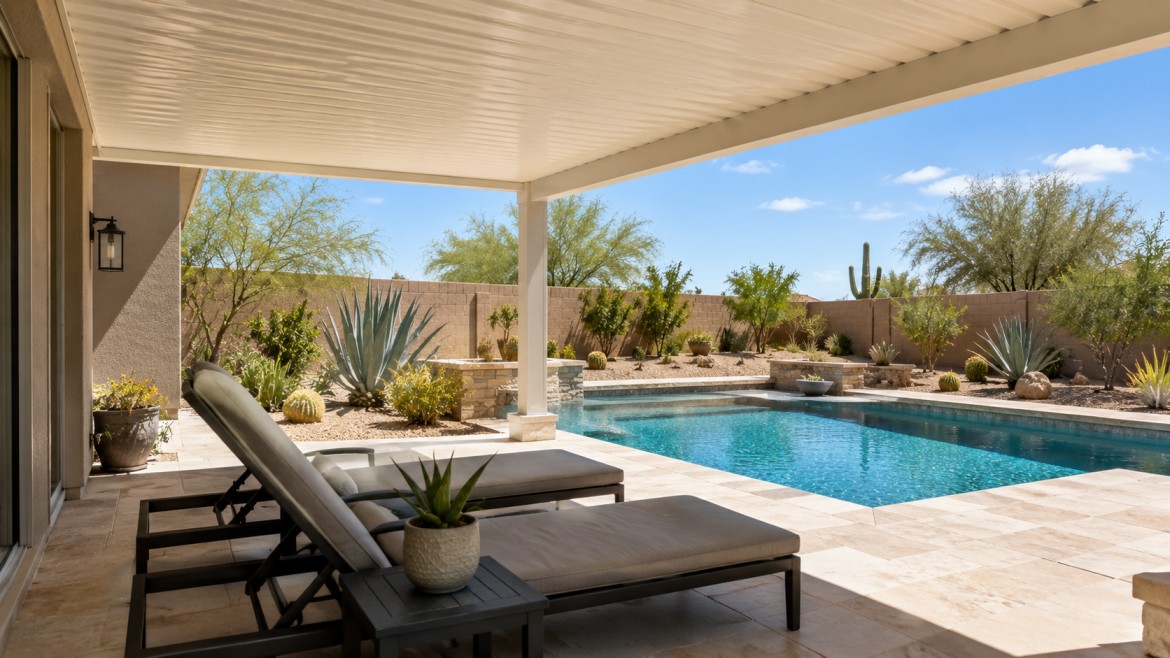
Aluminum patio cover over the deck: full shade and rain protection near the house. Can carry fans and lights. Best for seating and dining areas that face the pool.
Freestanding pergola by the pool: placed beside the water to shade loungers. Open rafters give partial shade unless you add slats or a canopy.
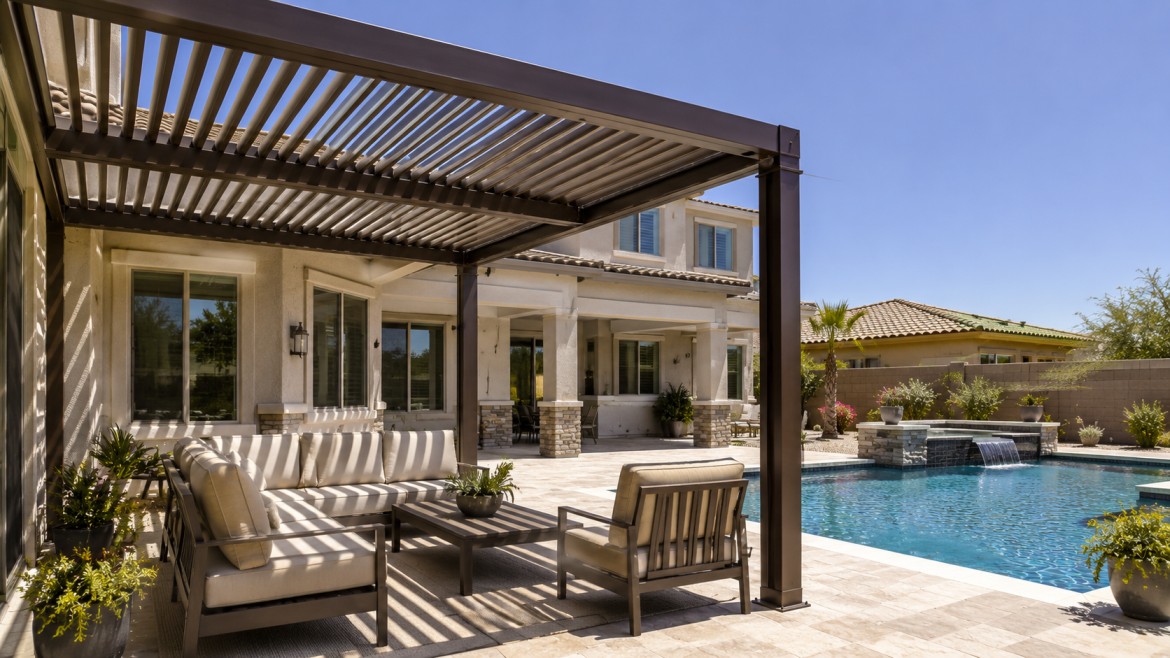
Louvered pergola: adjustable blades let you open the roof for sun and close it for full shade or rain.
Shade sails: a lower-cost, modern look. Fabric fades over time and usually needs to come down or be loosened before strong storms.
Cantilever umbrellas: flexible and movable, but they cover a small area and must be closed in wind.
Awnings: useful where the pool deck meets the house, especially over a back door or slider.
Permanent aluminum pool shade structures cost more upfront but last much longer and stand up better to monsoon wind than fabric or umbrellas. Learn more in our guides to louvered pergolas and pergolas vs. patio covers.
Should You Shade the Pool Itself or the Deck Around It?
Most Arizona homeowners shade the deck and seating areas, not the water. There are good reasons for that:
Water temperature: sun helps warm the pool in spring and fall, extending your swim season.
Span: covering the full water surface takes a large structure with long beams and more posts.
Debris: a roof directly over the water can drip leaves and dust into the pool.
Layout: people spend most of their time on loungers, at tables, or on a baja shelf, so that's where shade matters most.
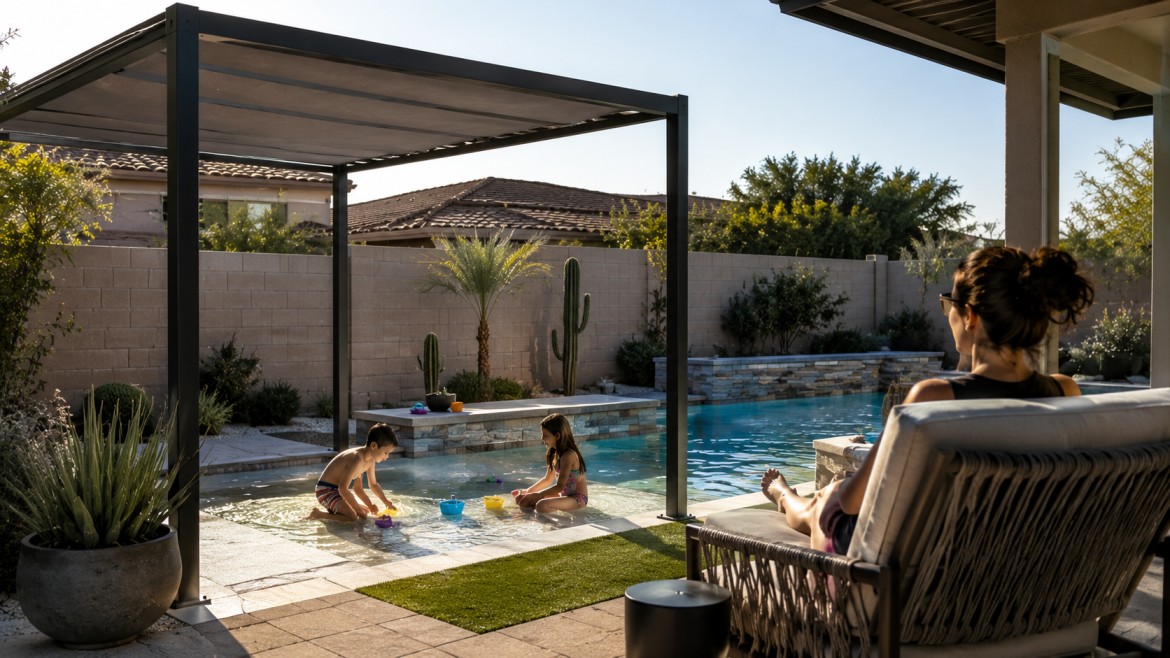
A popular approach is to shade the deck closest to the house with a patio cover, then add a pergola or sail over the loungers on the far side. Some homeowners also shade just the baja shelf or a swim-up ledge so kids can play in the water out of direct sun. Our article on how much shade a cover provides explains how sun angle affects coverage through the day.
What Safety and Code Rules Apply to Pool Shade Structures?
Pool areas come with rules that don't apply elsewhere in the yard. Before you build, keep these in mind:
Pool barriers: structures shouldn't create a way to climb over or around the pool fence or gate.
Electrical clearances: lights, fans, and outlets near water must meet strict safety codes, so plan wiring with your installer.
Setbacks: local rules limit how close structures can sit to property lines and walls, which often matters on smaller lots.
Wind and footings: posts near a pool still need proper footings and anchoring for monsoon wind.
Drainage: gutters and downspouts should send runoff away from the pool and decking.
HOA approval: most communities review size, color, and placement first.
A professional installer should handle these details along with the permit and HOA submittal. Learn more in our guides to permits in Arizona, setback requirements, and HOA approval.
How Do You Plan the Right Pool Shade for Your Yard?
Start by noticing when and where you actually use the pool area. Where does the afternoon sun hit hardest? Where do people sit? Where do you want to watch the kids from? Those answers point to the right spots for shade.
Next, think about how much you want to invest and how long you want it to last. A shade sail or umbrella can be a quick fix, while an aluminum patio cover, pergola, or louvered roof is a long-term upgrade that can add fans, lighting, and heaters. Our guide to ceiling fans for covered patios shows how much a fan helps on hot afternoons, and our monsoon guide explains why anchoring matters near open water.
Fall and winter are a great time to plan, since design, permits, and HOA review can take several weeks. Starting now means your pool shade is ready before the first 100-degree day.
Best Choice Exteriors is a veteran-owned company licensed under ROC#347963, building patio covers, pergolas, sunrooms, and awnings for homeowners within about 30 miles of San Tan Valley, including Queen Creek, Gilbert, Mesa, and Chandler. If you're searching for pool shade installation near me, explore our work on the Best Choice Exteriors homepage or schedule a free consultation and estimate.
Frequently Asked Questions
What is the best way to shade a pool deck in Arizona?
For long-lasting shade, an aluminum patio cover or pergola over the deck is usually best. It handles heat, UV, and monsoon wind and can include fans and lighting. Shade sails and umbrellas cost less but wear faster and need care in storms. The right pool shade depends on your layout, budget, and how you use the space.
Can you build a patio cover over a pool?
It's possible, but most homeowners shade the deck and seating areas instead of the full water surface. Covering the whole pool takes a large span, may drop debris into the water, and keeps the pool from warming in spring and fall. Your installer can recommend a layout that balances shade and sun.
Are shade sails good for Arizona pools?
Shade sails can work well as a lower-cost option and give pool areas a modern look. However, Arizona UV fades fabric, and sails may need to be loosened or taken down before strong monsoon storms. For permanent, low-maintenance shade, many homeowners choose aluminum pool shade structures instead.
Do I need a permit for pool shade in Arizona?
Permanent structures like patio covers and larger pergolas usually need a permit, and electrical work near the pool almost always does. Shade sails and umbrellas may not, depending on size and your city's rules. HOA approval is often required either way. Our guide to permits in Arizona explains the basics.
Who installs pool shade structures near me?
Best Choice Exteriors designs and installs patio covers, pergolas, and louvered roofs for pool areas in San Tan Valley, Queen Creek, Gilbert, Mesa, Chandler, and nearby communities. We're veteran-owned, licensed under ROC#347963, and offer lifetime material and labor warranties. See our Chandler guide for more pool-friendly designs.
